
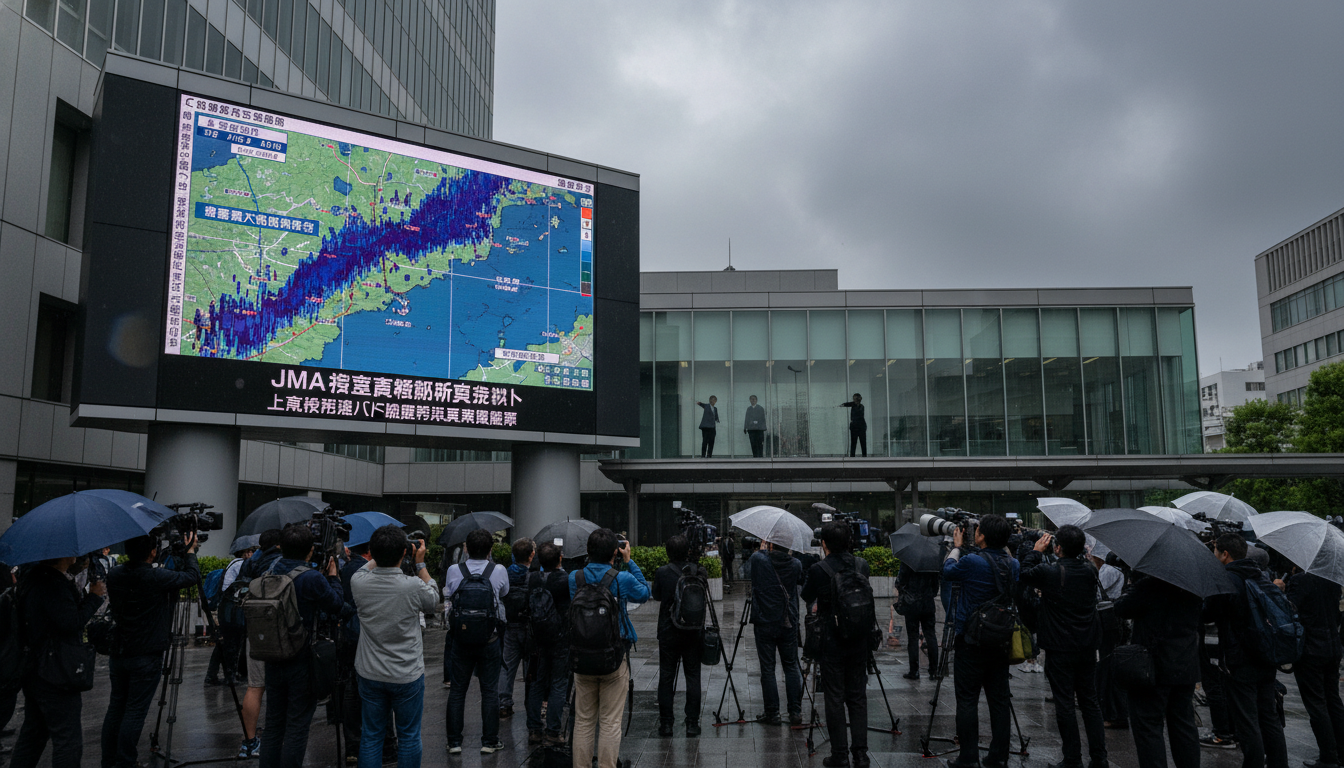
Linear rainband imminent for eastern Kanagawa, JMA issues emergency forecast
Japan Meteorological Agency warns of possible linear rainband in eastern Kanagawa within three hours; residents near rivers and cliffs urged to monitor evacuation information.
The Japan Meteorological Agency (JMA) issued an emergency "linear rainband imminent" forecast at 8:20 a.m., warning that a linear rainband could develop over eastern Kanagawa Prefecture within the next three hours. The alert said a string of developing cumulonimbus clouds could bring prolonged, intense rainfall, sharply increasing the risk of life-threatening landslides and flooding. Residents in the affected area were urged to confirm evacuation information from local municipalities and to stay alert to changing weather conditions.
Details of the JMA emergency forecast
The JMA’s emergency notice characterizes a linear rainband as a procession of powerful convective clouds that can produce concentrated, very heavy rain over a relatively narrow area. Such rainbands are capable of sustaining intense precipitation for an extended period, leading to rapid rises in river levels and saturated slopes. The agency emphasized the speed with which hazards can escalate once a line of storms organizes, prompting the issuance of the specialized "just-before" forecast.
Immediate hazards: landslides and flash flooding
A linear rainband’s persistent heavy rainfall raises the immediate risk of shallow and deep-seated landslides on steep terrain and sudden flooding in low-lying districts. The JMA warned that mudflows, slope failures and overtopping of riverbanks could occur with little notice in areas already made vulnerable by prior rainfall or geological conditions. Emergency services cautioned that roads may become impassable and that bridges and river embankments could be compromised where flows intensify.
Areas and communities at elevated risk
Localities in eastern Kanagawa — particularly those adjacent to rivers, steep hillsides and reclaimed lowlands — were identified as most vulnerable to the forecasted conditions. Municipalities along river courses and in narrow valleys should expect the greatest potential for concentrated damage from intense downpours. The JMA advised people living near cliffs, steep inclines, and the banks of rivers to take special care and to avoid staying in locations where rapid runoff or slope failure would pose a direct threat.
Guidance from the JMA and municipal authorities
The Japan Meteorological Agency urged residents to monitor official channels for updates and to follow instructions issued by municipal governments. The alert specifically recommended that people check evacuation advisories and orders issued by their local authorities, and to be prepared to evacuate without waiting for an order if they judge their situation to be dangerous. Officials noted that municipal evacuation information can be more specific to local conditions and may precede or supplement national forecasts.
Practical precautions for residents and commuters
Residents were advised to prepare an evacuation bag with essentials, secure outdoor items that could be swept away, and move to higher ground if they observe signs of rising water or ground movement. Motorists were cautioned against driving through flooded roads and underpasses, where water depth can be deceptive and engine failure or washouts pose serious danger. People working outdoors or in coastal and riverside areas were told to relocate to safe shelters and to avoid unnecessary travel until the situation stabilizes.
Potential emergency responses and service impacts
Local governments may issue evacuation advisories or orders, activate community shelters, and mobilize disaster response teams depending on how the forecast evolves. Public transportation and road networks could face disruptions if flooding or landslides occur, and utilities may be affected in severely impacted neighborhoods. Residents were reminded to keep mobile devices charged, maintain battery-powered lighting if possible, and to rely on official information rather than unverified reports.
The JMA stressed that the formation and progression of a linear rainband can be rapid and localized, meaning that intense conditions may strike some communities while nearby areas remain relatively unaffected. Given that unpredictability, authorities recommended erring on the side of caution and heeding local evacuation guidance promptly.
Local leaders and emergency responders are standing by to provide updates and assistance as conditions develop, and community networks have been mobilized in vulnerable municipalities. Those with mobility challenges, the elderly, and families with young children were especially encouraged to arrange immediate support for rapid evacuation if necessary.
Residents are advised to follow forecasts from the Japan Meteorological Agency, announcements from their municipal offices, and instructions from emergency services. Keeping clearance from riverbanks and unstable slopes and confirming evacuation routes now can reduce risk should heavy rain begin to fall.
Individuals who detect signs of imminent danger — rapidly rising water, cracking or collapsing ground, or unusual rumbling noises from slopes — should move immediately to the safest nearby higher ground and call local emergency numbers if rescue is required.

