
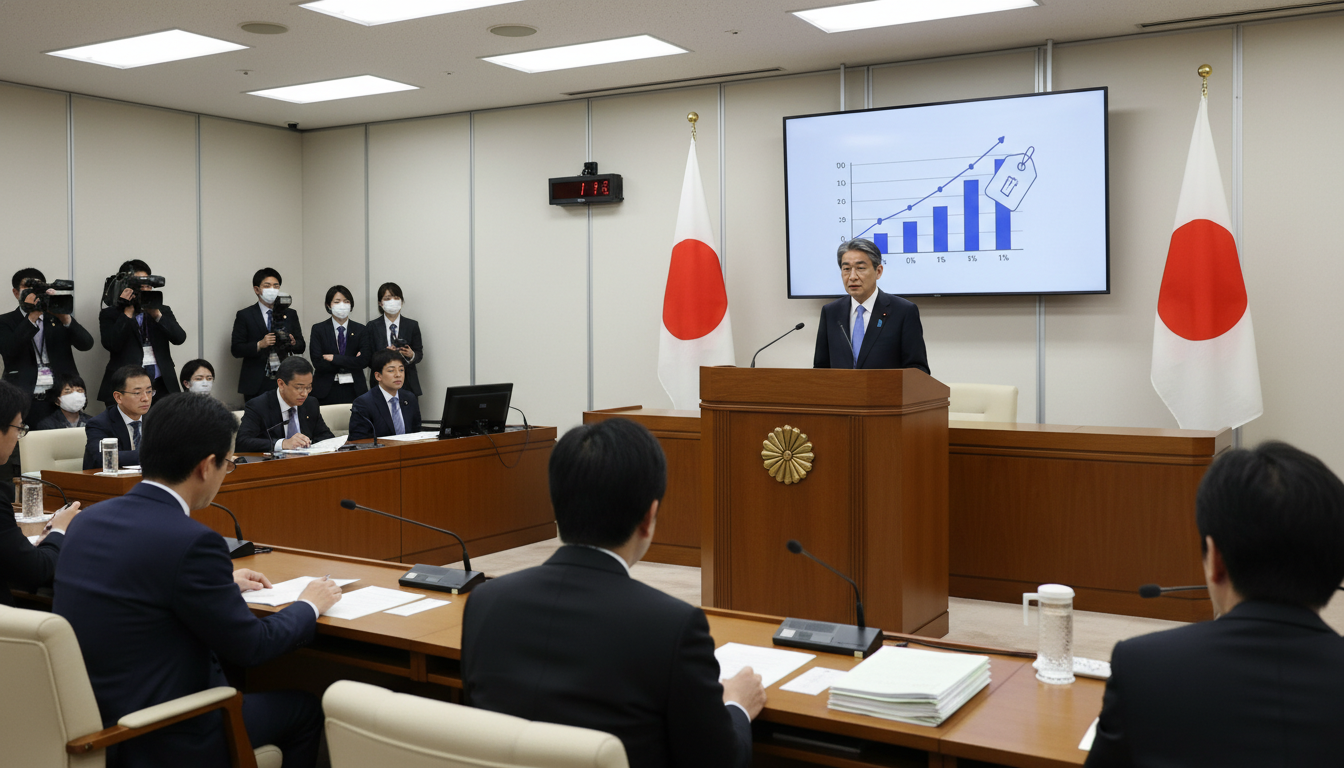
Government pivots to 1% consumption tax cut on food to speed rollout
Japan’s government has shifted course to a 1% consumption tax cut on food, citing register upgrades and speed of implementation as key reasons for moving away from a full zero rate.
Government announces 1% consumption tax cut plan
On June 2, 2026, the Cabinet decided to pursue a limited 1% consumption tax cut on food items, abandoning an initial plan to reduce the rate to zero. The change of course was driven by practical constraints tied to retailer point-of-sale system upgrades and a desire to implement relief as quickly as possible. Officials say the measure would be temporary and limited to food purchases, aiming to ease household burdens while technical and fiscal questions are resolved.
The announcement followed weeks of internal debate over how best to deliver relief to consumers amid cost-of-living pressures. Prime Minister Sanae Takaichi signaled the government’s priority is speed, asserting that a partial cut could be introduced sooner than a zero-rate plan that requires extensive system changes. Lawmakers and ministry officials are now working to set a start date and the precise scope of eligible items.
Register system hurdles that altered the policy
A core reason cited for the shift to 1% was the time required for retailers to adapt cash registers and electronic payment systems to a zero tax rate. Industry sources and government technicians told ministers that many point-of-sale (POS) systems would need substantial software and hardware modification to accommodate multiple rates, exemptions, or a zero band. Those upgrades, they warned, could take a year or longer to complete across the retail sector.
By choosing a 1% cut, the government hopes to shorten the implementation window and avoid protracted delays. Officials estimate the smaller adjustment will be easier to roll out through existing billing frameworks and will reduce the need for immediate, costly system overhauls. Still, retail associations say even a 1% change will entail logistical work, certification and testing that will require coordination and clear guidance from regulators.
Fiscal challenge remains the largest obstacle
While administrative practicality guided the policy pivot, the government faces a substantial fiscal test in funding the temporary tax relief. Officials acknowledge that foregone revenue from even a 1% cut will require identifying offsets in the budget or accepting higher deficits. Debate is underway within ministries about whether to reallocate existing spending, delay planned projects, or tap reserve funds to cover the shortfall.
Opposition parties and independent fiscal analysts have pressed the government to present a transparent financing plan before implementation. They argue that without clear offsets, the measure could exacerbate medium-term debt dynamics and complicate the government’s broader fiscal strategy. Ministers have said discussions will continue and that any final plan will be submitted to the Diet for review.
Business and consumer reaction to the decision
Reaction from businesses was mixed. Large supermarket chains signaled they can adapt swiftly to a 1% change but cautioned that smaller retailers may struggle with costs and technical capacity. Trade groups called for transitional assistance, such as subsidies for POS upgrades and extended compliance deadlines, to prevent an uneven burden on small and mid-sized enterprises.
Consumer advocates welcomed the move as a step toward immediate relief, especially for households facing tight budgets. At the same time, some economists warned the effect on prices could be muted if retailers do not pass the full cut through to consumers. Analysts also noted that targeted support for low-income households might be more effective than a blanket tax adjustment in addressing inequality and purchasing power.
Next steps and political implications ahead of implementation
The government plans to finalize the legislative and technical details in the coming weeks and target a rollout date that allows for necessary coordination with industry and tax authorities. Officials have indicated the measure would be time-limited and focused on foodstuffs, though precise start and end dates are yet to be formally announced. The Cabinet must also reconcile internal views on funding and prepare explanatory materials for businesses and consumers.
Politically, the 1% consumption tax cut represents a compromise intended to show swift action while deferring harder fiscal choices. The move may ease public pressure in the short term, but it leaves open questions about long-term fiscal management and the government’s ability to pursue structural reforms. Lawmakers from multiple parties will closely monitor implementation and its economic impact as the proposal moves through parliamentary procedures.
The government’s pivot to a 1% consumption tax cut highlights the tension between policy ambition and administrative reality, with speed prioritized over the deeper technical and fiscal work required for a zero-rate approach.

