
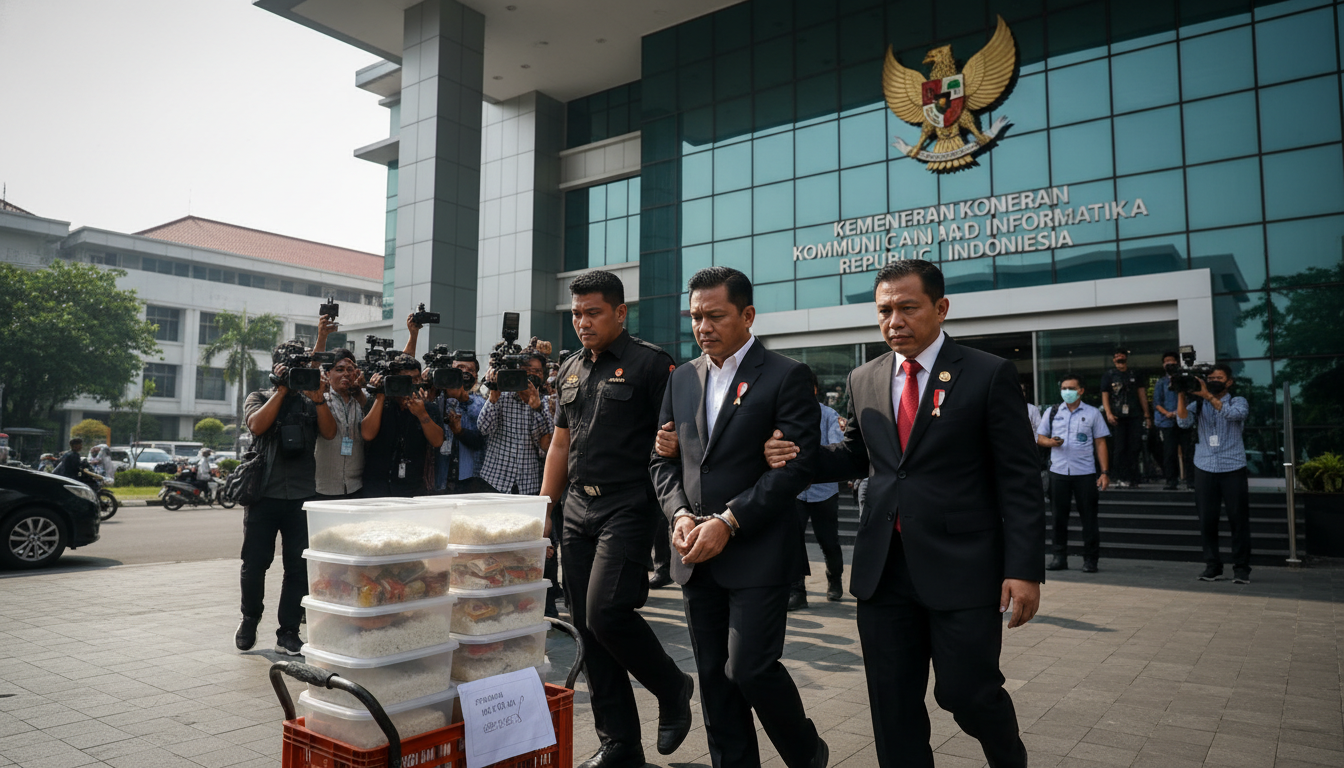
Prabowo’s free nutritious meals program hit as National Nutrition Agency chief and deputies arrested
Indonesian prosecutors arrest National Nutrition Agency head and two deputies over alleged markups in Prabowo’s free meal program, threatening rollout.
Indonesian prosecutors on June 3, 2026, arrested the head of the National Nutrition Agency and two deputies, alleging they siphoned billions of rupiah from President Prabowo Subianto’s free nutritious meals program. The arrests mark a dramatic escalation in scrutiny of the flagship scheme, which was launched in January 2025 and has drawn controversy since. Prosecutors say the investigation centers on alleged procurement markups and irregular contract payments tied to the program’s implementation.
Prosecutors announce arrests and allegation summary
Prosecutors publicly confirmed detentions of the agency’s top officials, saying the suspects are accused of diverting funds meant for school meals and nutrition services. Officials have described the amount involved as "billions of rupiah" and indicated a wider probe into procurement processes and contract awards.
The detained officials were taken into custody as investigators collected financial records and contract documents, according to the prosecutor’s statement. Authorities say the arrests are part of an ongoing criminal inquiry that could lead to corruption and embezzlement charges.
Scope and ambition of the free nutritious meals program
The free nutritious meals program was unveiled in January 2025 with an ambitious goal to provide meals to roughly 80 million children nationwide. The program is a central social policy of President Prabowo’s administration, presented as a measure to improve child health and educational outcomes.
Funding and logistics for the program involve multiple ministries and regional bodies, with the National Nutrition Agency playing a coordinating role. Since its launch the scheme has been politically prominent and administratively complex, relying on large-scale procurement and partnerships with private suppliers.
Allegations of markups and procurement irregularities
Investigators allege portions of the program’s budget were inflated through marked-up contracts and questionable supplier arrangements. Prosecutors have not released full details of the evidence publicly, but said their probe targets procurement invoices and payment flows tied to meal production and distribution.
Observers say procurement markups are a common risk in large government food programs, especially where oversight is limited and local implementation varies. The prosecutor’s use of the term "siphoning" underscores a focus on deliberate diversion rather than accounting errors.
Potential operational impact on meal deliveries
The arrests raise immediate questions about operational continuity for the free nutritious meals program and its ability to reach children in the coming months. Local authorities and school administrators rely on established supply chains, and any freeze on agency leadership or funding transfers could disrupt deliveries.
Ministry-level coordination and regional procurement offices will be watched closely as the investigation proceeds, since continuity of service depends on those bodies maintaining contracts and payments. Program beneficiaries, including millions of schoolchildren, could face delays if logistical or financial bottlenecks are not quickly resolved.
Political implications for the Prabowo administration
The scandal places political pressure on President Prabowo Subianto, whose administration has made the program a flagship policy. The arrests may trigger scrutiny from opposition lawmakers and civil society groups demanding accountability and stronger safeguards against corruption.
Government officials have framed the program as both a social priority and a test of administrative capacity, so developments in the probe could affect public confidence ahead of future policy initiatives. Analysts say a transparent investigation and clear steps to protect program operations will be essential to limit reputational damage.
Next steps in the investigation and oversight measures
Prosecutors have indicated the inquiry will continue with forensic reviews of contracts, supplier records and payment trails, though they have not disclosed a timetable. Legal proceedings could follow detentions if prosecutors secure sufficient evidence to file formal charges.
Stakeholders have called for independent audits and parliamentary oversight to restore confidence in the program’s governance. Strengthening procurement rules, increasing transparency in supplier selection and improving financial controls are among the measures specialists say could reduce future risks.
The arrests of the National Nutrition Agency head and two deputies mark a critical juncture for Indonesia’s high-profile free nutritious meals program, testing both the integrity of public procurement and the resilience of a policy designed to reach tens of millions of children.

