
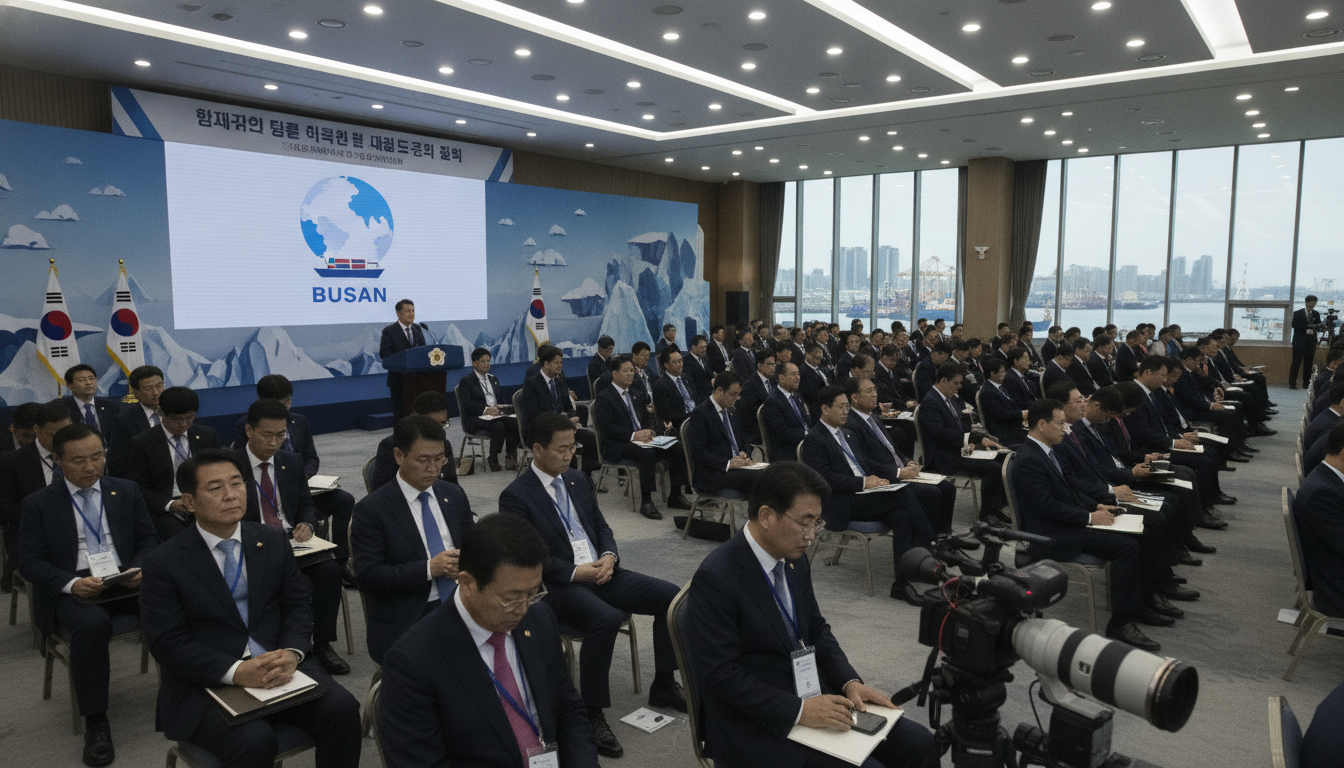
Busan Polar Hub Push Accelerates as Icebreaker Araon Begins 17th Arctic Voyage
Icebreaker Araon departs on its 17th Arctic voyage as Seoul promotes Busan polar hub to boost port logistics, research, jobs and regional trade growth.
The Korea Polar Research Institute’s icebreaker Araon set off on July 11 for its 17th Arctic expedition, a move that Seoul says underscores plans to develop Busan as a Busan polar hub for science and logistics. The voyage, conducted under the auspices of the Korea Polar Research Institute and supported by the South Korean Ministry of Oceans and Fisheries, also highlights the vessel’s dual role in research and resupply missions. The government has tied the polar initiative to broader efforts to revive economic momentum through port-led investment and specialised logistics services.
Araon Departs for the Arctic
The Araon left port on July 11 for a voyage the institute described as its 17th trip to Arctic waters, carrying scientific teams and equipment for seasonal research. The ship can carry roughly 45 standard shipping containers and is routinely used to resupply South Korea’s Antarctic research stations, combining logistical capacity with research capability. Officials say the deployment signals continuity in Seoul’s polar research programs while testing commercial and logistical models that could be scaled from Busan.
Presidential Push to Make Busan a Polar Hub
In recent statements, the president has promoted Busan as a strategic node for polar activity, linking the initiative to job creation and regional development. The plan envisages leveraging Busan’s deepwater port, container terminals and cold-chain infrastructure to serve an emerging market in polar logistics. Seoul’s pitch frames the Busan polar hub as a way to attract investment in specialised shipping, research services and related industries.
Logistics and Commercial Opportunities
Port authorities and industry stakeholders see potential to adapt existing container and resupply systems to polar routes, citing Araon’s container capacity as an example of dual-use capability. Developing polar-certified vessels, cold-chain warehousing and transshipment services in Busan could open new commercial corridors as Arctic access changes. Analysts note, however, that turning research-driven voyages into steady commercial flows will require regulatory alignment, long-term contracts and investment in specialized equipment.
Scientific Collaboration and Research Capacity
The Araon’s mission will support oceanographic, atmospheric and ice-monitoring research, reinforcing South Korea’s scientific footprint in polar regions. Building Busan as a polar hub is pitched not only as an economic project but also as a way to expand collaborative research, training and data-sharing with international partners. Authorities argue that concentrating logistics and scientific services in one port can lower mission costs and speed deployment of multidisciplinary teams.
Environmental and Geopolitical Challenges
Expanding polar operations brings environmental sensitivities and geopolitical calculations, with officials emphasizing the need for sustainable practices and adherence to international rules. Increased traffic and commercial activity in polar seas raise concerns about ecosystem impacts, emergency response capacity and shipping safety. Seoul’s approach, per government statements, seeks to balance economic opportunity with safeguards for fragile polar environments and coordination with Arctic stakeholders.
Implementation Steps and Local Impact
City and port officials in Busan are reportedly exploring incentives, zoning and infrastructure upgrades to attract polar-focused firms and institutes. Short-term measures under consideration include pilot logistics facilities, vessel retrofitting programs and partnerships between research institutes and private operators. Local leaders view the strategy as a way to diversify Busan’s maritime economy beyond container throughput and to create higher-value services linked to polar science and logistics.
The Araon’s departure and the government’s push to brand Busan as a polar hub together mark a calculated effort to align scientific capability with economic policy. Observers say the success of the initiative will depend on sustained funding, international cooperation, and careful management of environmental risks as the city seeks to translate polar activity into long-term growth.

