
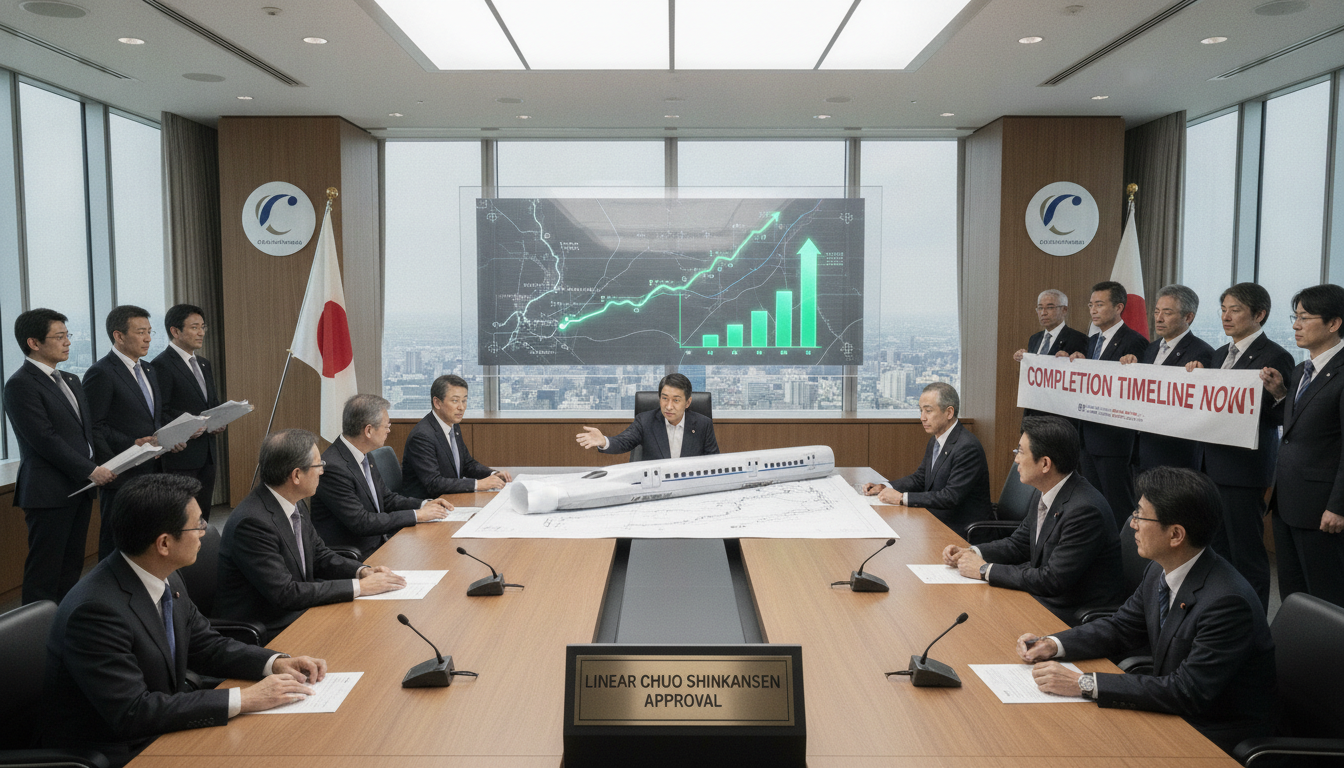
Maglev train project moves forward after local approval, but completion date remains uncertain
Local governments press for clear completion timeline as maglev train plan advances following a key approval, amid warnings of further delays.
The maglev train project known as the Linear Chuo Shinkansen has taken a significant step forward after local authorities granted construction approval, but municipalities along the route are pressing for a firm completion timetable. Residents and business leaders want clarity on when the oft-delayed scheme will begin to deliver promised economic gains. Central Japan Railway, the operator behind the project, says the first Tokyo–Nagoya leg could cut travel time to around 40 minutes, but questions remain over timing and next obstacles.
Local Approval Clears Key Hurdle
Municipal endorsements this month removed one of the most visible administrative barriers to resumed work on the Linear Chuo Shinkansen. Local assemblies granted consent for construction through their jurisdictions, signalling political acceptance at the municipal level.
Officials said the approvals followed lengthy consultations on land use and safety, reflecting intense local scrutiny of the maglev train plan. While symbolic, those votes do not by themselves guarantee that construction will proceed without further interruption.
Timeline and Remaining Approvals
Despite the recent approvals, a clear, binding completion date has not been established by Central Japan Railway or national authorities. Municipal leaders have demanded an explicit schedule so they can plan infrastructure, housing and business investment tied to the maglev train.
Observers note that the project still requires additional permits, central government endorsements, and coordination across prefectural boundaries. Each outstanding approval carries its own review process, leaving the overall timetable vulnerable to further slippage.
Construction, Land and Environmental Challenges
The Linear Chuo Shinkansen’s route traverses densely populated and geologically complex terrain, creating practical challenges for tunnelling and land acquisition. Engineers must balance the technical demands of ultrafast maglev infrastructure with stringent environmental assessments.
Compulsory land purchases, relocating utilities, and securing tunnel rights will extend pre-construction work in many municipalities. Environmental impact studies and mitigation plans could also prompt revisions to designs and schedules, adding months or years to projected milestones.
Economic Promises for the Tokyo–Nagoya Corridor
Supporters of the maglev train emphasise the economic uplift expected along the Tokyo–Nagoya corridor if the project meets its service goals. Central Japan Railway projects that the first leg could reduce peak travel time to roughly 40 minutes, substantially shortening journeys compared with the current fastest bullet trains.
Municipalities anticipate faster movement of labour, tighter business linkages, and expanded tourism opportunities once high-speed service begins. Local chambers of commerce and economic planners say a definitive timetable would unlock investment decisions that are now being delayed.
Community Concerns and Compensation Demands
Not all communities along the line view the progress with unalloyed optimism; residents in affected areas have raised concerns about noise, disruption and fair compensation. Town councils and citizen groups are pressing for transparent compensation schemes and guarantees on environmental protection.
Local leaders say they need legally binding assurances on relocation support, project oversight, and long-term monitoring before they will provide unequivocal backing. Those conditions could become bargaining points that slow final sign-offs and project mobilization.
Cost, Financing and Political Stakes
The maglev train has long been one of Japan’s most expensive transport undertakings, and questions over financing remain central to the debate. National and regional authorities will need to clarify funding commitments and risk-sharing arrangements as costs evolve with design and construction challenges.
Political attention is high because the project’s scale and visibility link it to broader commitments on regional development and technological leadership. Any further delays could raise scrutiny of the budget and the role of public funds in underwriting private-sector ambitions.
Next Steps for Central Japan Railway
Central Japan Railway must now coordinate a complex sequence of detailed engineering works, additional permit applications and stakeholder negotiations before full construction can proceed at scale. The company faces the practical task of translating municipal approvals into secured land rights, finalized designs and mobilized construction teams.
Executives have indicated that work will proceed where feasible, but they also warn that sequencing will depend on clearing remaining administrative and legal steps. For local governments and businesses watching closely, the near term will test whether approvals translate into momentum or merely mark another pause in a long-running project.
The recent municipal approvals mark a notable advance for the Linear Chuo Shinkansen, yet they leave the most consequential questions unresolved: when the maglev train will begin operating, how much it will ultimately cost, and whether communities along the route will see the economic benefits they expect.

