
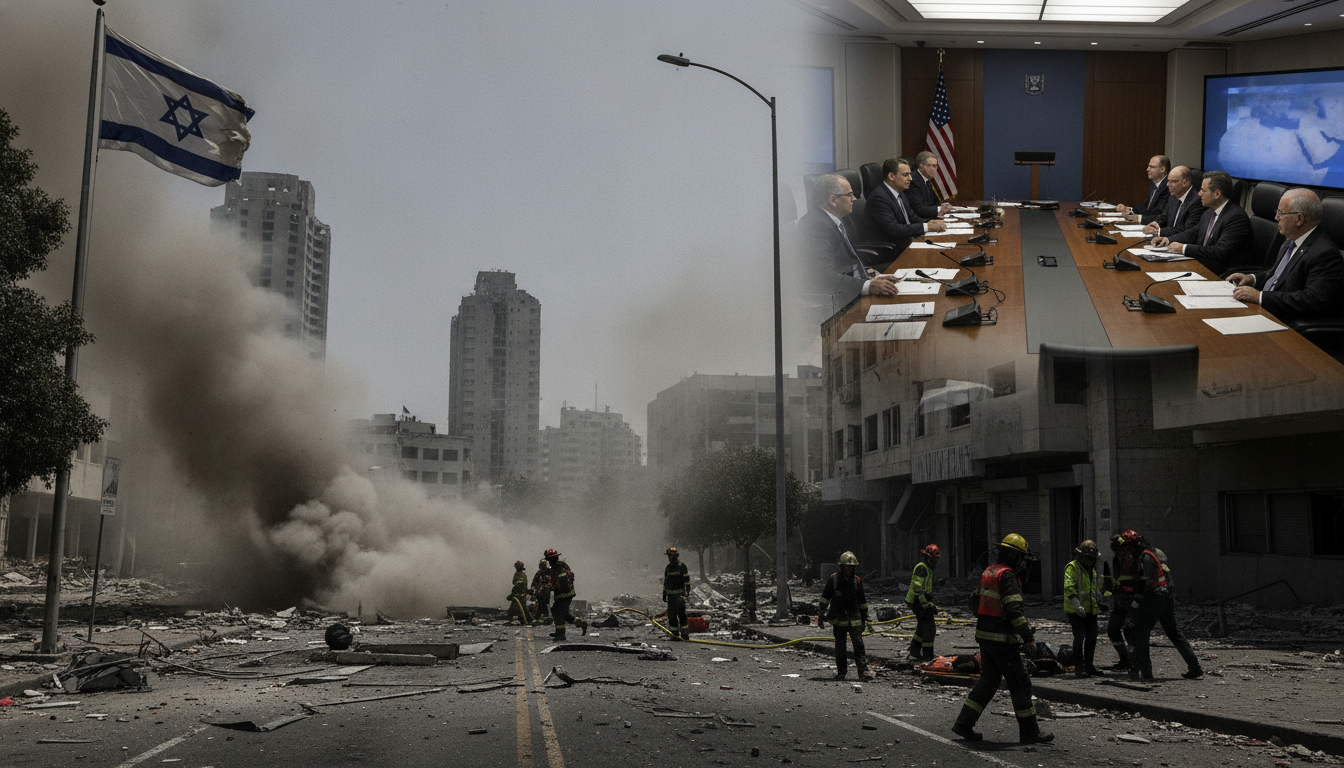
Iran-Israel clashes resume after April ceasefire as talks stall and leaders face domestic pressure
Iran-Israel clashes flared two months after the April 8 ceasefire as US-Iran talks stalled; leaders face pressure and growing risk of regional escalation.
The Iran-Israel clashes that resumed this week marked the most serious exchange of fire since the April 8 ceasefire, raising alarms about a wider regional escalation. Both Tehran and Jerusalem publicly signaled a desire to avoid an all-out war, yet reciprocal strikes and halted diplomacy have left analysts warning of renewed instability. U.S. efforts to mediate have shown signs of strain, and political pressures at home are shaping each capital’s responses.
Immediate sequence of attacks
The latest exchanges began with what officials described as retaliatory strikes that shattered a two-month lull following the April 8 ceasefire. Missiles and air operations were reported in border areas, and local authorities on multiple fronts said civilians and infrastructure were affected. Although neither side announced a full-scale offensive, the tempo and precision of strikes reflected sustained military capability and readiness to respond.
Both parties issued restrained statements shortly after the fighting, but military movements and localized skirmishes continued to complicate the situation. International monitors and regional partners called for de-escalation, noting how quickly localized incidents could spiral into broader conflict.
U.S. mediation and stalled negotiations
The United States has been trying to shepherd negotiations aimed at solidifying the ceasefire and preventing further Israeli-Iranian confrontations. Senior U.S. officials described talks with Tehran as delicate and repeatedly emphasized the need for both sides to return to the negotiating table. However, progress has been slow, and trust deficits remain large after repeated rounds of tit-for-tat attacks.
U.S. political messaging has at times been blunt, pressing Israel to temper its responses while urging Iran to refrain from striking beyond calculated limits. That balancing act became more fraught as diplomatic channels showed limited movement and ambiguity over timelines for any durable agreement.
U.S.-Israeli exchanges and leadership tensions
U.S. leadership publicly urged restraint during the flare-up, but friction surfaced between Washington and Jerusalem over acceptable military options. U.S. calls for de-escalation were followed by pointed criticisms from the White House about certain Israeli strikes near Lebanon, reflecting a divergence in public tone. In private and public comments, Israeli leadership maintained that it would act to protect national security interests, signaling a readiness to pursue targeted retaliation despite outside pressure.
Israeli officials framed recent strikes as necessary to deter future attacks and to preserve operational credibility. That posture resonated with hardline constituencies at home, complicating international appeals for immediate calm.
Iran’s posture and domestic considerations
Iran signaled calculated retaliation rather than an intent to pursue a protracted campaign, while also invoking domestic imperatives to demonstrate resolve. Tehran’s public rhetoric stressed deterrence and the right to respond to perceived aggression, and state-aligned outlets emphasized the importance of defending regional allies and interests. Those messages serve both to satiate domestic political audiences and to warn adversaries against further action.
At the same time, Iranian leaders must balance external projections of strength with economic strains and political considerations at home, making the calculus for prolonged escalation more complex than it might appear on the surface.
Fronts of concern: Lebanon and the West Bank
Lebanon and the West Bank emerged as immediate flashpoints during the latest exchanges, with reports of strikes and unexploded ordnance prompting fears of civilian harm and displacement. Lebanon’s border regions have long been a theater for proxy and direct actions, and any intensification there risks drawing in nonstate groups and neighboring states. In the West Bank, security incidents heighten the potential for broader Palestinian-Israeli confrontations that could reverberate across the region.
Humanitarian groups and regional governments urged caution as military activities increased in populated areas. The prospect of spillover into wider cross-border engagements has attracted international attention and emergency diplomacy.
Outlook and risks of renewed fighting
Analysts say the outlook remains uncertain: the Iran-Israel clashes can abate with effective behind-the-scenes diplomacy, but miscalculation or domestic political pressures could trigger another cycle of retaliation. The current environment—stalled U.S.-Iran talks, assertive rhetoric from capitals, and complex on-the-ground dynamics—creates fertile ground for incidents to escalate. External actors, including regional states and international organizations, may play a decisive role in nudging the parties back toward restraint.
For now, military postures and public statements suggest both sides prefer to avoid an all-out war, yet tactical strikes and political signaling indicate that deterrence, rather than reconciliation, is driving behavior.
The immediate priority in capitals and among mediators is to reopen credible diplomatic channels and establish clearer mechanisms to prevent incidents from spiraling. Absent that, the risk that Iran-Israel clashes will recur remains elevated, with consequences that could extend beyond the immediate combat zones.

