
Xi Jinping visit to North Korea underscores Beijing’s regional strategy as Pyongyang advances weapons ties
Chinese leader Xi Jinping wrapped up a two-day visit to North Korea on June 9, 2026, meeting Kim Jong Un in Pyongyang on June 8 in an effort to reinforce Beijing’s influence as Pyongyang expands its nuclear capabilities. The Xi Jinping visit to North Korea was presented by Beijing as a diplomatic engagement, while analysts saw it as a strategic move to recalibrate power dynamics on the Korean Peninsula. The trip comes amid growing military cooperation between North Korea and Russia and persistent worries in Seoul, Tokyo and Washington about nuclear escalation.
Xi Jinping concludes two-day Pyongyang visit on June 9, 2026
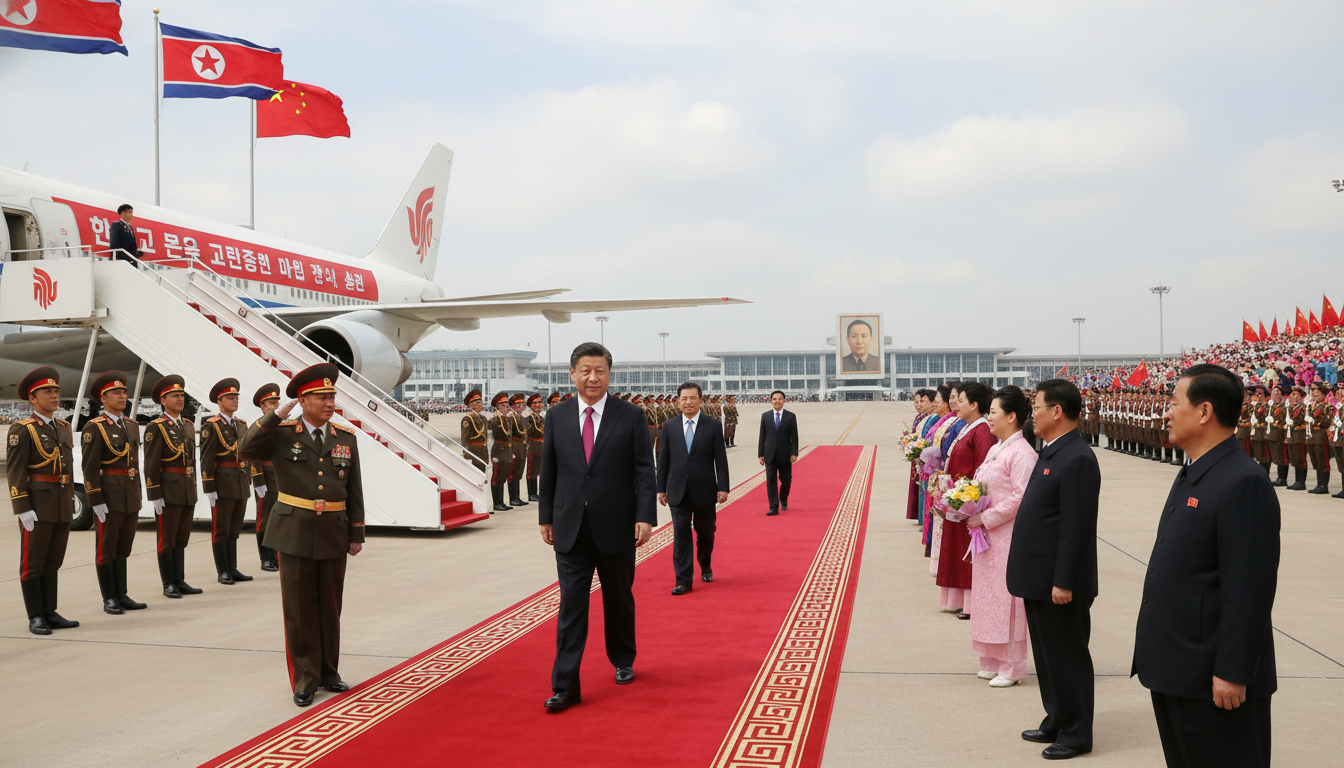
Xi Jinping’s delegation departed Pyongyang after two days of talks that included high-profile meetings with Kim Jong Un and state ceremonies in the North Korean capital. Chinese state media described the visits as warm and constructive, while North Korean outlets broadcast images of the two leaders standing together at official events on June 8. The visit broke months of absence at the highest diplomatic level between the two countries and was billed in Beijing as a step to deepen traditional ties.
Beijing frames visit as stabilizing engagement for the region
Officials in Beijing emphasized that the Xi Jinping visit to North Korea aimed to stabilize regional relations and promote dialogue rather than provoke confrontation. Chinese spokespeople said the talks focused on bilateral cooperation, common interests and the need for peace and stability on the peninsula. Foreign policy analysts note that, beyond public rhetoric, the trip served Beijing’s broader objective of reasserting its role as a central diplomatic actor in Northeast Asia.
Security questions and nuclear developments shadow talks
The visit occurred against the backdrop of renewed concern over Pyongyang’s accelerated weapons development program, a key point of unease for neighboring capitals. Analysts quoted by diplomatic observers said Beijing is attempting to manage the fallout from North Korea’s expanding arsenal while maintaining influence over its unpredictable neighbor. The meetings did not produce public commitments on denuclearization, leaving observers to assess whether the talks will alter the trajectory of North Korea’s strategic posture.
Russia’s growing ties with Pyongyang complicate China’s calculus
China’s engagement took on added significance as North Korea strengthens military links with Russia, a development that Beijing views with both strategic caution and opportunity. Senior analysts argue that the Xi Jinping visit to North Korea partially reflects Beijing’s interest in preventing a security architecture in the region that sidelines China. By reinforcing bilateral relations, China appears intent on shaping how Pyongyang balances its ties with Moscow and preserving Beijing’s longstanding influence.
Economic and diplomatic gestures in Pyongyang highlighted by both sides
During the visit, ceremonial exchanges and official meetings underscored the symbolic value of the diplomacy, with both governments promoting economic and cultural cooperation in public statements. Chinese trade and development ties to North Korea have long been a lever of influence, even as multilateral sanctions complicate formal economic engagement. Observers said the sequence of gestures was designed to send a message of continuity and pragmatic engagement, while stopping short of concrete, broad-scale economic commitments announced at the state level.
Regional capitals signal caution and call for clarity on security commitments
Seoul, Tokyo and Washington watched the Xi Jinping visit to North Korea closely, issuing cautious responses that emphasized concern over denuclearization and regional stability. While diplomats framed public reactions in measured terms, analysts in those cities said the visit raises questions about whether Beijing will press Pyongyang on nuclear restraint or instead prioritize its bilateral partnership. The trip is likely to sharpen debate in regional capitals over responses ranging from renewed engagement to tighter coordination on sanctions and defensive postures.
The visit marks the latest diplomatic maneuver in a complex strategic environment in which Beijing seeks to balance ties with Pyongyang against broader regional interests. How the Xi Jinping visit to North Korea influences Pyongyang’s next moves — whether toward deeper military cooperation with Russia, limited economic opening, or continued weapons development — will be watched closely by governments across East Asia.

