
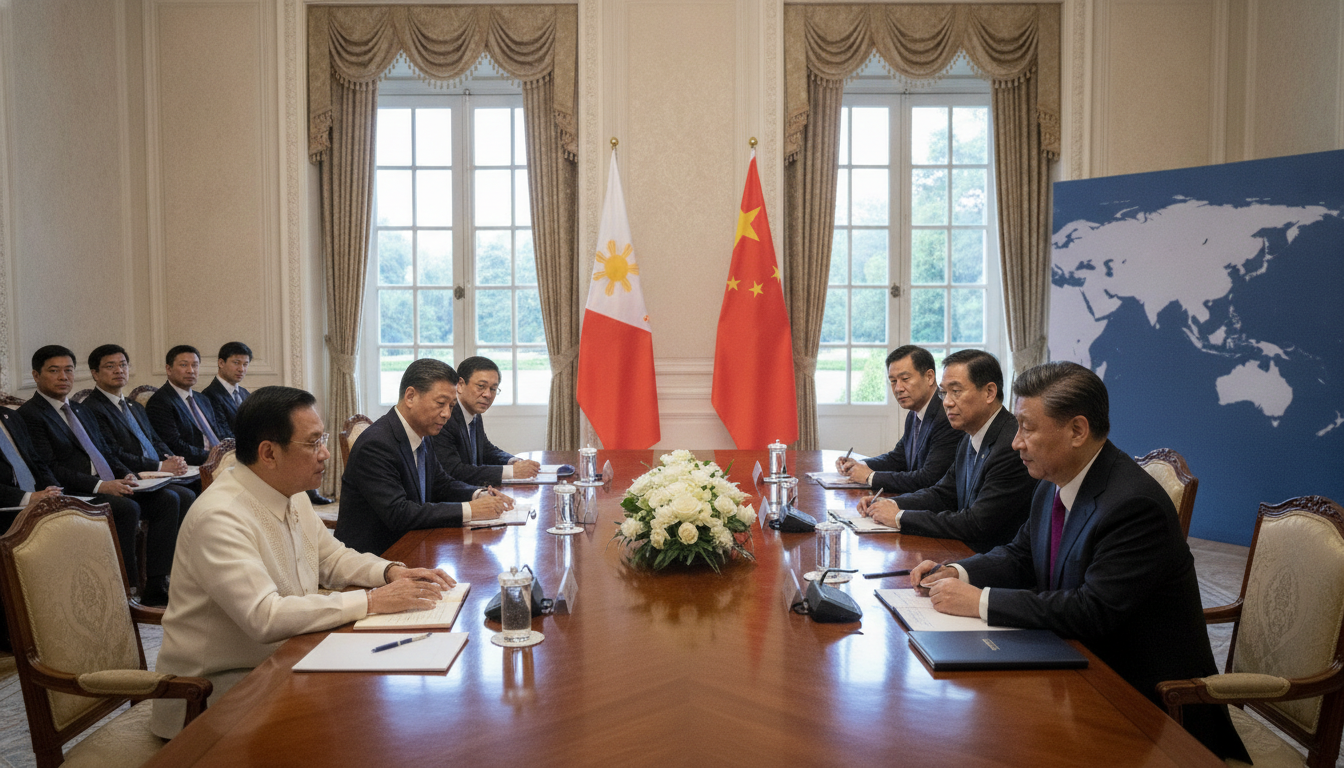
Philippine President Marcos seeks reset with China after South China Sea confrontations
Philippine President Marcos seeks to reset ties with China after late July South China Sea confrontations during ASEAN meetings, while the US and Australia voice concern.
President Ferdinand Marcos Jr. has called for a reset in Manila’s strained relationship with Beijing after a series of confrontations in the South China Sea unsettled regional diplomacy in late July 2026. Marcos signaled the outreach amid the ASEAN foreign ministers meetings in the Philippine capital, saying he wants to reduce tension and restore channels of communication. The development follows several recent maritime encounters that drew criticism from Washington and Canberra and overshadowed the diplomatic gathering.
Marcos proposes a diplomatic reset at Malacañang
Marcos met with Chinese Ambassador Jing Quan at the Malacañang Presidential Palace on July 21, a meeting the Presidential Communications Office said was intended to open a new phase of engagement. The president framed the talks as an effort to de-escalate immediate tensions and to pursue steady, predictable relations with China. Philippine officials described the outreach as pragmatic, aimed at preventing maritime incidents from spilling into broader confrontation.
Incidents in the South China Sea raised regional alarm
In the days leading up to and during the late July meetings in Manila, multiple encounters in contested waters heightened concern among Southeast Asian diplomats. Officials and regional delegates said the incidents underscored the fragile security environment in portions of the South China Sea where competing claims intersect with heavy commercial and military traffic. The spate of encounters drew urgent calls for restraint and clearer mechanisms to manage at-sea contact.
The confrontations also complicated Manila’s efforts to balance economic ties with China and security relationships with Western partners. Analysts noted that such incidents tend to harden public and political attitudes in claimant states, making diplomatic flexibility more difficult. For the Philippines, which faces both security pressures and deep economic links to Beijing, the balancing act remains politically sensitive.
ASEAN foreign ministers meeting was overshadowed by maritime tensions
Delegations attending the ASEAN foreign ministers meeting in Manila reported that maritime security concerns dominated private discussions even as organizers pushed a broad regional agenda. The meetings, held in late July 2026, were intended to address trade, climate, and health cooperation but were repeatedly steered back to the South China Sea by delegates pressing for collective responses. Several ASEAN members urged a calm, rules-based approach while pressing for stronger conflict-avoidance measures at sea.
Efforts to produce a unified ASEAN statement on the incidents were complicated by differing national priorities and ties with Beijing. Southeast Asian diplomacy has historically favored consensus, but persistent maritime incidents have tested that model and exposed divisions over how to engage China without alienating major powers.
United States and Australia publicly criticize Beijing’s actions
Washington and Canberra issued public criticism of Chinese conduct in the disputed waters, with officials urging Beijing to refrain from coercive behavior and to respect international law. U.S. and Australian statements emphasized freedom of navigation and the need for de-escalation, signaling continued diplomatic and security backing for Southeast Asian claimants. The comments added pressure on Beijing and underscored the wider geopolitical stakes that incidents in the South China Sea now carry.
Both countries also reiterated support for ASEAN-led efforts to manage tensions and for multilateral dialogue as the primary path to reduce risks. Defence and diplomatic sources said Western criticism aimed to deter further confrontations while encouraging channels for negotiation to remain open.
Diplomatic steps and regional implications
Manila’s outreach to Beijing, including the July 21 meeting with Ambassador Jing Quan, reflects an attempt to convert short-term crisis management into longer-term dialogue, according to Philippine officials. The reset bid is likely to include proposals for enhanced communication between maritime agencies and renewed talks about confidence-building measures. However, any progress depends on whether Beijing responds with reciprocal steps to reduce friction at sea.
For ASEAN, the episode has reinforced the urgency of developing stronger crisis-avoidance protocols and practical mechanisms to prevent maritime incidents from escalating. Member states face the twin challenge of preserving unity while accommodating divergent relationships with major powers. The outcome of Manila’s reset push will be watched closely across the region for signs that diplomacy can restore predictability to contested waters.
The coming weeks are likely to see intensified diplomacy in Manila and capitals across Southeast Asia as governments seek ways to stabilise maritime interactions and to prevent future confrontations in the South China Sea.

