
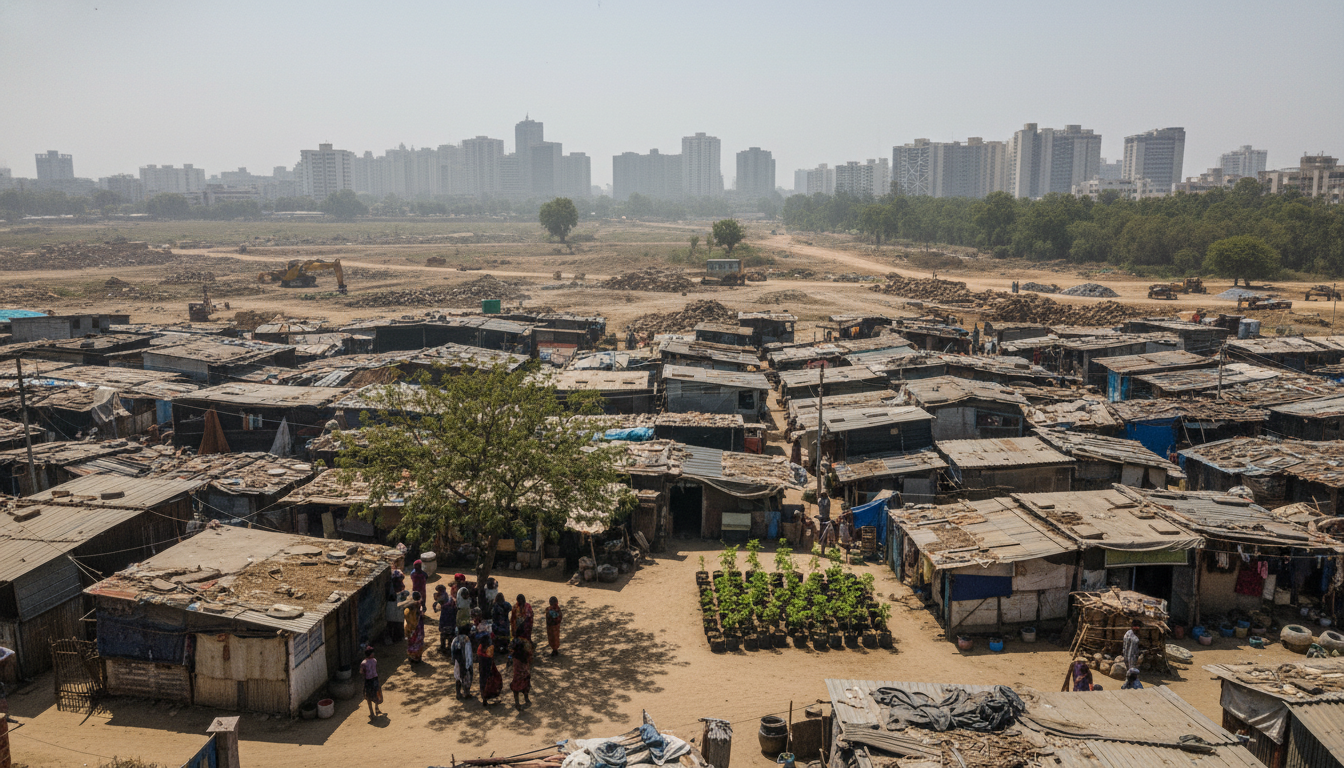
Urban heat in India intensifies as rapid city growth removes cooling greenery
India’s cities are heating faster due to poor urban planning, increasing heat stress for millions and reducing nighttime cooling by nearly 9% in Delhi, the study finds.
India’s urban heat problem is worsening as rapid, poorly planned expansion replaces trees and open ground with concrete and asphalt, researchers say. A recent study by the Centre for Science and Environment found that Delhi’s ability to cool at night has declined by about 9% over the past decade, and slum settlements are among the hardest hit. The growing urban heat island effect is amplifying risks for hundreds of millions of low-income residents across major metropolitan areas.
Cities Built Without Cooling
Urban expansion has favored compact development with little attention to green infrastructure, planners and researchers report. Hard surfaces such as roads, rooftops and parking areas store heat during the day and release it slowly at night, keeping temperatures elevated when residents need relief most.
The conversion of parks, wetlands and agricultural fringe into built land removes natural cooling mechanisms and fragments tree cover. That loss of vegetation reduces shade and evaporative cooling, two of the most effective, low-cost ways cities moderate local temperatures.
Nighttime Cooling Loss in Delhi
The Centre for Science and Environment’s analysis shows a measurable decline in Delhi’s nighttime cooling capacity, a change that reduces overnight recovery from daytime heat. Reduced night cooling is particularly dangerous because it increases cumulative heat exposure and prevents the body from recuperating.
Researchers linked the decline to denser built form and the disappearance of green and blue spaces that once helped regulate microclimates. Officials and experts warn that without targeted interventions, similar patterns will spread to other fast-growing Indian cities.
Slums Face Largest Temperature Rise
Informal settlements are experiencing disproportionately high temperature increases because they often lack trees, open space and durable housing that insulates against heat. Densely packed residences, thin walls and metal roofs amplify indoor temperatures and prolong heat exposure after sunset.
Residents of low-income neighborhoods also have limited access to electricity, air conditioning or reliable cooling centers, heightening vulnerability. The combination of structural exposure and socioeconomic constraints places hundreds of millions of urban poor at elevated risk of heat-related illness.
Health and Economic Toll
Rising urban temperatures worsen respiratory and cardiovascular conditions and increase the incidence of heat stroke, dehydration and other acute illnesses. Medical services in heatwaves can be overwhelmed, and public health systems may struggle to provide timely care in densely populated areas.
Economic impacts are significant: labor productivity falls when outdoor workers, construction crews and street vendors face extreme heat, and household energy costs rise for those who can afford mechanical cooling. The cumulative effect undermines livelihoods and deepens inequality in affected cities.
Infrastructure and Energy Stress
Higher temperatures drive up electricity demand as residents and businesses seek relief, straining power grids at peak times. Utilities face greater risk of outages just when cooling services are most needed, complicating emergency responses during heatwaves.
Transportation infrastructure also suffers, with rail lines, road surfaces and urban systems experiencing accelerated wear under prolonged heat. Cities without resilient infrastructure designs face rising maintenance costs and disruptions that ripple through local economies.
Prescriptions for Cooler Cities
Experts recommend expanding urban tree canopies, restoring wetlands and designing parks and water bodies into neighborhood plans to bring back natural cooling. Shading streets, promoting green roofs and changing building materials to more reflective, permeable options are practical steps that reduce surface temperatures.
Policy measures should prioritize cooling for the most vulnerable neighborhoods through targeted greening, slum upgrading and community cooling centers. Integrating heat mitigation into land-use planning, building codes and public investment decisions can lower long-term health and economic burdens.
The growing evidence that “urban heat in India” is being driven as much by construction patterns as by global warming underscores the need for immediate, place-based action. Restoring green cover, upgrading infrastructure and prioritizing vulnerable neighborhoods can reduce exposure and build more resilient cities for millions of residents.

