
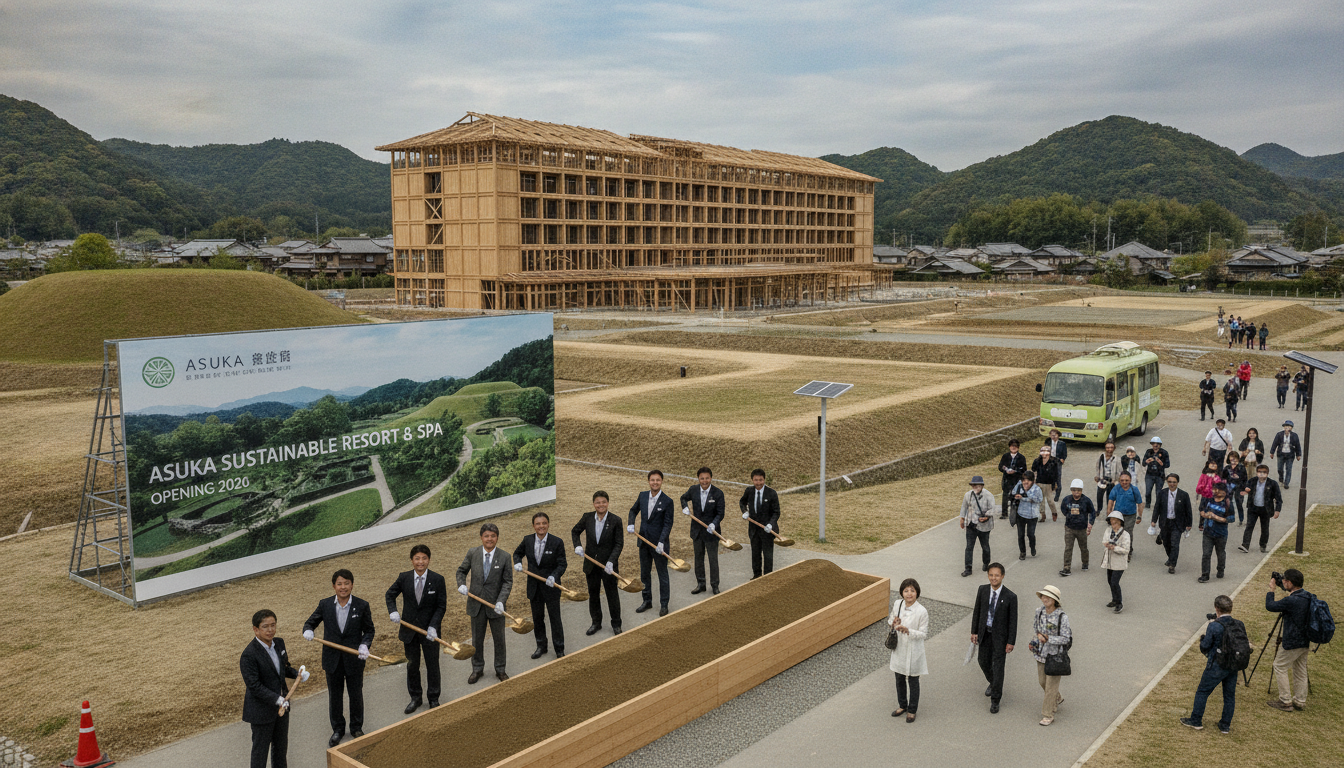
Asuka-Fujiwara world heritage spurs new hotels and cautious tourism strategy in Asuka Village
Asuka-Fujiwara world heritage listing drives growth in village lodging while authorities and residents seek sustainable, slow-paced tourism that protects archaeology and landscape.
The UNESCO decision on July 26, 2026, to inscribe the Asuka-Fujiwara palace capitals set has prompted a fresh push to develop overnight stays in Asuka Village, Nara Prefecture. Local officials and private operators say new accommodations are intended to encourage longer visits and reduce day-trip congestion while preserving the area’s archaeological sites and rural character. Village leaders and tourism planners are balancing expectations for increased visitors with constraints such as narrow roads and limited parking.
World Heritage Designation Confirmed
The UNESCO World Heritage Committee formally approved the inscription of the Asuka-Fujiwara palace capitals on July 26, 2026, elevating the profile of the region’s ancient tombs, temple remains and palace sites. The decision followed a recommendation from ICOMOS and has already driven a noticeable uptick in visitors from outside Nara prefecture. Village officials report seeing more cars with non-local plates since the listing became likely in June, signaling immediate interest from domestic travelers.
Visitor Trends and Historical Context
Asuka Village has experienced wide fluctuations in visitor numbers over the past decades, shaped by discoveries and changing travel patterns. After the famed wall painting of the Asuka beauty was found at Takamatsuzuka in the 1970s, annual visits peaked at roughly 1.75 million in 1982 before declining and stabilizing near 800,000 before the COVID-19 pandemic. For fiscal 2025 the village recorded about 720,000 visitors, with roughly 60–70 percent still arriving as day-trippers rather than staying overnight.
Kominka Hotels Expand Local Capacity
Private investment has already turned vacant traditional houses into guest accommodation to fill a longstanding shortfall in rooms. In 2022 the Haseko Group opened Bransiera Villa Asuka after renovating a kominka registered in the village’s empty-house bank, and it added Bransiera Ishibutai Terrace with lodging and dining near Ishibutai Kofun in 2025. Company representatives say repurposing historic homes helps retain the village atmosphere while offering visitors a chance to stay within walking distance of key sites.
Hoshino Resorts to Open Luxury Property
Major hospitality operator Hoshino Resorts plans to enter Asuka with a high-end property, Hoshinoya Asuka, scheduled to open in 2027 with 35 rooms. The design calls for a two-story, tiled-roof building set on former rice paddies, featuring a central garden arranged like terraced fields to echo local landscape forms. Development officials say the property aims to attract guests seeking immersive, contemplative stays rather than mass-market day visits.
Capacity Constraints and Visitor Experience
Despite the surge in accommodation projects, Asuka Village faces practical limits that shape what kind of tourism it can sustainably host. Roads in the village are often narrow and parking is scarce, complicating plans for large tour buses and peak-day crowds. Both developers and Hoshino Resorts executives have emphasized a strategy focused on encouraging multi-night stays of three to four nights, which they argue will spread visitor flow, reduce pressure on single sites and allow travelers to explore the area more slowly.
Community Concerns and Management Objectives
Local residents and history enthusiasts express mixed feelings about the world heritage designation and rising visitor numbers. Some welcome the economic opportunities that new hotels bring, while others voice concern about preserving fragile archaeological remains and the quiet rural environment. A visitor from Nara city reflected relief at arriving before potential crowds, saying she hoped the village would remain protected. Village authorities have signaled they will use the World Heritage status as a guide for future planning, aiming to steer development so it supports conservation and local life.
As Asuka Village adapts to its new international recognition, officials are testing measures to manage flows, expand modest lodging capacity and promote longer stays that align with preservation goals. The coming years will show whether the combination of restored kominka, a luxury resort and village-led planning can deliver sustainable tourism that safeguards Asuka’s archaeology and countryside.

