
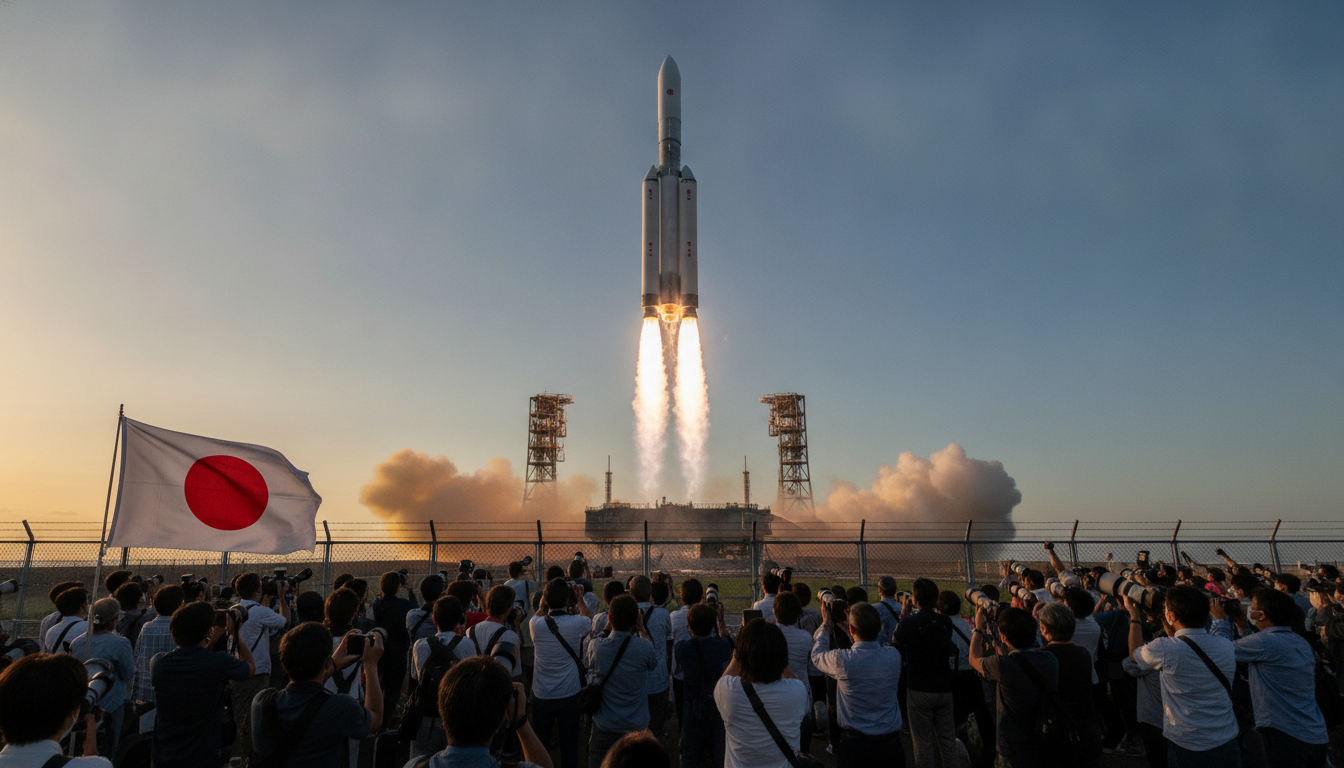
H3 rocket resumes flights from Tanegashima in new "30" configuration, probing prior failure
Japan’s H3 rocket resumed flights on June 12, 2026, launching the new "30" configuration from Tanegashima to validate design changes and probe last failure.
The H3 rocket, Japan’s next-generation launch vehicle, lifted off from the Tanegashima Space Center at 09:53 JST on June 12, 2026, marking the sixth flight in the programme and the debut of the so-called "30" configuration. The mission carried a 1.6-tonne dummy primary payload alongside six small secondary satellites, aiming to place them into an orbit near 580 kilometres. JAXA and partner industry engineers described the flight as both a technical demonstration of a new vehicle form and a test to clarify causes behind the programme’s suspension six months ago.
Launch confirmed at 09:53 JST from Tanegashima
The countdown proceeded under clear weather and the rocket achieved liftoff on schedule from the Yoshinobu launch complex on Tanegashima. Ground telemetry and video feeds showed nominal initial ascent and stage separation events consistent with mission design. Officials monitored performance across propulsion, guidance and stage separation systems to confirm the transition to orbit.
Vehicle configuration and payload mix explained
The sixth H3 vehicle is a two-stage rocket approximately 57 metres long and weighing roughly 271 tonnes at liftoff. Unlike earlier flights that used strap-on boosters, this flight employed the "30" configuration, which relies solely on the core stage’s three main engines without lateral booster units. Alongside a 1.6-tonne dummy satellite, six small satellites ranging from about 9 to 65 kilograms rode as secondary payloads, reflecting a growing commercial market for rideshare opportunities.
Design changes behind the "30" configuration
The "30" form is one of three planned H3 variants, identified by engine and booster combinations tailored to mission requirements and cost targets. Developers say the configuration is intended to simplify integration and lower operational costs for certain payload classes. The shift to this configuration required adjustments in structural loads, engine throttling profiles and flight software, all of which were focal points for engineers during mission rehearsals and the launch itself.
Inquiry into previous failure and response
This flight also served as a follow-up to an earlier anomaly that halted H3 operations about six months prior, with teams conducting targeted tests to validate corrective actions. JAXA engineers reported extensive ground and component-level investigations in the intervening months and implemented both hardware modifications and revised procedures where analyses indicated vulnerability. Public statements emphasized the importance of learning from the anomaly to restore program reliability and customer confidence.
Commercial and strategic importance for Japan
Restoring regular H3 launches is central to Japan’s ambitions to maintain sovereign access to space for both government and commercial satellites. The H3 programme was developed to replace and succeed the H2A series while cutting launch costs and expanding mission flexibility. For domestic satellite operators and international customers, a dependable H3 service is seen as a keystone for Japan’s presence in the global launch market and for national security and scientific missions.
Industry reaction and international context
Industry partners and observers are watching closely to gauge how the H3 will compete with other medium-class launchers worldwide. The successful demonstration of multiple configurations would broaden the vehicle’s market appeal and could attract additional commercial rideshare contracts. At the same time, transparent reporting of anomaly investigations and clear recovery steps are expected to factor heavily in customer decisions and bilateral partnerships.
Japan’s space sector will now focus on post-launch data analysis and the health of the deployed payloads, with engineers poring over telemetry to confirm in-orbit insertion accuracy and subsystem margins. If telemetry confirms nominal performance throughout the flight sequence, program managers are likely to accelerate plans for subsequent H3 flights and customer missions.
The outcome of this flight will shape near-term scheduling for the H3 programme and influence how quickly Japan can expand its domestic launch cadence and international service offerings.

