
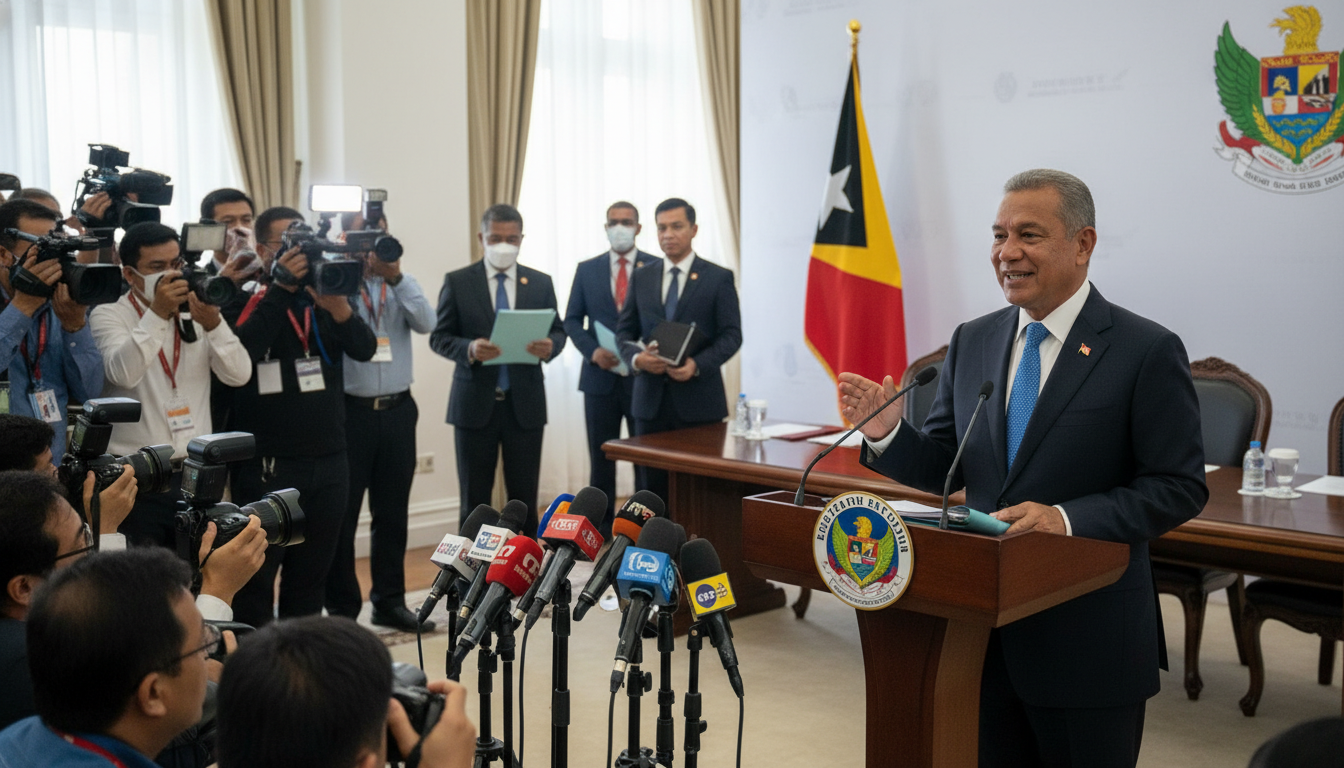
Ramos-Horta Says Greater Sunrise Gas Field Agreement Could Be Signed in July
East Timor President Ramos-Horta says a deal to develop the Greater Sunrise gas field with Australia could be signed in July, boosting national revenues.
East Timor President Jose Ramos‑Horta told interviewers on June 11 that an agreement to develop the Greater Sunrise gas field with Australia could be finalized as early as July, a development that would follow the cessation of the country’s last producing field in 2025 and offer a critical new revenue source. The president framed the potential signature as the culmination of prolonged negotiations over how to develop and share income from the Timor Sea resource, and he stressed the urgency given East Timor’s need to replace lost production. Markets, government planners and international energy firms are watching closely because a signed deal would unlock a multi-year development process for a field long viewed as pivotal for the young nation’s fiscal future.
East Timor president: Greater Sunrise gas field deal imminent
In an online interview on June 11, President Ramos‑Horta indicated that negotiators had narrowed differences sufficiently to set a potential signing window for July, describing the milestone as realistic if final technical and commercial terms are agreed. He emphasized the importance of the agreement for East Timor’s economic stability after the country’s last producing field went offline in 2025, and said the government is prepared to move quickly to secure investment and begin the next stage of development. Officials in Dili have reiterated that a signed deal would not itself start production but would clear the way for detailed project planning, contractual commitments and regulatory approvals.
Background on the Greater Sunrise reserves
The Greater Sunrise gas field lies in the Timor Sea and has long been regarded as one of the region’s most significant untapped natural gas resources, attracting attention from governments and energy companies for more than two decades. Discussions over how to develop the field have included proposals for a central processing facility, onshore and offshore options, pipelines and liquefied natural gas facilities, and the choice of development concept has major implications for revenue sharing, jobs and environmental oversight. Because the field straddles maritime interests and involves foreign partners, the technical complexity has been matched by diplomatic and commercial negotiations that have delayed final investment decisions until now.
Economic impact after East Timor’s 2025 production halt
The potential agreement comes at a time of heightened fiscal sensitivity for East Timor, whose last producing field ceased operation in 2025 and left a gap in public revenues that the government must fill to sustain services and development plans. Government officials and external advisers have framed the Greater Sunrise development as a long‑term source of export earnings, fiscal receipts and employment, but they also caution that revenue flows will not be immediate and depend on construction timetables, market conditions and gas pricing. For a nation that has relied heavily on hydrocarbons, the timing of a deal and the speed of subsequent project milestones are central to budget planning and investor confidence.
Negotiation points and proposed timeline toward signature
Key negotiation topics reportedly include the fiscal regime and revenue split, the choice of development model—whether to prioritise onshore processing in Timor‑Leste or an offshore solution tied to facilities in Australia or regional partners—plus infrastructure routing, environmental safeguards and the allocation of contractor roles. President Ramos‑Horta’s July target suggests negotiators believe those sticking points can be resolved in weeks rather than months, but any signature would still be followed by a phase of detailed engineering, investor financing and regulatory clearances before construction can begin. Observers note that even with a signed agreement the path to first gas is typically measured in several years, underscoring the distinction between a political deal and project delivery.
Australia–East Timor relations and regional implications
The Greater Sunrise talks sit against a backdrop of evolving Australia–East Timor relations, including normalization of maritime boundaries that has created a framework for cooperation while leaving complex project‑level decisions to be settled by commercial and political negotiation. A signed agreement would likely ease bilateral tensions over resources and could serve as a template for managing cross‑border energy projects in the Indo‑Pacific, with implications for regional supply chains and investor appetite. Major energy companies and neighbouring states will be attentive to how the deal allocates environmental responsibilities and disaster‑risk mitigation, which remain politically sensitive and economically consequential.
Next steps for development and revenue management
If a signature is achieved in July as the president suggested, the next steps will include final investment decisions by project partners, environmental and social impact assessments, legislative or parliamentary approvals in East Timor and the mobilization of construction capital and contractors. The government will also need to set transparent revenue management and oversight mechanisms so that eventual gas income supports development priorities, reduces dependence on external aid and builds fiscal resilience. Donor institutions and multilateral banks may be engaged to facilitate financing, while companies will press forward with engineering, procurement and construction schedules that will determine when first gas—and therefore meaningful revenue—arrives.
A July signing, if it materializes, would mark a major diplomatic and commercial break‑through for East Timor and Australia, but it would also start a demanding implementation phase that will test the capacity of national institutions, investors and regulators to turn a headline agreement into sustainable energy production and public benefit.

