
U.S. to Use Japan’s $550 Billion Investment Pledge to Back Nuclear Power Expansion and Export Drive
U.S. Commerce Secretary says part of Japan’s $550 billion investment pledge will fund U.S. nuclear plant construction and expansion to boost exports, jobs, and energy security.
The United States will direct part of Japan’s $550 billion investment pledge toward building and expanding nuclear power plants, U.S. Commerce Secretary Howard Lutnick said in Washington on Tuesday. Lutnick described the move as a strategic effort to "take a leading position to export around the world" and to strengthen bilateral industrial ties. The announcement follows high-level talks between U.S. officials and Japanese counterparts aimed at deepening cooperation on clean energy infrastructure.
U.S. plan links Japan’s $550bn pledge to nuclear projects
The Commerce Department indicated that a portion of the Japanese investment package will be allocated to nuclear construction and modernization in the United States. Officials see nuclear energy as a core element of decarbonization strategies and an exportable technology where U.S. firms can compete globally. The commitment is expected to support both large-scale reactor projects and emerging modular technologies.
The linkage of the funds to nuclear projects signals a coordinated industrial strategy between the two governments. Beyond capital, the effort is designed to mobilize private-sector financing and supply-chain partnerships to scale up production and deployment. Sources close to the discussions say the United States aims to present competitive offers for overseas markets as American companies expand capacity.
Bilateral talks involved senior U.S. and Japanese ministers
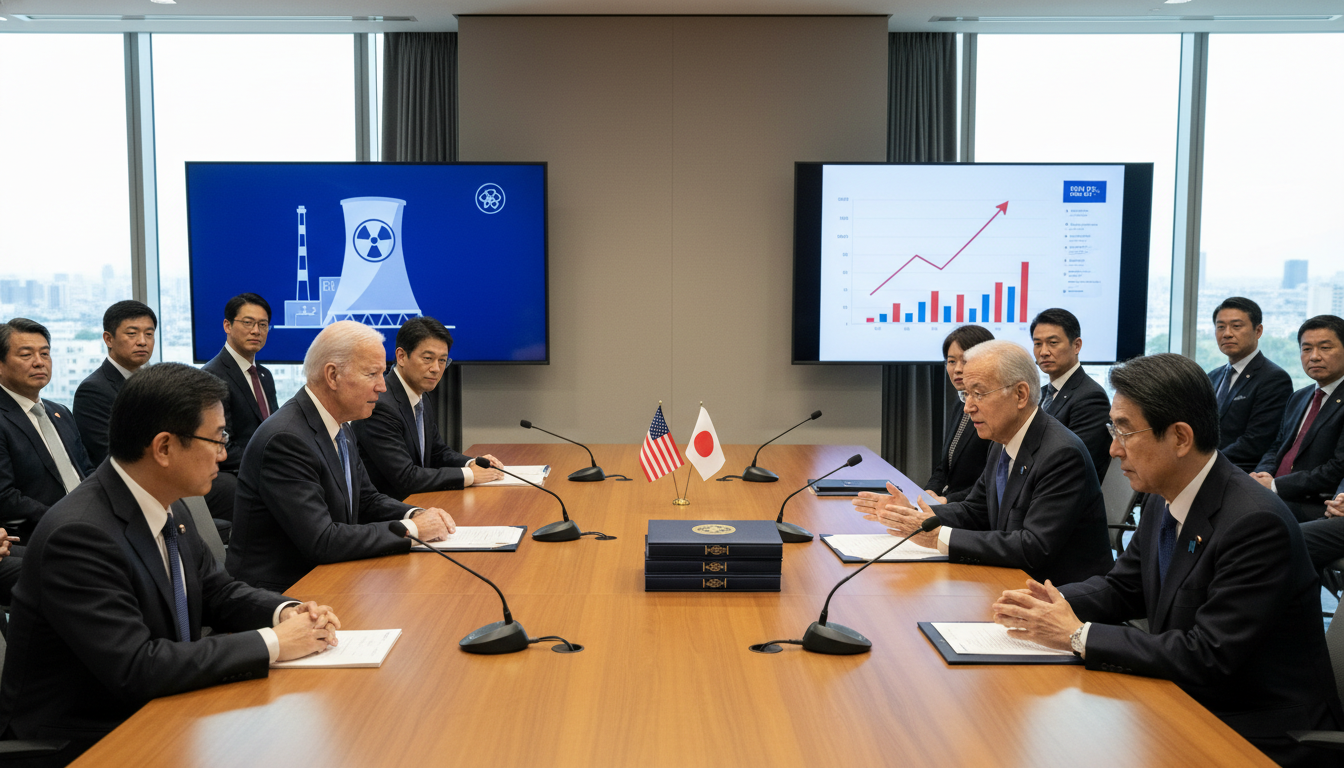
Commerce Secretary Lutnick held talks with Japanese officials, including Minister Ryosei Akazawa, during his Washington visit. The conversations focused on investment channels, regulatory alignment, and opportunities for joint ventures in advanced reactor technology. Both sides emphasized the economic benefits of closer cooperation and the potential to create manufacturing and construction jobs.
Officials described the meetings as part of an ongoing dialogue to translate large-scale pledges into practical projects. Japanese leaders have outlined broad investment ambitions, and U.S. counterparts are now detailing areas where that capital could be most effective. Discussions also touched on export promotion mechanisms and the roles of development banks and private investors.
Planned uses: construction, modernization and export preparation
Planned allocations are expected to cover new reactor construction, upgrades to existing facilities, and factory-scale production of components for both conventional and small modular reactors (SMRs). U.S. industry officials say front-loaded investment will help reduce costs and shorten delivery timelines for domestic and international projects. Enhanced manufacturing capacity would also enable American vendors to bid more aggressively for global contracts.
Investment could fund workforce training, factory expansion, and the development of supply chains that meet stringent nuclear standards. Proponents argue these measures will make U.S. offerings more attractive to countries seeking low-carbon baseload power. The approach aims to convert capital commitments into demonstrable industrial capability.
Economic and industrial implications for U.S. regions
Regions with heavy engineering, fabrication and construction capacity are likely to see increased activity if projects proceed. State and local officials in manufacturing hubs have been preparing to compete for contracts tied to reactor builds and component production. Supporters say the multiplier effect from nuclear construction can create long-term employment and renew domestic manufacturing.
Private investors and utilities are weighing opportunities against regulatory and permitting timelines, with several companies signaling interest in partnerships. Economists caution that while the scale of investment could stimulate growth, actual job creation will depend on project approvals and sustained funding. Market analysts are watching for concrete project announcements that would translate pledges into orders.
Regulatory, safety and public acceptance challenges
Expanding nuclear capacity faces well-known hurdles: lengthy licensing, stringent safety oversight, and public concerns about waste and plant siting. Regulators in the United States and Japan will need to coordinate on standards and approvals if cross-border collaboration grows. Experts say harmonizing technical requirements and streamlining permitting processes are essential to accelerate deployment.
Community engagement and transparent planning will also be critical to securing local consent for new or upgraded sites. Proponents contend that modern reactor designs and robust safety frameworks can mitigate risks, but opponents remain focused on long-term waste management and cost uncertainties. Policy-makers will need to address these issues to sustain public and political support.
Geopolitical and climate context for nuclear cooperation
The initiative comes as nations seek reliable, low-carbon energy sources to meet climate targets while reducing reliance on fossil fuel imports. Strengthening a U.S.-Japan industrial partnership around nuclear technology also has geopolitical dimensions, bolstering allies’ access to secure energy infrastructure. Backers argue this collaboration can offer an alternative to state-backed competitors in global markets.
Analysts note that expanded exports of U.S. nuclear technology could reshape market dynamics in regions planning major power-system expansions. For climate policy, the addition of nuclear baseload capacity is seen by some as necessary to complement intermittent renewables. How Japan’s pledge is allocated and implemented will be watched closely by governments, investors and environmental stakeholders.
The coming months are likely to bring more detail on specific projects, financing mechanisms and timelines as officials translate the pledge into actionable plans. Stakeholders on both sides say the effort could mark a significant step toward boosting nuclear supply chains and positioning U.S. firms for larger roles in global clean-energy markets.

