
SpaceX IPO Rockets Higher on Nasdaq Debut as Valuation and Asia Growth Questions Loom
SpaceX IPO stuns markets as shares jump on Nasdaq debut; analysts question $1.75T valuation amid limited Starlink and AI uptake in Asia and regulatory scrutiny.
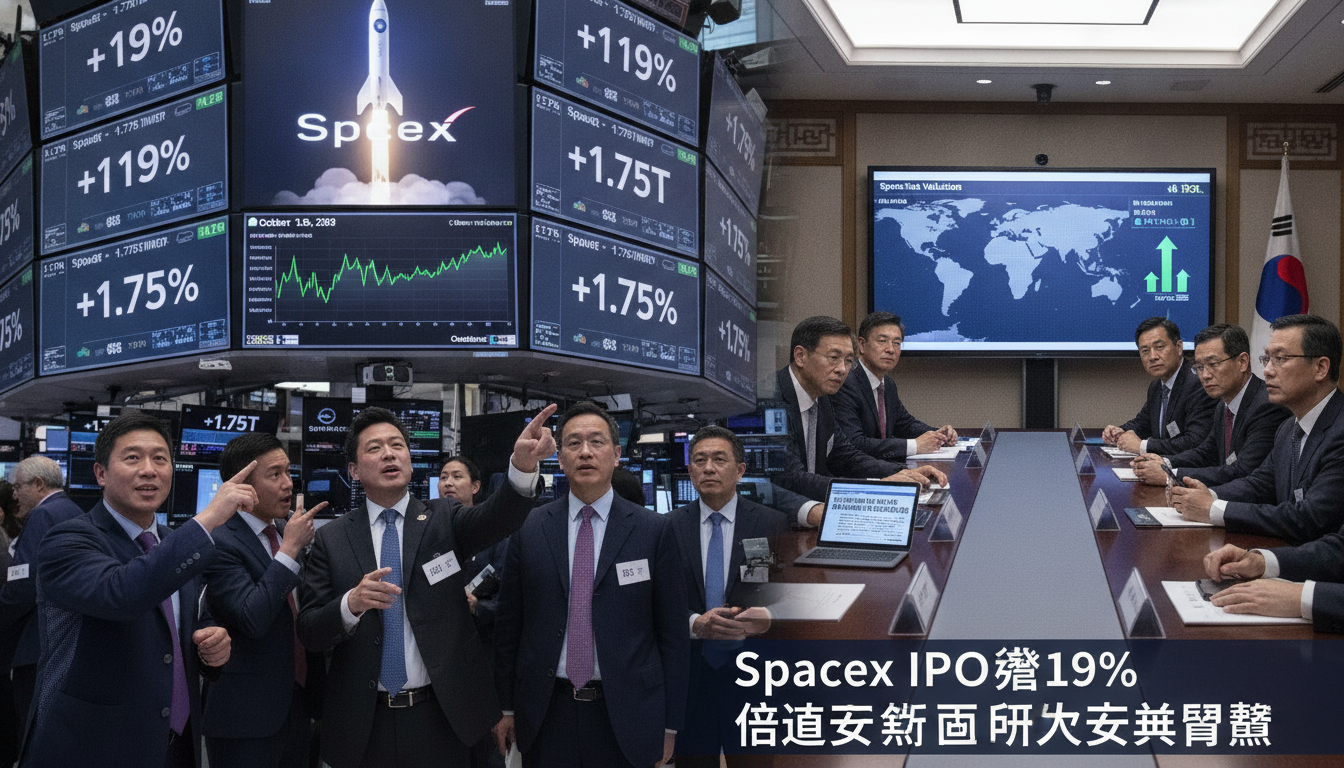
Elon Musk’s SpaceX made a dramatic entrance to public markets as the SpaceX IPO priced at $135 per share and closed sharply higher in its first day of trading on Nasdaq. Market data showed the stock rose nearly 20% on debut, valuing the company at roughly $1.75 trillion and elevating Mr. Musk’s net worth into record territory. While the immediate market reaction rewarded the company’s long-awaited listing, analysts and investors quickly focused on the durability of growth assumptions underpinning that valuation.
Shares Soar on First Trading Day
Shares in SpaceX climbed substantially on the opening trading session, reflecting strong retail and institutional demand after the IPO pricing. The jump sent the company’s market capitalization into the trillions and underscored investor appetite for high-profile tech and space ventures. Trading volumes were heavy as market participants adjusted positions and liquidity providers established quotes around the new ticker.
Market commentators noted that first-day gains are not uncommon for hyped offerings, but they also warned that early momentum can mask longer-term performance risks. Short-term optimism will need to be tested against quarterly results and updated guidance from SpaceX as public disclosure obligations increase.
Valuation Tops $1.7 Trillion
The SpaceX IPO established an implied valuation around $1.75 trillion based on the offering price, a figure that places the company among the most valuable global corporations. That valuation reflects investor expectations not only for launches and satellite services but also for a wider commercial ecosystem tied to space infrastructure and artificial intelligence. Pricing assumptions baked into that figure assume rapid scale-up of revenue streams that have yet to fully materialize.
Analysts say the headline number raises questions about whether near-term revenue and margin improvements can justify such lofty multiples. Several sell-side and independent analysts emphasized the importance of forthcoming disclosures, including detailed revenue segmentation and growth forecasts, to validate investor confidence.
Asia Adoption of Starlink and AI Remains Limited
Despite SpaceX’s global ambitions, uptake of its Starlink satellite broadband service and related AI offerings in Asia has lagged behind expectations, according to industry observers. Regulatory hurdles, spectrum allocations, local incumbents, and affordability have slowed rollout and adoption in several key markets across the region. These constraints complicate revenue projections that rely on rapid international expansion.
Executives and market strategists note that Asia is critical for long-term growth, given its large population and digital demand, but that converting potential into paying subscribers will require regulatory approvals, partnerships with local carriers, and competitive pricing. Until those elements are in place, analysts say the contribution from Asian markets to overall revenue could be smaller and slower than some investors have modeled.
Core Revenue Streams and Growth Challenges
SpaceX’s business is anchored in three primary areas: launch services, Starlink broadband, and technology licensing or data services that increasingly intersect with artificial intelligence. Launch contracts with government agencies and commercial customers remain a stable source of revenue, supported by the company’s reusable rocket technology. Starlink, while promising, is still scaling and faces higher capital expenditure as the constellation and ground infrastructure expand.
Bringing AI services to market represents both an upside and a complexity, as commercializing advanced AI tied to satellite data and edge connectivity involves new product development and customer acquisition cycles. Investors will be watching margins closely, since heavy upfront investment in satellites, ground stations, and R&D could weigh on free cash flow for several years.
Investor Skepticism and Analyst Warnings
Following the SpaceX IPO, several market analysts issued cautionary notes about the assumptions baked into forward-looking models. Skeptics pointed to the company’s dependence on continued technological execution and favorable pricing for launch services and satellite broadband. The risk of slower-than-expected subscriber growth or heightened competition could lead to significant downward revisions in long-term profit estimates.
Portfolio managers highlighted the importance of diversification and rigorous valuation stress tests when adding newly listed mega-cap names to holdings. Some institutional investors signaled they would wait for a few quarters of public filings before materially increasing exposure.
Regulatory and Geopolitical Risks
SpaceX’s expansion faces a complex patchwork of regulatory approvals across jurisdictions, especially for satellite services that rely on spectrum coordination and licensing. Governments in Asia and elsewhere are scrutinizing foreign-controlled telecommunications infrastructure, which could complicate Starlink deployments or require joint ventures with local firms. Geopolitical tensions and export-control regimes also add uncertainty for advanced space and AI technologies.
Regulators may impose conditions that affect pricing, market access, or data handling, and any such measures could slow go-to-market plans. Observers say transparent engagement with authorities and clear compliance frameworks will be essential for SpaceX to sustain its international rollout.
Public investors now hold a greater stake in SpaceX’s future performance, and the company will be required to publish more detailed financials and risk disclosures than it did as a private firm. These filings, along with quarterly results and management commentary, will be closely parsed for signs that revenue growth and margin expansion are tracking the aggressive forecasts that contributed to the IPO valuation.
Market reaction in the weeks ahead will hinge on whether SpaceX can convert investor enthusiasm into consistent operational milestones and whether it can demonstrate scalable revenue from Starlink and nascent AI services, particularly in strategically important Asian markets.

