
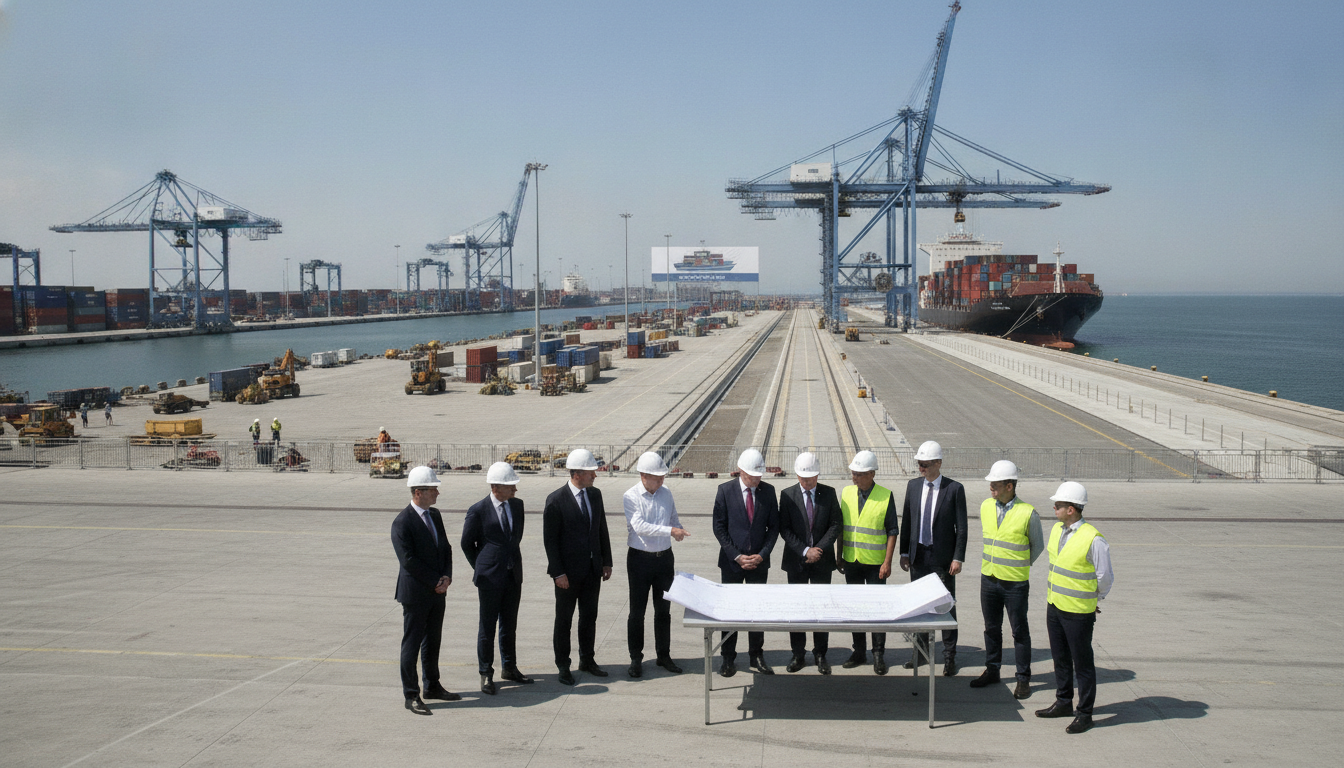
Rijeka port expansion will quintuple container handling capacity, Croatia says
Rijeka port expansion will quintuple terminal capacity as Croatia aims to become a maritime gateway from Asia to Central and Eastern Europe, boosting trade.
Croatia announced a major Rijeka port expansion that the government says will dramatically increase container handling capacity at the northern Adriatic terminal. Deputy Prime Minister Oleg Butkovic said the terminal upgrade is designed to quintuple handling volumes, part of a broader push to position Rijeka as a primary maritime gateway linking Asia and Central and Eastern Europe. The plan reflects growing interest in shifting portions of Asia–Europe trade flows to Adriatic routes and reinforcing inland connections to the region.
Government confirms capacity target for Rijeka terminal
Deputy Prime Minister Oleg Butkovic publicly described the expansion as central to Croatia’s transport strategy, noting the terminal upgrade will multiply current throughput by five times. Authorities framed the project as both an economic and strategic investment, intended to capture rising demand for containerized freight and to relieve pressure on Western European ports. Officials say the increased capacity will allow Rijeka to handle larger vessels and higher-frequency services, though precise handling metrics were not disclosed.
The announcement follows intensive government-level planning and signals a renewed focus on maritime infrastructure as a driver of national growth. While detailed technical plans remain in development, the commitment to a quintuple increase sets a clear benchmark for contractors and potential investors. The government has emphasized that achieving the capacity target will require coordinated improvements across quay, yard, and hinterland transport systems.
Ambition to link Asia and Central Europe through Rijeka
Croatia is presenting the Rijeka port expansion as a linchpin for connecting Asian exporters and carriers with markets in Central and Eastern Europe. Officials say the enhanced terminal will shorten transit times for goods destined inland, offering an alternative corridor to traditional northern European hubs. The strategy aims to capture traffic moving between China, Southeast Asia and inland European manufacturing and consumption centers.
Policymakers emphasize that the port’s location on the northern Adriatic gives it a geographical advantage for transshipment and onward rail and road connections. Rijeka’s role as a maritime gateway depends on synchronized upgrades in rail links and customs processing to ensure prompt onward delivery. The government has highlighted that effective intermodal links will be essential to translating seaborne capacity into competitive transit times.
Planned infrastructure works and intermodal links
Officials describe the project as more than berth expansion: it includes modernizing container yards, installing advanced handling equipment, and upgrading access roads and rail connections. Authorities pointed to plans for deeper berths and strengthened quays to accommodate larger container ships and heavier cargo flows. Port managers will also need to expand yard storage and logistics services to prevent bottlenecks once volumes rise.
Intermodal connections are a particular focus, with government statements stressing the need for reliable rail corridors into Central and Eastern Europe. Improvements to customs procedures and digital freight systems were cited as complementary steps to reduce dwell times. The success of the Rijeka port expansion will depend as much on these hinterland upgrades as on terminal infrastructure.
Economic impact for Croatia and the region
If realized, the expansion could generate sustained growth in port-related employment, logistics services and ancillary industries across the region. Authorities expect higher throughput to stimulate investments in warehousing, trucking, and rail freight operations, and to enhance Croatia’s role in regional supply chains. Increased port activity may broaden revenue streams for local and national government through fees, concessions, and associated economic activity.
Beyond national benefits, the Rijeka port expansion could shift cargo flows within Central and Eastern Europe, offering shippers alternative routing options. Regional manufacturers and distributors could gain from shorter overland legs for some trade lanes, potentially lowering overall logistics costs. Analysts caution, however, that capture of traffic will hinge on competitive pricing, reliable services, and timely infrastructure delivery.
Financing options and investor interest remain under discussion
Government spokespeople say financing models for the Rijeka port expansion are under active discussion, including combinations of public funding, private concessions and foreign investment. Officials have indicated openness to international partners that can provide capital, technical expertise, and shipping relationships. The scale of the capacity target makes private-sector participation and export-credit facilities likely components of any final financing package.
Authorities also underscored the need for transparent procurement and compliance with regulatory standards to attract reputable investors. Negotiations will balance national control with incentives for investors to commit capital and long-term operational expertise. The government has not released a definitive timetable for tendering or construction start dates, signaling that detailed commercial arrangements remain to be finalized.
Competition and environmental considerations for the northern Adriatic
Croatia’s ambition for Rijeka comes amid a competitive landscape of ports across the northern Adriatic and Mediterranean that are also pursuing capacity and connectivity upgrades. Port operators in neighboring countries have been expanding terminals and improving rail links, creating a regional contest for transshipment and hinterland traffic. Rijeka will need to differentiate through service reliability, pricing, and efficient customs and rail services.
Environmental and community impacts are likely to be factors as expansion plans progress, with port authorities expected to carry out impact assessments and mitigation measures. Officials have acknowledged the importance of minimizing emissions, protecting coastal ecosystems, and managing increased vehicle movements. Balancing economic objectives with sustainability commitments will be a key element of the project’s public acceptance.
The Rijeka port expansion represents a strategic gamble by Croatian authorities to capture a larger share of Asia–Europe maritime trade by boosting terminal capacity and strengthening inland links. Delivering on the government’s quintuple-capacity goal will require coordinated investment, timely construction, and effective regional partnerships to turn the Adriatic gateway vision into operational reality.

