
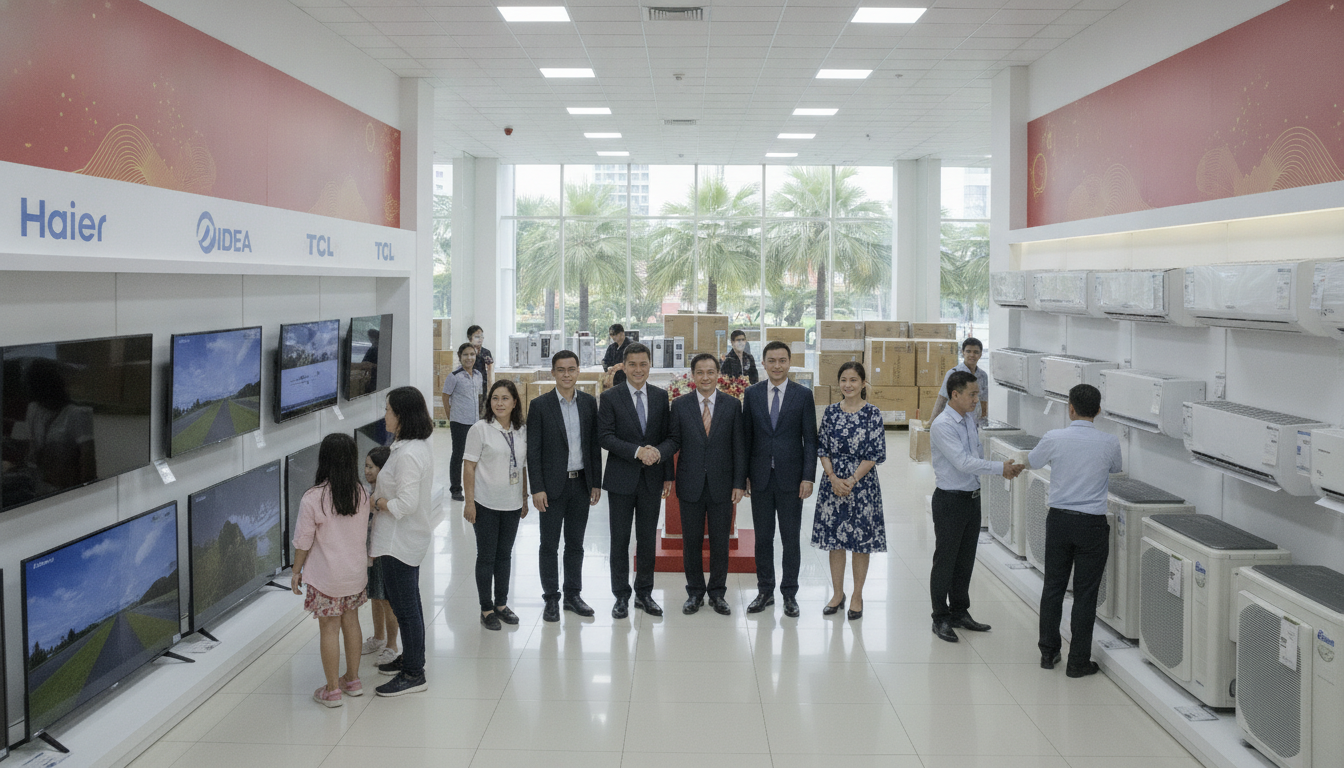
Chinese home appliance brands gain ground in Southeast Asia as TVs and air conditioners attract younger buyers
Chinese home appliance brands are expanding in Southeast Asia, winning market share with low-cost TVs, air conditioners, 24/7 support and youth-focused features.
Chinese home appliance brands have steadily increased their foothold across Southeast Asia over the past five years, driven by strong demand for televisions and air conditioners. Retailers and consumers in Singapore, Kuala Lumpur and Jakarta report rising sales as manufacturers combine aggressive pricing with larger screens, feature-rich designs and round-the-clock service. Young buyers, in particular, are choosing these products for their smart functionality and modern styling, shifting purchasing patterns in urban markets.
Market share gains concentrated in TVs and cooling appliances
Chinese producers have focused investment on televisions and air conditioners, categories that deliver scale and margin quickly. The combination of competitive components sourcing and streamlined supply chains has enabled brands to undercut established competitors on price while offering larger displays and energy-efficient compressors. In several regional markets this strategy has translated into double-digit share increases in the TV segment and rapid uptake of split and inverter air conditioners.
Younger consumers favor features and design over brand heritage
Younger shoppers in metropolitan areas are prioritizing screen size, app integration and modern aesthetics, reducing the premium formerly commanded by legacy brands. These consumers are more likely to evaluate products on social media reviews and online videos than on long-standing brand reputation. Manufacturers have responded by bundling smart-TV platforms, seamless smartphone pairing and contemporary industrial design to appeal directly to this demographic.
After-sales services and 24/7 support strengthen competitiveness
Beyond low sticker prices, Chinese companies are investing in after-sales support to address quality and trust concerns that once limited their reach. Round-the-clock customer service lines, extended warranties and rapid spare-parts networks have become selling points in urban centers. Retailers say these services help convert first-time buyers into repeat customers, particularly for higher-consideration purchases like large-screen TVs and inverter air conditioners.
Retail and distribution strategies vary by market
Brands are tailoring their market entry to local conditions, pairing e-commerce launches with experiential stores and partnerships with regional distributors. In Indonesia and Malaysia, for example, a mix of online flash sales and pop-up outlets has driven awareness quickly while keeping overheads low. In Singapore the emphasis has been on warranty transparency and certified service centers to meet higher regulatory and consumer-expectation standards.
Local manufacturers respond with product upgrades and price adjustments
Established regional and Japanese manufacturers are not standing still as Chinese brands expand. Competitors are accelerating product refresh cycles, cutting margins on entry-level models and highlighting long-term reliability and energy efficiency certifications. Industry analysts say this push-and-pull is prompting faster innovation across the category, with improved product choices for consumers but tighter profitability for suppliers.
The competitive dynamic also raises questions about long-term brand positioning and trade relations, with some policymakers monitoring market concentration and local employment impacts. Import regulations, energy-efficiency labeling and certification processes are under closer scrutiny in several countries, factors that could affect pricing and distribution in the year ahead.
Chinese home appliance brands have combined aggressive pricing, modern design and improved services to change the purchase calculus for many Southeast Asian consumers. Television and air-conditioner sales illustrate how product features and after-sales support can overcome prior brand hesitancy, particularly among younger buyers. As these trends continue, regional markets will see intensified competition, sharper product differentiation and a wider range of choices for consumers.

