
Japan World Cup 2026: Strong Team Spurs at Least $180 Million Consumer Boost as Jerseys Sell Out
Japan World Cup 2026 drives consumer spending from jerseys to beer as fans rally after June 21 public viewing; analysts estimate economic impact at $180 million.
Japan’s strong start at the World Cup 2026 is already lifting consumer spending across the country, with fans snapping up official shirts, stocking up on beverages and flocking to public viewings. The surge in demand follows Japan’s match against Tunisia, with large crowds gathering in cities such as Yokohama on June 21 to celebrate a decisive goal. Industry estimates now suggest the tournament will generate at least $180 million in economic activity in Japan tied to merchandise, hospitality and fan events.
Merchandise Sales Surge Across Retail Channels
Official Japan kits and related apparel have seen rapid sales since the tournament began, with the most sought-after items selling out at major outlets. Adidas’ away jerseys have reportedly gone out of stock in many locations, prompting restocking rushes and elevated secondary-market activity. Sporting goods retailers and online sellers say demand is being driven not only by match-day purchases but also by tourists and corporate clients ordering in bulk for viewing events.
Physical stores near public viewing sites and shopping districts reported sustained foot traffic, while e-commerce platforms showed spikes in search queries and basket sizes for national team merchandise. Retail analysts note that shortages of popular sizes and limited-edition items are intensifying purchases, pushing some consumers to buy additional apparel and accessories to secure memorabilia while it remains available.
Hospitality and Beverage Spending Rise with Home Viewing
Sales of food and drink tied to match viewing have climbed as fans choose bars, izakayas and home gatherings to watch Japan’s fixtures. Supermarkets and convenience stores reported increased sales of beer, snacks and ready-made party platters in the days surrounding matches. Local pubs and viewing venues near stadiums and fan zones have extended opening hours and added reservation systems to manage larger-than-usual crowds.
Hospitality operators say the uplift reflects both regular supporters and casual viewers drawn by the team’s performance. Hotels in host and nearby cities have reported higher occupancy among domestic travelers attending public screenings, boosting ancillary spending on dining and transport.
Public Viewing Events Draw Large Crowds in Urban Centers
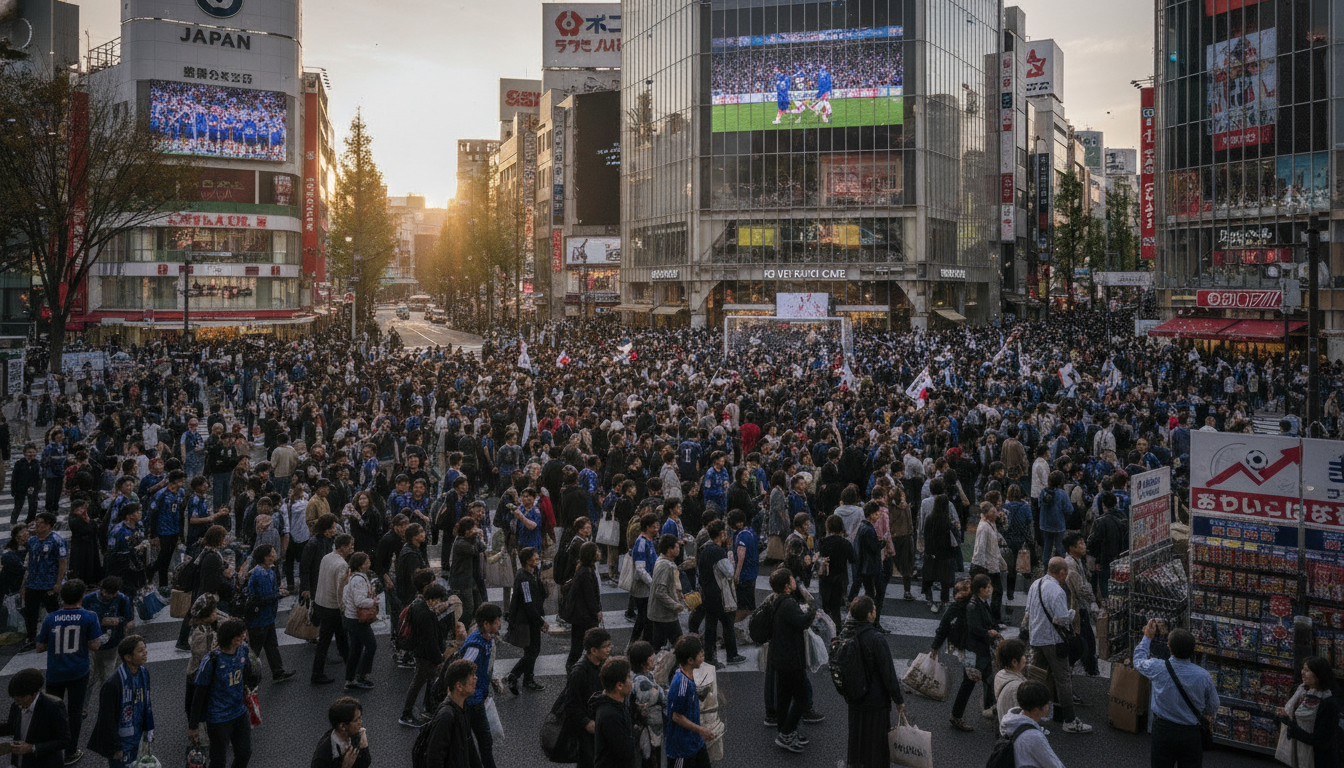
Public screenings have become focal points for communal support, with an image of fans cheering in Yokohama after a June 21 goal emblematic of nationwide enthusiasm. Municipalities and private promoters have organized fan zones that combine live screenings with food stalls and sponsor activations. These events have generated ticket and concession revenue while amplifying local economic activity in surrounding neighborhoods.
Event organizers emphasize crowd management and safety as attendance swells, coordinating with local authorities to handle transport and sanitation. The visibility of large-scale public viewings has also created marketing opportunities for brands seeking to associate with the national team and capitalize on high viewer engagement.
Analysts Place Economic Impact at Minimum $180 Million
Economic observers point to a constellation of spending channels—merchandise, hospitality, transport and event services—as drivers of the projected boost to Japan’s economy. Analysts who provided the $180 million estimate cited direct consumer outlays and short-term business gains tied to increased footfall and higher per-visit spending. They caution that the final figure will depend on how far Japan advances in the tournament and whether consumer momentum sustains through later rounds.
Beyond direct sales, ancillary benefits such as heightened media exposure, increased tourism for later matches and longer-term merchandise demand could raise the economic contribution. Conversely, supply shortages and logistical bottlenecks could temper upside by limiting transactions at peak moments.
Retailers Race to Restock and Manage Supply Chains
Manufacturers and distributors are responding to the unexpected velocity of demand by accelerating shipments and reallocating inventory to high-demand markets. Supply-chain managers say lead times for popular shirts remain strained because of global manufacturing schedules and transportation constraints. Some retailers are prioritizing fulfillment for in-store pickup and local deliveries to satisfy immediate consumer demand.
Secondary effects are visible in pricing trends, with certain scarce items seeing premium resale activity that benefits brokers rather than official retailers. Industry groups are urging fans to purchase through authorized channels and warning that counterfeits and inflated offers can undermine both consumer protection and the official economic impact.
Fans and businesses alike are watching how the remainder of Japan’s World Cup 2026 campaign will influence spending patterns. If the team progresses to later rounds, analysts expect a continued boost in merchandise sales, higher rates of public viewing attendance and stronger hotel bookings tied to in-person screenings.
Consumer sentiment appears buoyant, and companies from retail to hospitality are adjusting quickly to capture a share of the tournament-driven spending. The immediate picture is clear: Japan’s performance on the pitch is translating into measurable commercial activity on the ground, with at least $180 million already cited as a baseline estimate of impact.
Looking ahead, the persistence of demand and the ability of suppliers and venues to meet crowds will determine whether the economic lift becomes a lasting feature of the 2026 World Cup for Japan and its businesses.

