
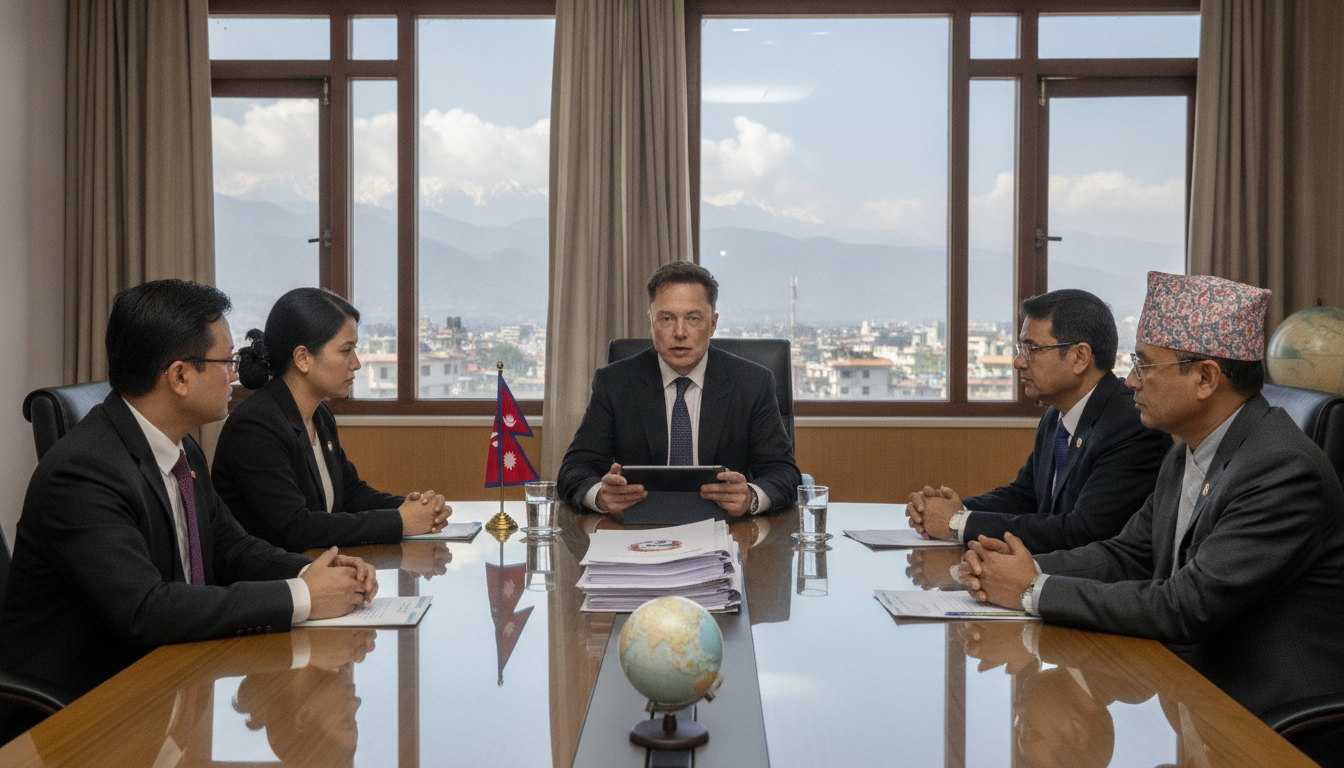
Starlink Nepal Faces Ownership Standoff as SpaceX Offers Satellite Internet to Himalayan Regions
SpaceX’s Starlink Nepal plan promises satellite internet across the Himalayas but conflicts with Kathmandu’s foreign ownership rule, triggering a legal standoff.
Nepal is weighing an offer from SpaceX to extend its Starlink satellite internet service across remote Himalayan districts, a move that could dramatically expand connectivity in areas where terrain has long limited access. The proposed Starlink Nepal arrangement has run into a legal requirement in Kathmandu for local participation in foreign telecom operations, and SpaceX is resisting sharing ownership with a domestic partner. The dispute raises immediate questions about how Nepal will balance rapid digital access for rural communities with laws designed to keep strategic assets under local control.
SpaceX Proposes Starlink to Nepal
SpaceX has pitched Starlink as a fast route to close Nepal’s digital divide by providing low-latency broadband without the need for costly ground infrastructure. Officials and industry observers say the service could reach villages and high-altitude settlements that remain underserved by fibre and mobile networks. The proposition arrives amid growing demand for reliable connectivity from schools, health clinics and small businesses across the country.
Nepal’s Ownership Requirement Triggers Dispute
Nepalese law requires significant local participation in telecommunications ventures, a provision intended to protect national interests and ensure domestic oversight. SpaceX’s reluctance to cede equity or establish a local joint-venture partner has clashed with that regulatory framework. Government ministers and legal advisers are now examining whether exceptions can be made or whether the company will need to restructure its proposal to comply.
Technical Promise and Mountainous Obstacles
Satellite internet like Starlink can bypass the logistical barriers posed by Nepal’s steep valleys and dispersed settlements, offering coverage without laying extensive fibre across rugged terrain. However, deployment faces practical hurdles including equipment import rules, power supply in off‑grid locations, and the need for ground stations and licensed spectrum. Local technicians will also require training to install and maintain user terminals in harsh weather and remote conditions.
Geopolitical Context with Competing Networks
SpaceX’s entry is viewed in part as an alternative to Chinese-backed network projects that have been active across South Asia. Nepali officials have publicly framed the Starlink offer as expanding vendor choice and enhancing national resilience. Analysts caution, though, that the dispute over ownership is not merely commercial; it reflects broader concerns about control of critical communications infrastructure in a region where external influence is closely watched.
Regulatory Timeline and Legal Options
Kathmandu faces a narrow window to resolve the impasse if it wants to accelerate rural connectivity before the onset of winter and the approach of harvest seasons when connectivity needs rise. Regulators can consider options such as temporary licences, conditions on data localisation, or mandated operational guarantees without share transfer. Legal experts note that any deviation from established ownership rules could set a precedent affecting future foreign investments in strategic sectors.
Potential Impact on Rural Communities
For many Nepalis living outside urban centres, delayed approval for Starlink Nepal means continued reliance on slow or intermittent connections that hamper education, telemedicine and commerce. A speedy and compliant rollout could enable remote classrooms to join virtual lessons, allow health workers to consult specialists over video, and give farmers market information in real time. Conversely, prolonged litigation or regulatory deadlock would slow those potential gains and keep digital exclusion entrenched.
Business and Economic Considerations
SpaceX’s negotiating stance reflects broader corporate approaches to market entry, where control over operations can be central to a firm’s ability to manage service quality and security. Nepal must weigh immediate economic benefits such as jobs and digital entrepreneurship against long-term regulatory consistency and national-security obligations. Private-sector players and development partners are monitoring the clash for indications of how Nepal will manage large foreign infrastructure propositions going forward.
The coming weeks are likely to determine whether Starlink Nepal proceeds under a modified arrangement, through regulatory carve-outs, or stalls until a negotiated ownership structure is agreed. Kathmandu’s decision will shape not only connectivity outcomes for remote Himalayan communities but also how the country is perceived by global tech investors and regional partners.

