
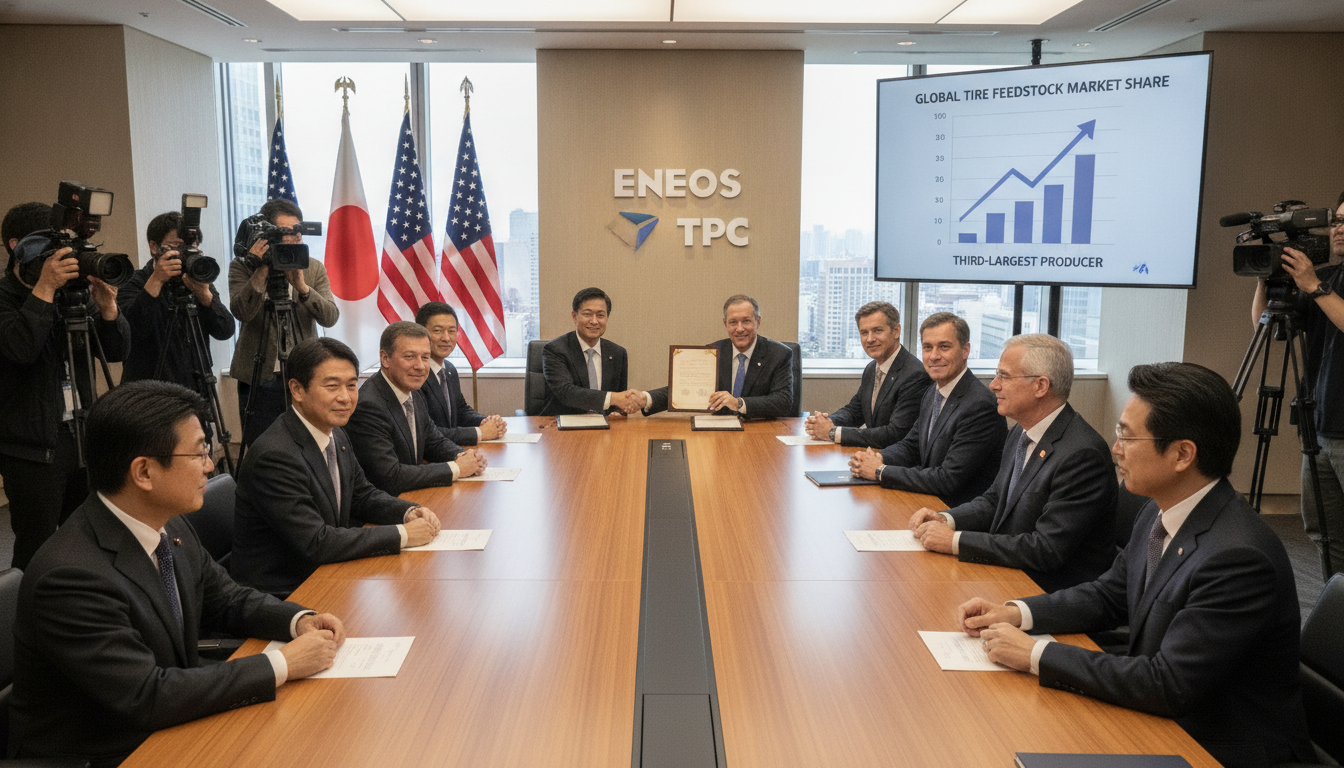
Eneos to Buy TPC Holdings and Become Third‑Largest Producer of Tire Feedstock
Eneos to buy TPC Holdings in a move to expand its U.S. chemical footprint, aiming to become the third‑largest global producer of feedstock used in auto tires and diversify revenue.
Eneos to buy TPC Holdings and acquire the Texas chemical maker for an undisclosed sum, the Japanese oil major announced on Friday. The transaction will give Eneos a significant new position in the global supply of feedstock used in auto tires, elevating the company to the third‑largest producer in that market. Company officials framed the deal as part of a strategic push into the U.S. chemical sector, which they note is roughly eight times the size of Japan’s domestic market.
Eneos Announces Purchase of TPC Holdings
Eneos confirmed that it will purchase all of TPC Holdings, a Texas‑based chemical manufacturer, though the price and several commercial terms were not disclosed. The announcement emphasized full ownership transfer rather than a minority stake or joint venture, signaling an intent to integrate the asset firmly into Eneos’s chemicals portfolio. The acquisition was described internally as a step to strengthen feedstock supply chains for downstream customers, particularly tire makers.
Eneos said the deal reflects a broader repositioning effort as the company seeks to move beyond a traditional oil and fuels business. Management has been publicly seeking opportunities in chemical manufacturing that can provide more stable margins and closer ties to industrial demand in the United States. The company highlighted the strategic importance of scale in chemicals and the need for a stronger presence in the North American market.
Deal Would Make Eneos a Major Tire Feedstock Producer
According to the announcement, the combined operations following the acquisition would place Eneos among the top global producers of feedstock used in automobile tire manufacturing. That ranking is expected to provide the company with greater pricing influence and more direct access to a large and steady industrial buyer base. Feedstock for tires is a cyclical but essential commodity that links petrochemical output to the automotive supply chain.
Market observers expect the enlarged production capacity to alter competitive dynamics for suppliers of raw materials to tire manufacturers. A larger producer can offer long‑term contracts and supply security, factors that are increasingly valued by tire makers facing raw material volatility. Eneos’s move underscores an industry trend toward vertical integration where energy companies secure downstream chemical outlets for crude and refined inputs.
Strategic Push into the U.S. Chemical Market
Eneos framed the acquisition as a targeted entry into the U.S. chemical market, which company statements describe as roughly eight times larger than Japan’s market. The United States offers scale, feedstock availability and proximity to major industrial customers, elements Eneos cited as drivers behind the transaction. Securing a manufacturing base in Texas places the company in one of North America’s densest clusters of petrochemical production and logistics.
The Texas footprint also aligns with broader corporate objectives to diversify revenue and reduce exposure to fluctuations in refined fuel demand. By expanding chemical operations in a larger market, Eneos aims to capture growth from industrial demand tied to vehicle production and other manufacturing sectors. The acquisition also provides operational levers to optimize feedstock flows between refining and chemical production.
Implications for Supply Chains and Auto Industry Suppliers
The transaction is likely to reassure tire manufacturers that supply of essential feedstock will be more stable, potentially encouraging longer‑term purchasing arrangements. Access to a major producer in the United States may shorten lead times and reduce transportation costs for North American tire plants. For global customers, the deal offers another source of supply diversified from incumbent producers in Asia and Europe.
At the same time, competitors and intermediaries that trade or blend feedstock could face renewed pricing pressure as Eneos seeks to capture higher margins through direct sales. Supply chain managers in the automotive sector monitor such shifts because raw material availability and cost are key inputs into tire pricing and production planning. Over time, the enlarged producer base could influence contract structures and inventory strategies in the tire supply chain.
Market Context and Industry Trends
The acquisition follows a period in which several oil and energy companies have sought greater exposure to the chemicals sector as margins in fuels have faced structural pressure. Chemicals often offer higher returns and closer ties to industrial customers, making the segment attractive for companies looking to rebalance portfolios. Eneos’s purchase of a U.S. chemical manufacturer fits this pattern and highlights crossborder consolidation in the petrochemicals space.
Investors and market participants will be watching how Eneos integrates the Texas operations and whether the company pursues additional acquisitions to build scale. The success of the deal will depend on execution, cost synergies, and the company’s ability to convert increased production into stable long‑term contracts with tire makers and other end users. Capital expenditure plans and operational integration will be closely scrutinized in the months after closing.
Next Steps and Standard Closing Conditions
Eneos indicated the transaction remains subject to customary closing conditions and regulatory approvals in the relevant jurisdictions. The company did not provide a specific timetable for completion or outline detailed integration steps for the acquired assets. Management statements suggested the firm will prioritize operational continuity for existing TPC customers as it implements integration measures.
Regulatory scrutiny in the United States and elsewhere will focus on competition in feedstock markets and any potential concentration effects, though Eneos has framed the deal as an enhancement of supply options rather than a consolidation designed to restrict output. The parties are expected to provide further details as approvals proceed and integration milestones are established.
The acquisition marks a notable shift in Eneos’s strategy toward building chemical manufacturing scale in the United States, and it could reshape supplier relationships in the tire industry if executed as outlined. Timeframes for full integration and the realization of strategic benefits remain contingent on regulatory clearances and management execution.

