
Takaichi Proposes Amendment to Vice-Capital Plan Referendum Rules
PM Takaichi on June 22 urged narrowing the voter base for a referendum tied to the vice-capital plan, seeking to shift any "to" name change to assembly approval.
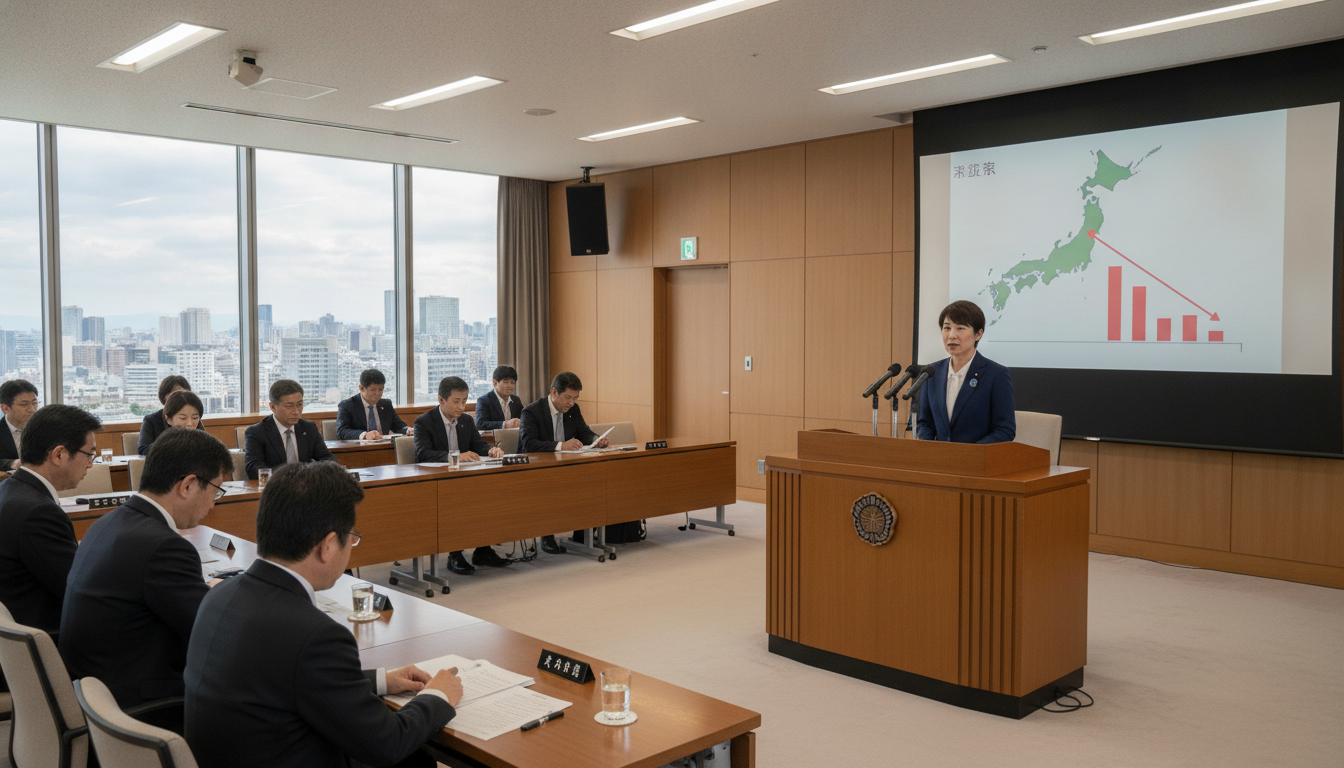
Prime Minister Sanae Takaichi met with Nippon Ishin leader Hirofumi Yoshimura at the Prime Minister’s Office on June 22 to press for changes to legislation implementing the vice-capital plan. The prime minister requested amendments that would limit who can vote in a referendum on introducing special wards and remove a provision allowing a prefecture-wide referendum on changing a prefecture’s name to a "to" (metropolis). The proposal signals a direct intervention to break a policy stalemate between the ruling Liberal Democratic Party (LDP) and Japan Innovation Party (Nippon Ishin).
Details of Takaichi’s proposed changes
Prime Minister Takaichi asked that the clause permitting a prefecture-wide referendum be deleted from the bill governing the vice-capital plan. Under the existing draft, a prefecture designated as a vice-capital could put both the establishment of special wards and a change of designation to "to" to a vote of the entire prefectural electorate.
Takaichi further proposed that any change of a prefecture’s official designation to "to" should be decided not by popular referendum but by a vote of the prefectural assembly followed by national approval. The move is intended to separate the politically sensitive naming decision from the direct-resident ballot on ward restructuring.
Contested scope of the referendum electorate
Debate has centered on whether the referendum should encompass the entire prefecture or be limited to affected municipalities. LDP members raised objections to a prefecture-wide franchise, arguing that voters in distant communities with minimal impact from special wards should not determine the outcome. Those objections prompted senior LDP officials to share a draft amendment with Nippon Ishin ahead of the June 22 meeting.
Opponents of the prefecture-wide approach have warned that broadening the electorate could produce results that do not reflect the preferences of residents in the municipalities where governance changes would be most felt. Proponents counter that a prefecture-wide vote better captures the interests and risks shared across the region.
Ishin’s strategy for the Osaka metropolis bid
Nippon Ishin has been preparing for a third referendum on the Osaka metropolis proposal and has set its sights on holding the vote in April next year. The party believes that widening the electorate to include the entire prefecture could improve the chances that the measure passes, a calculation shaped by past votes and local political dynamics.
Ishin leader Hirofumi Yoshimura told reporters after the meeting that Takaichi’s changes would represent “very significant alterations” to the bill, and he signaled readiness to accept a final decision if terms were settled. Yoshimura said he hoped a conclusion could be reached within a day or two, underscoring the urgency of reconciling the two parties’ positions ahead of campaign planning.
Negotiation dynamics and party calculations
The June 22 tête‑à‑tête reflects a broader bargaining process between the LDP and Nippon Ishin as they seek to finalize language that will be submitted to the Diet. Party working groups had already been engaged in talks but had failed to bridge key differences, prompting Takaichi to step in personally. Her intervention signals how high the stakes are for both governing partners.
For the LDP, narrowing the referendum electorate reduces the risk that voters outside core urban areas would sway a locally focused governance reform. For Nippon Ishin, securing a broader franchise could be decisive for its flagship Osaka effort. Both parties must weigh political expediency against principles of local autonomy and democratic legitimacy as they work toward a compromise.
Legal and administrative implications
Shifting the mechanism for a name change from referendum to assembly approval with national sign-off raises legal and administrative questions. A move away from direct public voting could invite criticism that an important symbolic change is being removed from popular decision-making. At the same time, assembly approval followed by national ratification may offer a clearer statutory pathway to implement a change without the contested logistics of a prefecture-wide plebiscite.
Officials will also need to address how any amendment affects timing, campaign rules, and voter education for a potential April referendum. Administrative preparations for a large-scale vote, including eligibility lists and ballot design, depend on the final scope of the electorate and the specific legal mechanism chosen for approval of the "to" designation.
Political analysts say the outcome of the negotiation could set a precedent for how major municipal restructuring is handled across Japan. The vice-capital plan, framed as a measure to ensure continuity of government functions during large-scale disasters, intersects with long-standing debates over decentralization, regional identity and the balance of local versus national authority.
Both parties indicated they would move quickly to finalize text that could be presented to their rank-and-file and to the Diet. The coming days are likely to see intensified consultations between party officials, legal advisers and local prefectural leaders as they seek a path that preserves policy aims while remaining politically viable.
The resolution of this dispute will determine whether the vice-capital plan proceeds with a referendum structure acceptable to coalition partners and whether Osaka’s bid for a metropolitan reorganization can be advanced on the timeline Nippon Ishin seeks.

