
Government Presents Imperial Household Law Amendment Outline; Diet Leaders Defer Approval of Detailed Guidelines
June 22, 2026 — Diet presiding officers accepted an outline for the Imperial Household Law amendment on imperial family numbers; detailed guidelines deferred.
Japan’s Diet presiding officers on June 22, 2026 accepted the government’s outline for an Imperial Household Law amendment designed to secure the number of imperial family members. The move advances core policy proposals while stopping short of approving more detailed implementation guidelines, which were sent back for further revision. Lawmakers and government officials said a full party representatives’ meeting will be held on June 25, 2026 to seek broader agreement before a formal bill is submitted in the current Diet session.
Presiding officers accept outline but withhold guideline approval
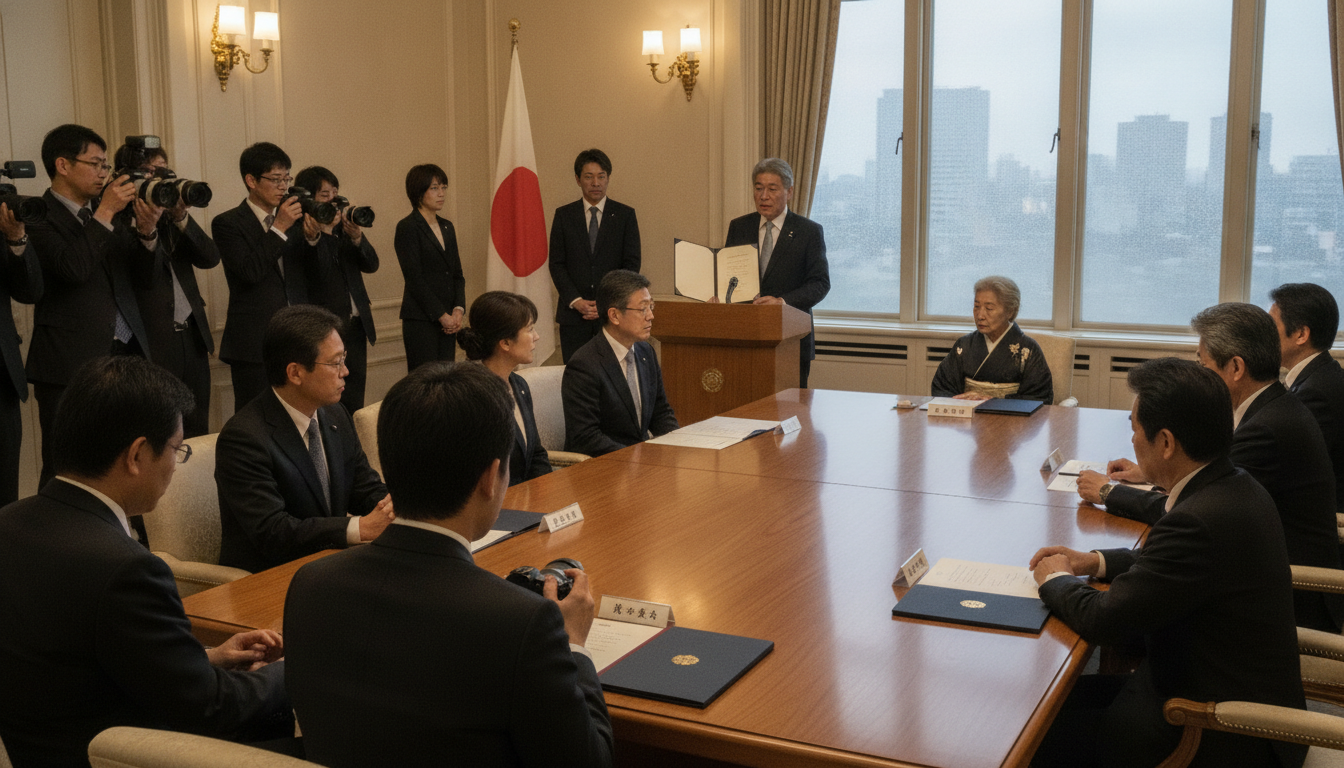
The presiding officers of both chambers met at the House of Representatives speaker’s official residence on June 22, 2026, where Chief Cabinet Secretary Minoru Kihara presented both the amendment outline and a more detailed set of guidelines. The officers approved the broad outline, which follows the “consensus of the legislature” compiled earlier this month, but requested revisions to parts of the proposed guidelines and therefore did not grant immediate approval to the detailed text. Officials said the deferment was intended to allow party representatives to discuss contentious points at the planned June 25 meeting.
Key measures set out in the amendment outline
The outline sets two principal measures to address the shrinking pool of imperial family members: first, to permit female members of the imperial family to retain their imperial status after marrying outside the imperial family; and second, to allow male-line males from former imperial branches to be brought into the imperial family through adoption. The proposals are intended as structural changes to the Imperial Household Law to stabilize ceremonial and public duties carried out by members of the imperial household.
Marriage, adoption and transitional provisions described
Under the outline’s provisions regarding marriage, if a female imperial family member marries a non-imperial male, the marriage would require deliberation by the Imperial Household Council. The outline does not specify the status that would be conferred on the spouse or any children born after such a marriage. As a transitional measure, current female imperial family members would retain the option, of their own volition, to leave imperial status upon marriage. For adoptions, the outline targets males aged 15 or older from the 11 former imperial houses that lost imperial status in 1947, limiting candidates to those without spouses or children.
Unresolved questions and legal ambiguities
The outline leaves several politically sensitive and legally complex issues unresolved. It states that adoptees would not acquire succession rights, and it does not explain how the law would treat children born to adoptees or the status of spouses and descendants of adopted members. The document also includes a provision for periodic reassessment, specifying that the measures would be reviewed every 30 years as needed, but it provides little detail on triggers or review mechanisms. Legal scholars and party officials are expected to press for clarification during inter-party talks, with some observers warning that gaps could create future constitutional or administrative disputes.
Political timetable and next procedural steps
Following the June 22 acceptance of the outline, the presiding officers scheduled a full meeting of party representatives for June 25, 2026 to deliberate the detailed guidelines and seek amendments acceptable to a broader political spectrum. Government sources said the executive branch intends to revise the guidelines based on that discussion and then submit a formal Imperial Household Law amendment bill to the Diet, with the aim of securing enactment during the ongoing session. Lawmakers noted that timing will depend on negotiations among ruling and opposition parties and on whether outstanding technical and symbolic issues can be resolved.
Implications for imperial succession and public duties
Supporters of the proposed changes argue the amendment would provide immediate relief to the institutional strain on the imperial household by expanding the pool of members available for ceremonial duties. Critics, however, caution that retaining the current male-line succession principle while adding adopted members without succession rights might produce a two-tiered system within the imperial family. The lack of clarity on the status of spouses and children could also raise concerns about equality and the long-term sustainability of the household’s composition.
Japan’s constitutional framework and the public’s sensitivity toward the imperial institution mean that any legal change will carry political and social weight. Party negotiators on June 25 are expected to weigh public sentiment and the need for administrative clarity as they attempt to reconcile competing priorities. The government has framed the measures as pragmatic responses to demographic realities, while some political factions seek more comprehensive answers to succession and status questions.
The June 22 outline advances the policy discussion but leaves critical details unresolved, setting the stage for intensive legislative and public debate in the days ahead.

