
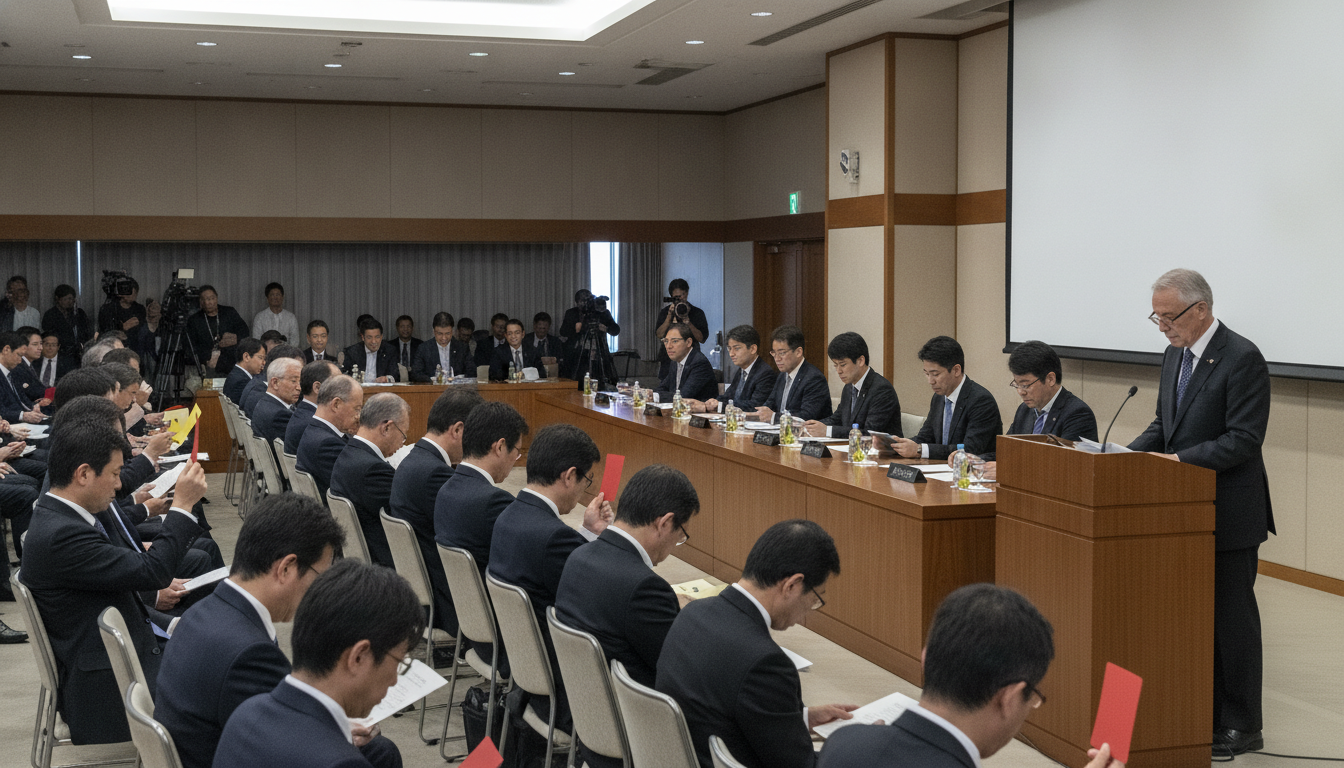
Nissan shareholder vote rejects reappointment of Mizuho-linked director at June 23 meeting
Nissan shareholder vote on June 23 rejected the reappointment of outside director Motoo Nagai, citing independence concerns over his Mizuho Financial Group ties.
Shareholders Reject Nagai Reappointment
The Nissan shareholder vote held on June 23, 2026, resulted in the rejection of the reappointment of outside director Motoo Nagai.
Nagai, a former executive of Mizuho Financial Group, had been included in the company’s slate of 12 director candidates presented at the annual meeting.
The outcome left one seat from the company-backed slate unfilled after shareholders approved the other 11 nominees.
The decision represents an uncommon rebuke of a major corporation’s management proposal and immediately raised questions about governance oversight at Nissan.
Proxy Adviser ISS Cited Independence Concerns
The proxy advisory firm Institutional Shareholder Services (ISS) recommended that investors vote against Nagai’s reappointment.
ISS argued that Nagai’s prior affiliation with Nissan’s main bank, Mizuho Financial Group, meant he lacked the degree of independence appropriate for an outside director.
ISS’s guidance is widely followed by institutional investors and often influences close contests at shareholder meetings.
In this instance, its recommendation appears to have swayed enough shareholders to alter the outcome of a management-supported slate.
Nagai’s Tenure and Committee Assignments
Motoo Nagai has served as an outside director at Nissan since 2019 and was proposed for reappointment to several key roles.
Had he been approved, Nissan planned to reinstate him as chair of the audit committee and as a member of both the nomination and remuneration committees.
Those committee positions are central to board oversight of financial reporting, executive appointments and pay.
With Nagai’s reappointment rejected, Nissan’s planned committee lineups will require revision and could delay governance work scheduled for the coming months.
Board Governance at a Pivotal Moment
Nissan is undergoing a corporate turnaround, and governance stability is a stated priority for management and investors alike.
The rejection of a single candidate from a management-endorsed slate is rare among large Japanese corporations and signals heightened shareholder scrutiny.
Investors’ focus on independence standards reflects broader expectations for stronger oversight following governance controversies in the region’s corporate history.
For Nissan, the vote underscores the challenge of balancing longstanding banking relationships with market demands for independent board composition.
Potential Implications for Bank and Investor Relations
Nagai’s prior role at Mizuho — characterized by ISS as a potential conflict with independent oversight — highlights tensions between traditional bank-company ties and modern governance norms.
Shareholders appeared to give priority to institutional independence over historical links when casting their ballots.
The result may prompt Nissan to reassess how it evaluates director independence and to take a more cautious approach when nominating candidates with close ties to major financial counterparties.
It could also influence how banks and other major corporate stakeholders are represented on public company boards across Japan.
Next Steps for Nissan’s Board and Management
Nissan’s board will need to determine how to fill the vacancy on the audit committee and to reassign committee responsibilities in the short term.
Management and the nomination committee, where composition may now change, are likely to seek consensus among major shareholders on a path forward.
The company may nominate an alternative candidate at a future shareholders’ meeting or address the issue through internal board adjustments permitted under corporate rules.
Whatever approach Nissan chooses, it will occur against a backdrop of investor attention to governance and independence standards.
The rejection of Motoo Nagai’s reappointment at the June 23 shareholder meeting marks a clear signal from investors that candidate independence will be a decisive factor in future board contests at Nissan and potentially at other large Japanese firms.

