
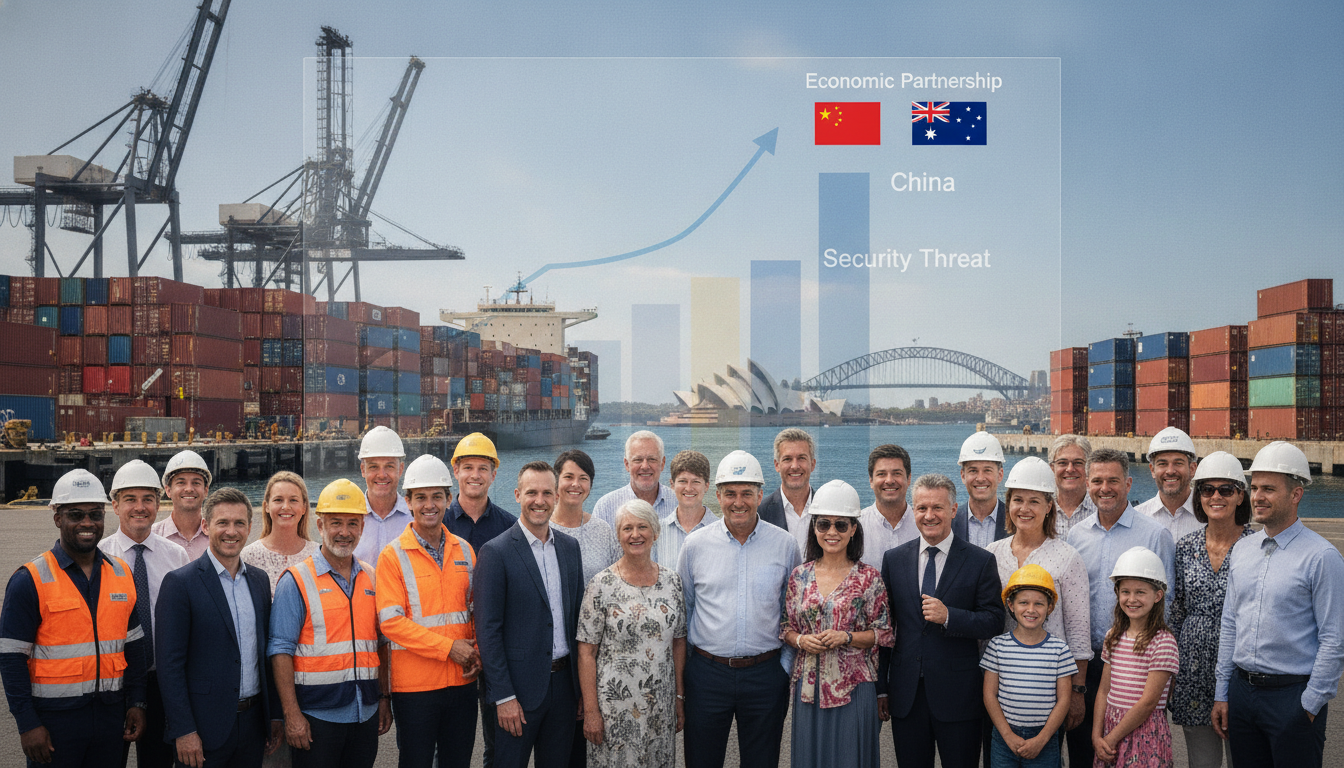
Australia-China relations shift as majority of Australians now view China as economic partner
Majority of Australians now view China as an economic partner, poll shows — a shift in Australia-China relations reshaping trade, public opinion and Canberra’s diplomatic strategy.
A recent annual national poll found a clear majority of Australians now see China more as an economic partner than as a security threat, marking a notable change in Australia-China relations after years of tension during the COVID-19 period. The result signals a pragmatic turn in public sentiment that could influence Canberra’s approach to trade and diplomacy. Political leaders and business groups are watching closely as the shift alters the domestic environment for foreign policy debates.
Poll results show economic emphasis
The poll, conducted this year, reported that more Australians place economic considerations ahead of security concerns when thinking about China. Respondents cited trade, jobs and investment as central factors shaping their views. Analysts say the finding reflects public sensitivity to economic ties amid rising living costs and supply chain concerns.
The change contrasts with earlier years when a larger share of the public highlighted geopolitical risks. The new balance suggests that many voters now weigh economic opportunity heavily when forming opinions about bilateral relations. This does not mean security issues have disappeared, but their salience appears reduced in popular judgment.
COVID-era rifts and their gradual easing
Public attitudes shifted sharply during the COVID-19 pandemic after a series of diplomatic disputes and trade restrictions affected perceptions on both sides. Those years left a residue of mistrust that influenced politics and business relations across the Indo-Pacific. Over time, however, practical pressures — including resumed commerce and negotiated settlements — have helped ease tensions.
The poll indicates that recent diplomatic contacts and trade negotiations have contributed to a more positive temperament among ordinary Australians. Experts caution that mood can pivot quickly if new incidents occur, but for now the trajectory favors a more cooperative economic framing.
Implications for Canberra’s policy choices
For policymakers in Canberra, the poll presents both an opportunity and a constraint. A public leaning toward economic engagement may empower government initiatives to restore fuller trade links and attract investment. At the same time, elected officials must balance those moves with alliance commitments and concerns about strategic competition in the region.
Debates within parliament and among advisers are likely to focus on how to pursue deeper commercial ties without compromising national security. The poll could recalibrate political calculations ahead of legislative or trade decisions, shaping how parties present their foreign policy platforms.
Trade and business ties driving sentiment
Business leaders and exporters have argued that stronger engagement with China supports jobs and growth in Australia’s export-dependent sectors. While not all respondents cited specific industries, the broader economic linkages — from commodities to services — were prominent in survey responses. Companies say clarity and predictability in relations are essential for investment planning.
At the same time, some sectors remain cautious about overreliance on a single market. The poll underscores a pragmatic public view that welcomes economic benefit while expecting government safeguards and diversification strategies to protect national interests.
Security experts and allies voice continuing concerns
Despite the public tilt toward economic priorities, security analysts and Canberra’s allies continue to emphasize strategic risks in the Indo-Pacific. Issues such as military posturing, cyber activity and supply chain vulnerabilities persist as topics of concern for defence officials. These perspectives ensure that security remains part of official planning even as public attention shifts.
Diplomatic channels and defence dialogues are expected to remain active as governments reconcile economic engagement with alliance obligations. The dual-track approach — reinforcing defence ties while expanding commerce — appears to be the working model in official circles.
Outlook ahead of future diplomatic talks
The poll’s timing could influence upcoming diplomatic engagements and trade discussions between the two countries. A softer public stance may give negotiators greater latitude to pursue practical agreements and resolve outstanding trade frictions. Observers expect Canberra to emphasize reciprocal economic benefits while maintaining clear red lines on national security.
How leaders translate public sentiment into policy will depend on events in the region and the domestic political calendar. Continued improvement in bilateral contacts could consolidate the shift reflected by the survey, but sudden crises or new disputes could quickly alter public opinion.
The poll’s takeaway is that many Australians now prioritise economic ties in assessing China, offering Canberra an opening to pursue pragmatic engagement while managing enduring strategic concerns.

