
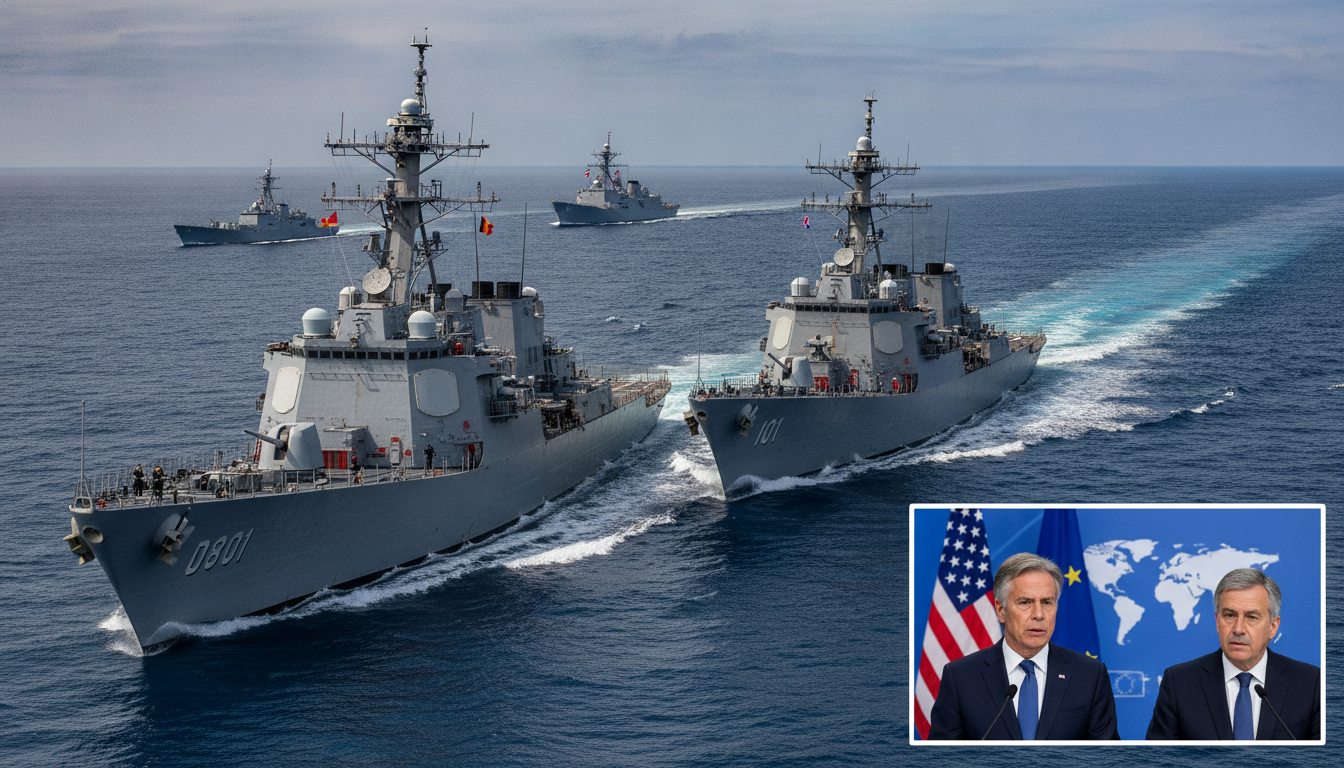
Taiwan tensions escalate as Chinese maritime operations intensify east of the island
Taipei warns Beijing’s naval activity east of Taiwan risks accidental clashes after Japan‑Philippines sea talks; U.S. and European diplomats publicly rebuke China. (156 characters)
Chinese maritime activity east of Taiwan intensifies
Chinese vessels and aircraft have stepped up operations to the east of Taiwan, officials in Taipei and regional observers say, heightening Taiwan tensions across the strait.
Beijing has framed the deployments as a response to recent sea‑boundary discussions between Japan and the Philippines, but the scale and tempo of activity have alarmed maritime safety experts.
Taiwanese authorities report sustained patrols and manoeuvres that place multiple platforms in proximity to commercial shipping lanes and coastguard vessels.
Analysts warn such concentrations increase the chance of accidental collisions and unintended escalation, particularly where rules of engagement between sides remain ambiguous.
Taipei calls Japan‑Philippines talks a ‘pretext’
Senior Taiwanese officials have publicly challenged Beijing’s stated rationale, calling the Japan‑Philippines negotiations a pretext for pressure rather than the principal cause of the operations.
A key official warned that “there is something new happening,” signaling concern that the pattern of activity marks a strategic shift rather than a temporary response.
Taipei argues the diplomatic talks between Tokyo and Manila concern legitimate boundary and resource management issues in their exclusive economic zones.
For Taiwan, the issue is not only the immediate maritime movements but the broader message sent to neighbouring democracies about regional security arrangements.
Coastguard deployments and collision risks increase
Taiwan’s coastguard and naval units have reported closer encounters with Chinese vessels during the recent surge in maritime operations.
Coastguard spokespeople have emphasized readiness to protect shipping and fisheries, while also expressing concern that crowded seas raise the prospect of accidents.
Maritime safety experts point out that many incidents at sea begin as navigation errors or miscommunication in dense operational environments.
With multiple state and paramilitary actors operating near the same routes, the margin for miscalculation is reduced and the potential for an inadvertent clash grows.
U.S. and European diplomats publicly rebuke Beijing
Washington and several European capitals have issued statements condemning coercive behaviour in the waters near Taiwan, increasing international scrutiny of Beijing’s actions.
U.S. and EU officials stressed the importance of maintaining freedom of navigation and of resolving disputes through diplomacy rather than displays of force.
The diplomatic pushback underscores how Taiwan tensions have become a focal point for wider geopolitical competition.
Allies say coordinated messaging aims to deter further escalation while preserving room for diplomatic engagement to reduce immediate risks.
Tokyo‑Manila consultations deepen regional alignments
The Japan‑Philippines talks, which Beijing cites as justification for its maritime activity, reflect growing maritime cooperation among regional democracies.
Tokyo and Manila have been strengthening bilateral consultations on boundaries, resource-sharing and search‑and‑rescue procedures in response to shifting regional dynamics.
For partners in the region, closer coordination is intended to manage disputes peacefully and to improve practical mechanisms for de‑escalation at sea.
However, Beijing treats such collaborations warily, viewing them as challenges to its regional influence and prompting the recent operational response.
Taiwan steps up monitoring and contingency planning
Taipei has increased surveillance and patrols, combining coastguard presence with naval readiness to monitor developments and protect civilian shipping.
Officials say contingency plans are being refined to reduce the risk of accidents and to ensure rapid communication channels with neighbouring states when incidents occur.
Diplomats in Taipei have also urged international partners to support de‑escalatory measures and to reinforce norms that keep commercial and civilian maritime traffic safe.
At the same time, some Taiwanese voices call for clearer rules of engagement and confidence‑building steps to prevent inadvertent confrontations.
As activity east of Taiwan continues to draw international attention, policymakers face a delicate balancing act between deterrence and diplomacy.
The immediate concern is to keep maritime spaces safe while avoiding actions that could precipitate the very confrontation all sides seek to prevent.

