
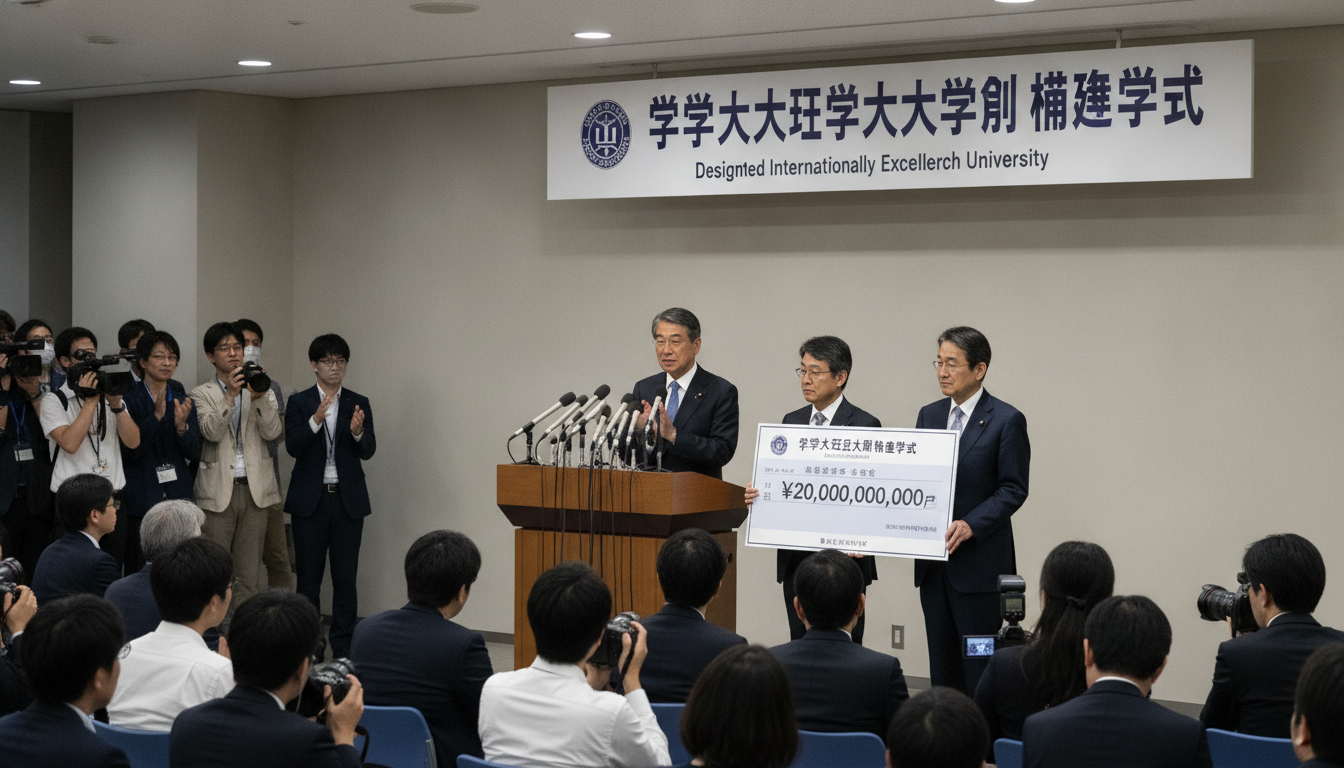
Kyoto University Selected as Internationally Excellent Research University with Initial ¥20 Billion Support
MEXT named Kyoto University an Internationally Excellent Research University on July 3, 2026, granting about ¥20 billion and endorsing a major departmental reorganization
MEXT Announces Kyoto University’s Designation
The Ministry of Education, Culture, Sports, Science and Technology (MEXT) announced on July 3, 2026 that Kyoto University has been formally selected as an Internationally Excellent Research University. The designation, aimed at elevating global research competitiveness, places Kyoto as the third institution to receive the status after Tohoku University and Tokyo University of Science. MEXT said the decision followed a detailed review by an expert panel that confirmed the university met the program’s standards.
The announcement confirms a provisional selection made at the end of 2025 and follows months of monitoring of Kyoto’s reform progress. MEXT emphasized that the designation carries both significant funding and heightened expectations for structural and cultural change within the university. Officials framed the move as part of a broader national effort to reverse a long-term relative decline in Japan’s research standing.
Funding Scale and Program Objectives
The Internationally Excellent Research University program provides sustained, large-scale support to a small number of Japanese universities with the goal of producing world-leading research. MEXT has indicated the program’s annual funding operates at the scale of several tens of billions of yen, designed to enable ambitious hiring, facilities upgrades, and international partnerships. For Kyoto University, the ministry expects initial support in the first year to be roughly ¥20 billion, reflecting the government’s prioritization of the university’s reform plan.
Program architects argue that concentrated investment, tied to concrete organizational restructuring and performance benchmarks, is the most effective way to accelerate competitiveness. MEXT officials noted that funding will be contingent on continued progress against milestones and periodic expert reviews. The ministry also signaled that continued funding for any recipient will depend on demonstrable outcomes in research output, international collaboration, and talent attraction.
Reforms: From Small "kōza" Units to About 20 Departments
A central pillar of Kyoto University’s plan is the overhaul of its traditional research structure, which the university has long organized around roughly 1,000 small research units known as "kōza." Under the reform, those units will be phased out and consolidated into about 20 larger, discipline-based departments intended to foster interdisciplinary collaboration and higher visibility. University leaders told MEXT they aim to create a more open research environment that encourages mobility among scholars and clearer career pathways for early-career researchers.
Kyoto has committed to fully implementing the new department-based system from fiscal year 2029, which begins on April 1, 2029, according to the plan submitted to the ministry. The expert panel cited that implementation timeline as credible and noted the university’s concrete governance changes, including new leadership roles and performance-review mechanisms. Observers say the scale and speed of the reorganization are ambitious for an institution of Kyoto’s size and history.
Assessment Process and Timeline
Kyoto’s formal recognition followed a two-step process: a provisional selection at the end of 2025 and subsequent verification by a MEXT-appointed expert committee. The committee evaluated whether the university’s organizational and governance reforms were being enacted as promised and whether those reforms would realistically support world-class research. After on-site reviews and documentation checks, the panel concluded Kyoto had sufficiently advanced its plans and met the program’s entry standards.
MEXT’s decision underscores the ministry’s insistence on concrete evidence of institutional change rather than promises alone. The expert panel will continue periodic reviews to monitor progress, and future disbursements of program funds will be conditional on meeting set benchmarks. The ministry has framed this approach as a balance between offering generous support and maintaining strict accountability.
Other Universities’ Status in the Program
Kyoto joins Tohoku University and Tokyo University of Science as the third designated Internationally Excellent Research University, completing a first cohort envisioned by the ministry. Meanwhile, the University of Tokyo remains under continued review and has not been approved at this time, a status MEXT attributed in part to ongoing scandals that have affected governance perceptions. The ministry specifically cited a series of problematic incidents in the medical faculty as factors that complicated a clean certification for the University of Tokyo.
Program officials have said that designation decisions will continue to be selective and based on both reform credibility and institutional integrity. The ministry has left open the possibility that additional universities may be designated in future rounds if they can demonstrate comparable reforms and clear plans for using funding to boost global research impact.
Implications for Japan’s Research Landscape
Analysts say Kyoto’s designation is likely to accelerate changes across Japan’s higher education sector by raising the stakes for institutional reform and competition for government support. Large-scale, multi-year funding tied to governance change may incentivize other universities to rethink fragmented research structures and invest in international recruitment. At the same time, critics caution that concentrated funding could widen gaps between elite institutions and the broader university system unless accompanied by complementary measures.
MEXT has framed the program as part of a long-term strategy to bolster Japan’s scientific standing in fields ranging from life sciences to advanced materials. University administrators and researchers will now face the operational challenge of translating organizational reform into measurable research gains, international partnerships, and talent retention over the coming years.
Kyoto’s designation marks a significant step in a government-led initiative to reshape the research ecosystem, and the coming months will reveal how rapidly the university can convert funding and structural change into global research outcomes.

