
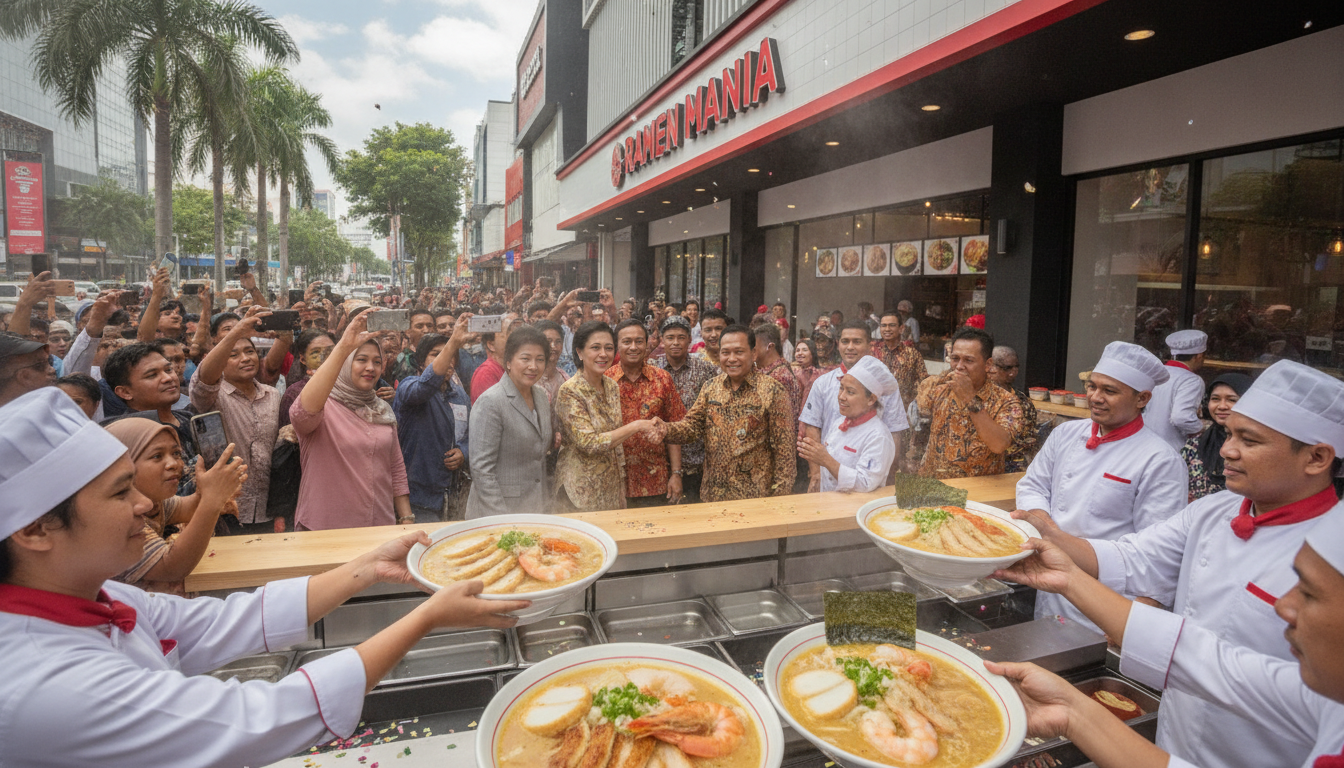
Ramen Mania Indonesia: Chikaranomoto to Build Nationwide Halal Ramen Network
Chikaranomoto’s Ramen Mania debuts halal-certified ramen in Indonesia, replacing pork with chicken and seafood broths as it aims for a nationwide rollout.
TOKYO — Chikaranomoto Holdings, the operator behind Ippudo, said on August 17, 2026 that it will expand its Ramen Mania outlets across Indonesia with halal-certified menus tailored to local tastes. The company is positioning Ramen Mania to capture demand in the world’s largest Muslim-majority market by offering chicken- and seafood-based broths and removing pork from its Indonesian outlets. Executives described the move as part of a broader strategy to convert a regional testing ground into a nationwide network of restaurants. The plan combines product adaptation, certification work and local partnerships to speed expansion across the archipelago.
Chikaranomoto outlines nationwide expansion plan
Chikaranomoto has set out an aim to scale Ramen Mania beyond initial cities and build a national footprint in Indonesia, according to the company announcement. The operator views the country’s large, urbanizing population and rising appetite for dining out as a structural opportunity for growth. Company officials said they will roll out additional outlets through a mix of company-owned stores and local franchise partners to accelerate presence in major islands and secondary cities.
Chikaranomoto also highlighted the strategic value of the Ramen Mania brand as a flexible unit that can be adapted for non-Japanese markets. Ramen Mania outlets will retain core ramen techniques while modifying recipes, service formats and pricing to suit local consumer preferences. This flexible approach is intended to shorten the time from concept to opening and lower execution risks in diverse regional markets.
Menu retooling and halal certification process
Ramen Mania’s Indonesian concept replaces traditional pork-based tonkotsu broths with chicken and seafood alternatives that can be certified halal. The company said it is working with recognized local halal authorities and supply-chain partners to ensure ingredients, kitchen processes and staff training meet certification standards. Halal certification will be a visible feature of the stores to reassure Muslim customers and support wider market access.
Beyond removing pork, the menu adjustments extend to seasonings, condiments and cross-contamination controls in kitchens. Chikaranomoto is investing in supplier audits and dedicated equipment to preserve food-safety standards while meeting religious requirements. The company expects certification work to be a foundation for customer trust and long-term brand acceptance.
Adapting recipes for Indonesian palates
Ramen Mania is changing spice profiles and topping choices to reflect Indonesian flavor preferences, which often favor bolder, spicier dishes. Local research cited by the operator informed recipe tweaks such as chili-based sauces, sambal accompaniments and regionally familiar garnishes. These product changes are designed to balance authenticity with localized taste to attract repeat visitors.
Menu testing will be conducted in select pilot outlets before broader rollouts to ensure consistency and customer appeal. The firm will collect customer feedback and sales data to fine-tune portion sizes, price points and ingredient mixes. This iterative approach aims to reduce the risk of misreading local demand and improve the speed of scale-up.
Market opportunity and competitive landscape
Indonesia’s large population and growing middle class make it a high-priority market for global and regional restaurant groups seeking scale. Ramen Mania will compete with existing local noodle brands, Japanese restaurants, and other international chains that have already adjusted offerings to meet halal requirements. Chikaranomoto believes that a combination of Japanese ramen techniques and explicit halal certification can differentiate Ramen Mania in crowded urban corridors.
Industry observers note that success will hinge on location choice, pricing strategy and the ability to deliver consistent quality across many outlets. Foot traffic in malls, transport hubs and food districts remains critical, while digital ordering and delivery partnerships will expand reach beyond dine-in customers. Chikaranomoto’s experience with its Ippudo business gives it operational know-how, but replication in Indonesia will involve new logistics and marketing challenges.
Operational model, partnerships and supply chain
Chikaranomoto plans to leverage local partnerships for franchising, sourcing and distribution to navigate Indonesia’s fragmented geography and regulatory landscape. Local franchisees are expected to provide market insight, real estate access and on-the-ground management experience. The company has begun engaging suppliers for halal-compliant ingredients and is standardizing procurement to ensure product consistency.
To support rapid growth, Ramen Mania will employ a combination of centralized quality controls and localized decision-making on elements like spice levels and promotions. Training programs for staff will emphasize hygiene, halal procedures and the specific service cadence of ramen dining. The company anticipates that establishing reliable logistics hubs on major islands will be essential to maintaining supply continuity and controlling costs.
Chikaranomoto is positioning Ramen Mania as a Brazil-style blend of Japanese ramen craftsmanship and Indonesian culinary habits, aiming to win a broad customer base through accessibility and cultural sensitivity.
Looking ahead, the company intends to monitor early openings closely and adjust its rollout tempo based on certification timelines, customer response and operational readiness. If pilot stores meet targets, Chikaranomoto expects to accelerate openings over the coming months to build a recognizable nationwide presence. The success of Ramen Mania in Indonesia will be a test case for how Japanese dining concepts can scale in large Muslim-majority markets.

