
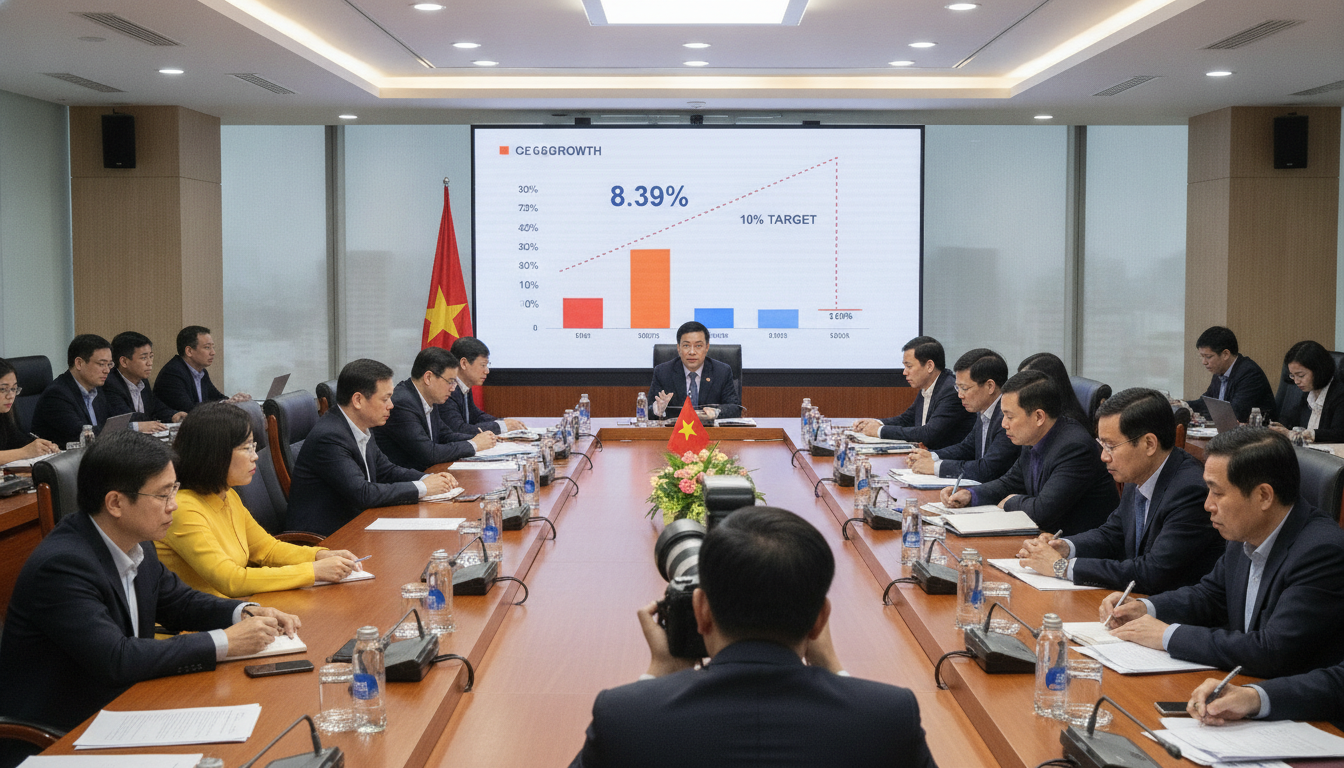
Vietnam economy growth accelerates as Q2 GDP rises 8.39%, raising pressure to meet 10% annual target
Vietnam economy growth accelerates as GDP rose 8.39% in Q2 2026, with first-half expansion of 8.18% heightening pressure on Hanoi to hit its 10% annual goal.
Vietnam’s economy growth accelerated sharply in the April–June quarter, with gross domestic product expanding by 8.39% year-on-year, the General Statistics Office reported on July 3, 2026. The latest figures mark an increase from 7.94% in the January–March quarter and lift the first-half growth rate to 8.18%, underscoring stronger domestic activity ahead of the full-year target.
Second-quarter GDP rises 8.39%
The statistics office attributed the quarter-on-quarter acceleration to stronger output across multiple sectors, notably construction and manufacturing. Year-on-year growth of 8.39% outpaced many regional peers and reflected robust demand for goods and infrastructure investment within Vietnam.
The improvement followed steady expansion earlier in the year, with the Q1 pace of 7.94% now eclipsed by the second quarter, signaling momentum as policymakers weigh options to sustain growth through the remainder of 2026.
Construction and manufacturing drove expansion
Construction activity was a key contributor, supported by large-scale public and private projects aimed at modernizing transport and industrial capacity. Manufacturing also posted solid gains as both domestic orders and overseas demand for electronics and textiles remained firm.
Analysts say the combination of infrastructure spending and factory output is creating positive spillovers into services and employment, helping to lift household incomes and consumer spending in major urban centers.
Exports, ports and external demand
Vietnam’s export-oriented model continued to underpin growth, with ports such as Haiphong in the north serving as vital gateways for shipments to global markets. Trade flows have been sustained by shipments of electronics, garments and machinery, even as global demand shows uneven patterns.
While exports remain a pillar, experts caution that external risks — including slower demand in key markets and shipping disruptions — could temper momentum if they materialize in the second half of the year.
First-half growth of 8.18% and the 10% target
The government’s headline annual growth ambition of 10% — set as a policy goal for 2026 — now faces pressure despite the strong first half. With an 8.18% expansion through June, Hanoi must rely on above-trend growth in the remaining months to close the gap to the 10% objective.
Officials will need to weigh how much fiscal support, public investment or regulatory easing is appropriate to sustain the pace without stoking inflation or creating overheating in specific sectors.
Policy choices and fiscal outlook
Policymakers have a range of tools if they seek to push growth higher, including accelerated budget disbursements for infrastructure, targeted incentives for manufacturing investment and measures to mobilize private-sector financing. Each option carries trade-offs between short-term stimulus and medium-term macroeconomic stability.
Monetary authorities will also be watching inflation and credit growth, balancing accommodative settings that support activity against the need to maintain price stability and financial sector resilience.
Risks to the outlook and corporate response
Despite the upbeat headline numbers, risks remain. Global economic uncertainty, commodity price swings and potential supply-chain constraints could weigh on exports and factory throughput. Domestic risks such as bottlenecks in land acquisition or delays in project approvals could also slow construction-led contributions.
Corporates responding to the data are likely to proceed cautiously, accelerating high-return investments while delaying projects with higher execution risk, which could moderate the overall stimulus effect of private investment.
Vietnam’s stronger-than-expected second-quarter performance provides a clear near-term boost but leaves policymakers with difficult choices about how aggressively to pursue a still-ambitious 10% annual growth target. Continued monitoring of inflation, external demand and investment execution will be critical to sustaining momentum into the latter half of 2026.

