
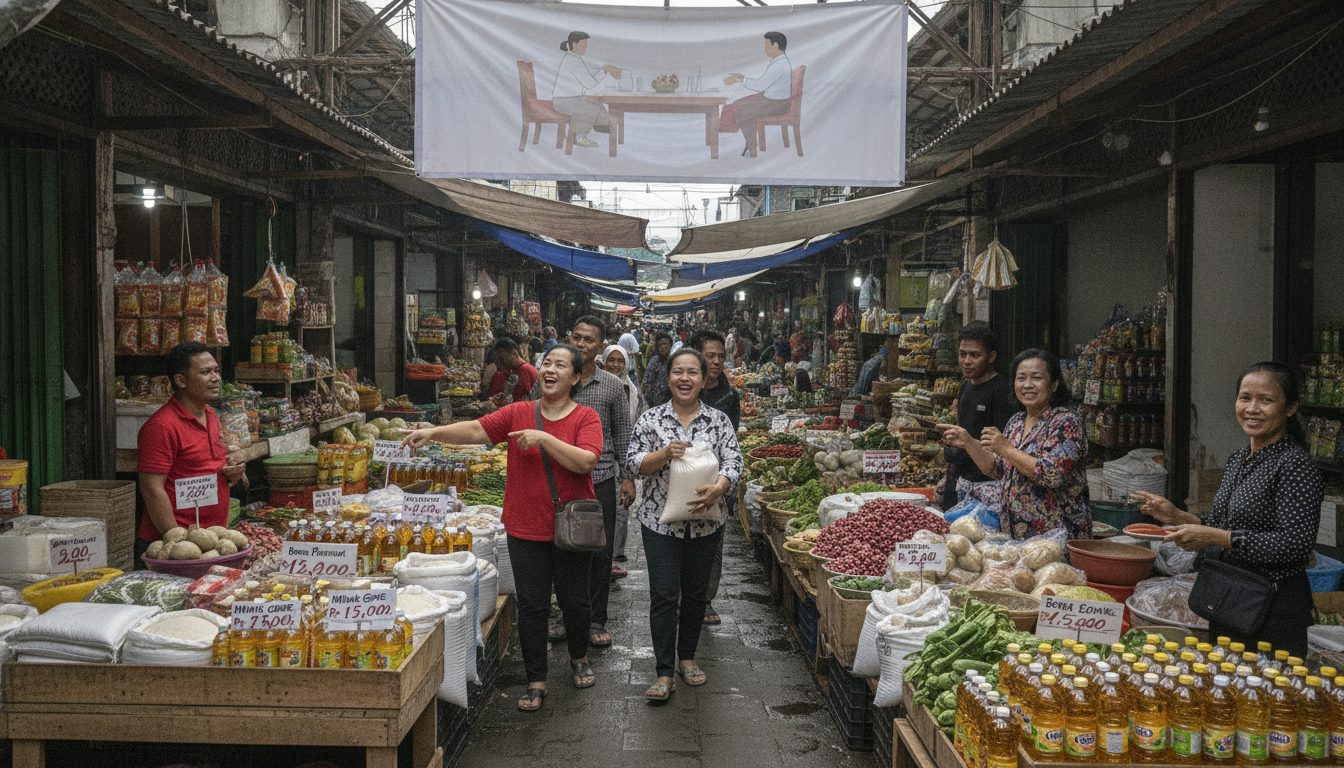
Indonesia: Surabaya Food Prices Drop as President Prabowo’s Free Meals Program Pauses
Surabaya food prices fell after President Prabowo’s free meals program paused for a monthlong school holiday in June–July 2026, offering temporary relief to shoppers. The suspension of the flagship free meals program has been widely credited by residents and market vendors for the recent decline in staple prices across East Java’s second city.
Market Traders Report Steep Price Declines
Vegetable and staple sellers in Surabaya’s traditional markets reported noticeably lower prices and slower turnover since the program was paused. At Tambak Rejo market, a veteran vendor said the cost of common items such as leafy greens and chilies had dropped compared with the weeks when the free meals initiative was active.
Shoppers in several neighbourhoods described larger purchases of fresh produce as vendors promoted surplus stock to clear shelves. Local traders attributed falling prices to reduced bulk buying linked to the temporary halt in free meal distributions.
Consumer Behaviour Shift During Holiday Pause
Households interviewed in market precincts said the pause in the free meals program led many families to cook more at home and shop for a wider range of ingredients. The change in behaviour depressed demand for some processed items while lifting sales of perishable vegetables and fruit that can be prepared at home.
Economically vulnerable shoppers said the price dip provided breathing room for budgets strained earlier in the year, though most described the improvement as short-lived. Several consumers indicated they expect spending patterns to revert once the program resumes.
Details of the Program Suspension and Resumption
The government’s flagship free meals program, known locally as MBG and administered nationally, was placed on a one-month break to coincide with the school holiday in June–July 2026. Officials signalled the pause was temporary and reiterated plans to restart distributions later in July 2026, aiming to return the initiative to full operation after the holiday period.
Authorities have framed the suspension as an operational pause tied to school schedules rather than a policy change. Government sources say the program’s logistics and funding remain intact and that the resumption will restore much of the purchasing support that households have relied upon.
Impact on Small Vendors and Supply Chains
Smaller traders reported a mixed impact: lower prices helped clear perishable stock but reduced daily takings for vendors who previously benefited from bulk institutional purchases associated with the program. Some market operators warned of tighter cash flow for small businesses if demand does not pick up quickly after the holiday.
Wholesalers noted adjustments in supply orders as buyers scaled back volumes during the pause, while transporters reported fewer large shipments destined for school feeding centers. Industry participants said these short-run disruptions were manageable but could create volatility if the program’s calendar changes unexpectedly.
Macroeconomic Perspective and Inflation Signals
Economists monitoring prices cautioned that the recent declines in Surabaya do not necessarily indicate a sustained easing of food inflation nationwide. They described the fall as largely demand-driven and tied to the temporary suspension of a large public procurement program rather than a structural reduction in production or distribution costs.
Analysts warned that price pressure could rebound once government meal distributions resume, returning demand to previous levels and potentially reversing short-term gains for consumers. Fiscal analysts also highlighted the program’s role in stabilizing household food access and noted that its reinstatement could have immediate effects on local markets.
Household Outlook Ahead of Program Return
Many families said they plan to retain small savings from the recent price dip to cover upcoming expenses, but they also expect some relief will evaporate when the free meals program restarts. Community leaders urged authorities to communicate the resumption schedule clearly to help vendors and households plan inventory and budgets.
Local market groups called for complementary measures — such as targeted subsidies or improved supply-chain coordination — to reduce volatility when large-scale public food programs start and stop. Vendors and shoppers alike voiced a desire for greater predictability so that short-term price swings do not translate into long-term hardship.
The pause in President Prabowo’s free meals program has produced a noticeable, if temporary, easing in food prices in Surabaya, but traders, consumers and analysts say much will depend on the timing and scale of the program’s recommencement.

