
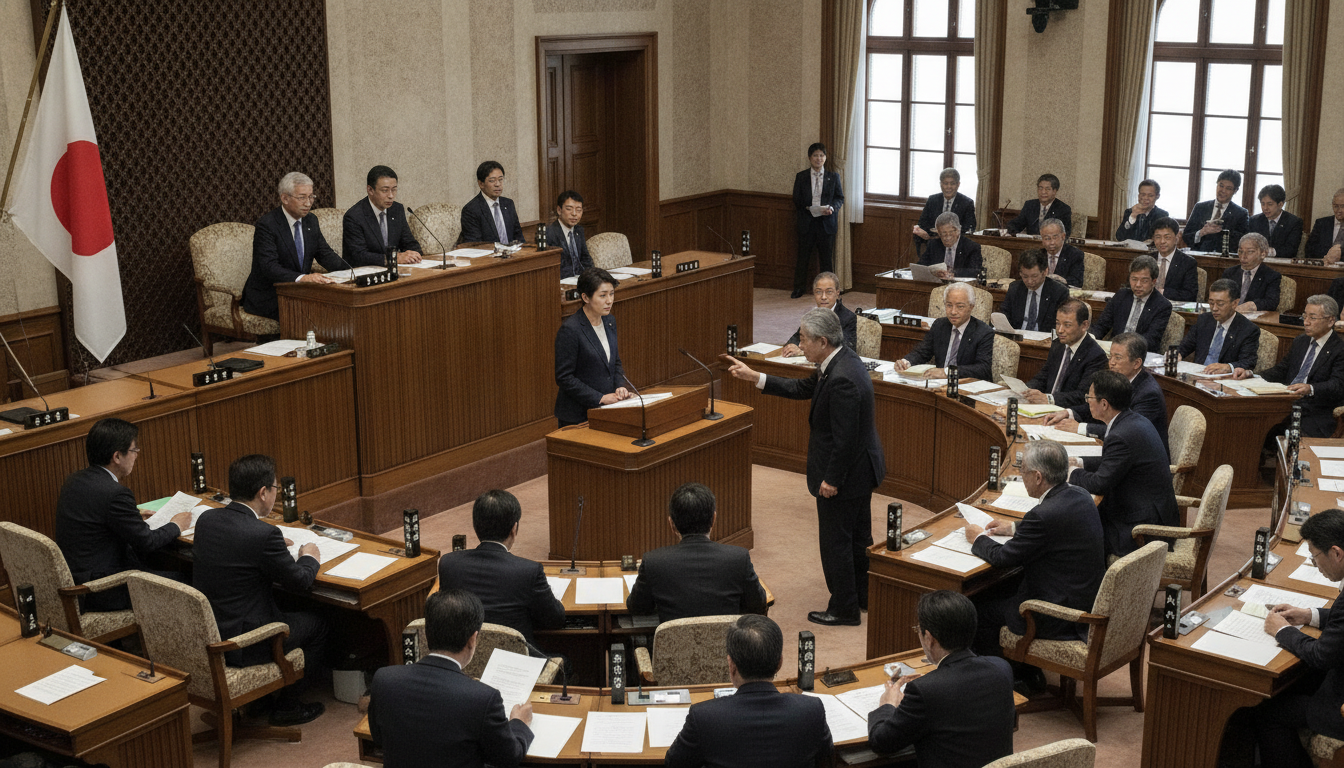
Prime Minister Takaichi to Face Upper House Final Accounts Committee on July 6, Outcomes Could Shape Diet Before July 17
Prime Minister Takaichi will appear July 6 before the Upper House final accounts committee; her answers could reshape the Diet ahead of the July 17 session end.
Committee Schedule and Scope
The Upper House final accounts committee is scheduled to convene at 1:00 p.m. on July 6, with questioning expected to run into the late afternoon. Ten lawmakers from eight parties are slated to participate, focusing formally on the government’s 2024 fiscal year final accounts.
Debate is likely to extend beyond accounting matters to broader political disputes that have paralysed Diet business in recent weeks. Lawmakers from both opposition and ruling parties plan to press the prime minister on several high-profile items tied to this parliamentary term.
Contentious Policy Items on the Agenda
Members will raise contested proposals including a plan to cut 45 Diet seats that would affect proportional representation and a long-running proposal to establish a deputy capital. Both measures have divided parties and could be difficult to advance if consensus is not reached.
Also on the agenda is potential revision of the Imperial Household Law to secure the number of imperial family members, a sensitive issue that carries deep public and legislative implications. These substantive policy fights are expected to dominate questioning alongside routine scrutiny of spending and accounting practices.
Pressure Over Attendance at Budget Committee and Party Leader Debate
A key procedural flashpoint is whether Prime Minister Takaichi will accept invitations to appear before the Budget Committee and to take part in a party leader debate. Opposition parties have repeatedly demanded such appearances as part of efforts to re‑open stalled parliamentary proceedings.
The ruling Liberal Democratic Party has signalled reluctance to commit the prime minister to additional sessions, a stance that has fueled partisan exchanges. How Takaichi frames her readiness to participate could determine whether the Diet returns to regular business or remains gridlocked ahead of the session’s scheduled end.
Allegations of a ‘Smear Video’ and Media Scrutiny
Lawmakers are also expected to press the prime minister on recent reporting related to a so‑called “smear video” involving members of her campaign. Opposition parties say the issue raises questions about campaign conduct and the government’s transparency, and they have demanded a direct explanation from the prime minister.
The media spotlight on the matter has intensified scrutiny of the administration’s response options, including whether legal or ethical inquiries will follow. Takaichi’s handling of questions about the reporting could influence public perceptions and shape the tenor of parliamentary debate in the coming days.
Implications for Electoral Reform and Imperial Law Deliberations
The stances articulated by the prime minister during the committee could materially affect the fate of electoral reform measures and any movement on the Imperial Household Law. If the government cannot secure cooperation from enough lawmakers, proposals such as the 45‑seat reduction will likely face mounting obstacles.
Conversely, clear commitments or conciliatory gestures from the prime minister could open limited pathways for compromise and procedural progress. Lawmakers and party strategists will watch closely for signals that might prompt negotiations on contentious bills before July 17.
Scenarios for the Final Phase of the Diet Session
With the Diet scheduled to adjourn on July 17, the coming week represents a last window for major business. One scenario sees Prime Minister Takaichi’s cooperative engagement leading to a resumption of budget and policy deliberations and a modest thaw in partisan hostilities.
An alternate outcome would be intensified confrontation if the prime minister rebuffs additional appearances or if exchanges over the smear video escalate, leaving several legislative priorities unresolved. Both sides face calculation about political risk and public reaction in a compressed timeframe.
The July 6 final accounts committee session will therefore be watched as a barometer of the Diet’s ability to recover functionality in its closing days. How Prime Minister Takaichi answers key questions — and whether party leaders respond with compromise or continued resistance — will largely determine whether the parliamentary calendar advances or ends amid acute partisan discord.

