
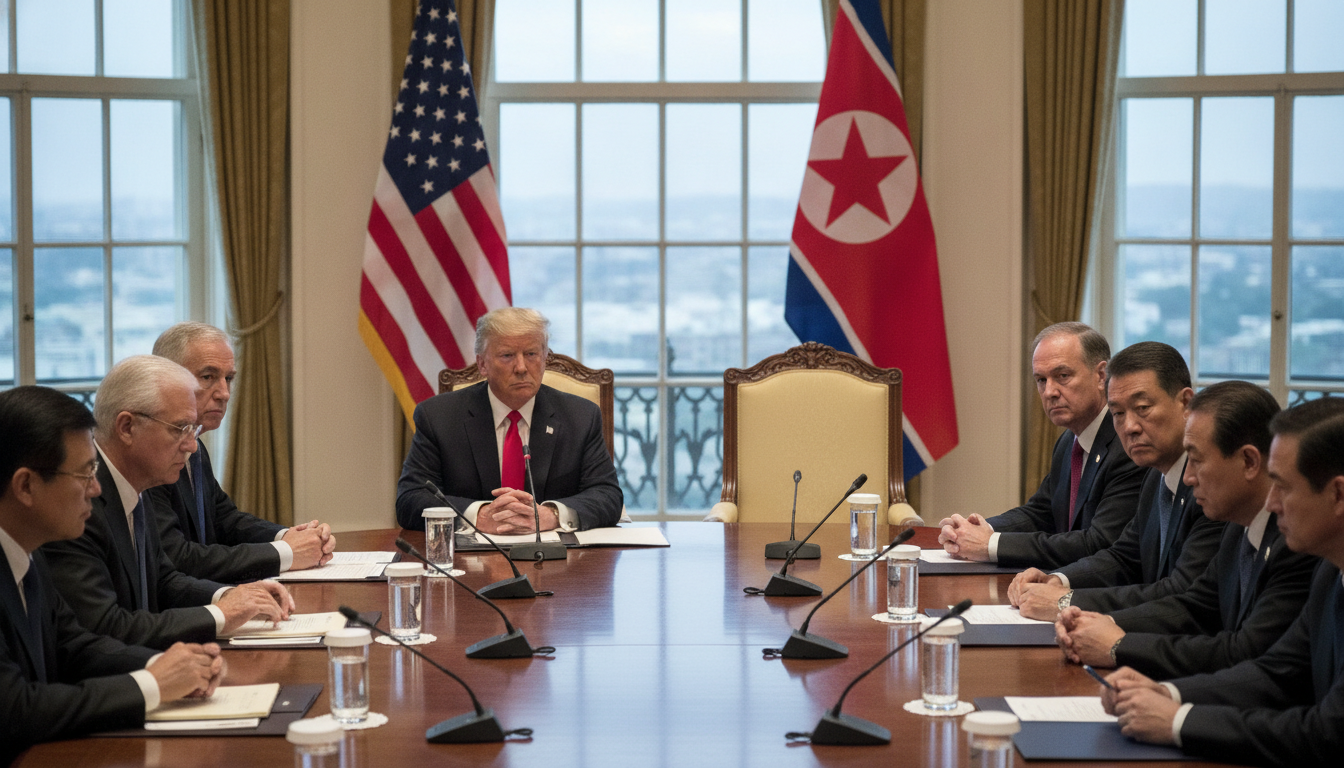
Trump Seeks Year-End Trump-Kim Meeting, Allies Warn of Hasty Concessions
On August 19, President Trump said he wants a Trump-Kim meeting before year-end, raising concerns a hasty summit could produce concessions and alarm allies.
Trump’s Announcement and Immediate Reaction
President Trump announced on August 19 that he would like to meet North Korean leader Kim Jong Un before the end of the year, a statement that quickly drew attention in Washington, Seoul and Tokyo. The comment came via his social media posts and public remarks, and officials and analysts said it appeared driven by the president’s personal initiative rather than a coordinated diplomatic rollout. The timing prompted swift questions about what, if any, preparatory work has been completed by U.S. diplomatic and national security teams.
State of U.S. Diplomatic Machinery
Current and former U.S. officials say the foreign policy apparatus that managed earlier North Korea diplomacy has been weakened in the administration’s second term. Career diplomats and experienced negotiators who once acted as buffers and handled detailed planning are reported to have less influence over policy decisions. That erosion of institutional capacity increases the risk that a summit could be arranged without the customary layers of technical preparation and contingency planning.
Concerns Over Potential Concessions
Policy analysts warn that a summit driven by headline diplomacy could produce major concessions to Pyongyang without verifiable reciprocal steps. Possible outcomes that worry experts include discussions on sanctions relief, the reestablishment of formal liaison offices, or steps that could be interpreted as de facto recognition of North Korea’s nuclear status. Such concessions, even if informal, could undermine long-standing nonproliferation goals and unsettle regional security calculations.
Allies Say They Weren’t Notified in Advance
Diplomatic sources indicate that neither South Korea nor Japan received prior notification from Washington about the administration’s push to revive a top-level meeting with Kim. The absence of pre-briefings to allied capitals has raised concern in Seoul and Tokyo about being sidelined on a high-stakes diplomatic move. Both capitals view close coordination on North Korea as essential, and any surprise announcement risks straining those relationships.
Timing and Practical Constraints for an Autumn Summit
Even supporters of renewed engagement acknowledge that arranging a credible summit this fall would be a tight undertaking. Effective negotiations typically require preparatory working-level talks, agreements on agendas and venue logistics, and security arrangements that can take months to finalize. Officials caution that rushing these processes increases the chance of miscommunication and produces outcomes based more on symbolism than on enforceable commitments.
Domestic and Regional Political Calculations
Observers note the broader political context surrounding the president’s outreach to Kim, including recent diplomatic developments involving Iran and the administration’s desire to demonstrate results on national security. Social media commentary by the president has linked calls to scale back joint military exercises with South Korea to broader messaging about conflict avoidance and military burden sharing. Analysts say such public positioning can reflect domestic political calculations as much as strategic diplomacy.
The prospect of a year-end Trump-Kim meeting has generated a mix of skepticism and cautious interest among diplomats, analysts and allied governments. While a summit could reopen dialogue and reduce immediate tensions, officials stress that durable progress will depend on meticulous preparation, credible verification measures and sustained engagement by experienced negotiators.
A summit arranged primarily as a political gesture risks producing headline-driven outcomes that are difficult to reverse and could complicate long-term efforts to prevent the further militarization of the Korean Peninsula.

