
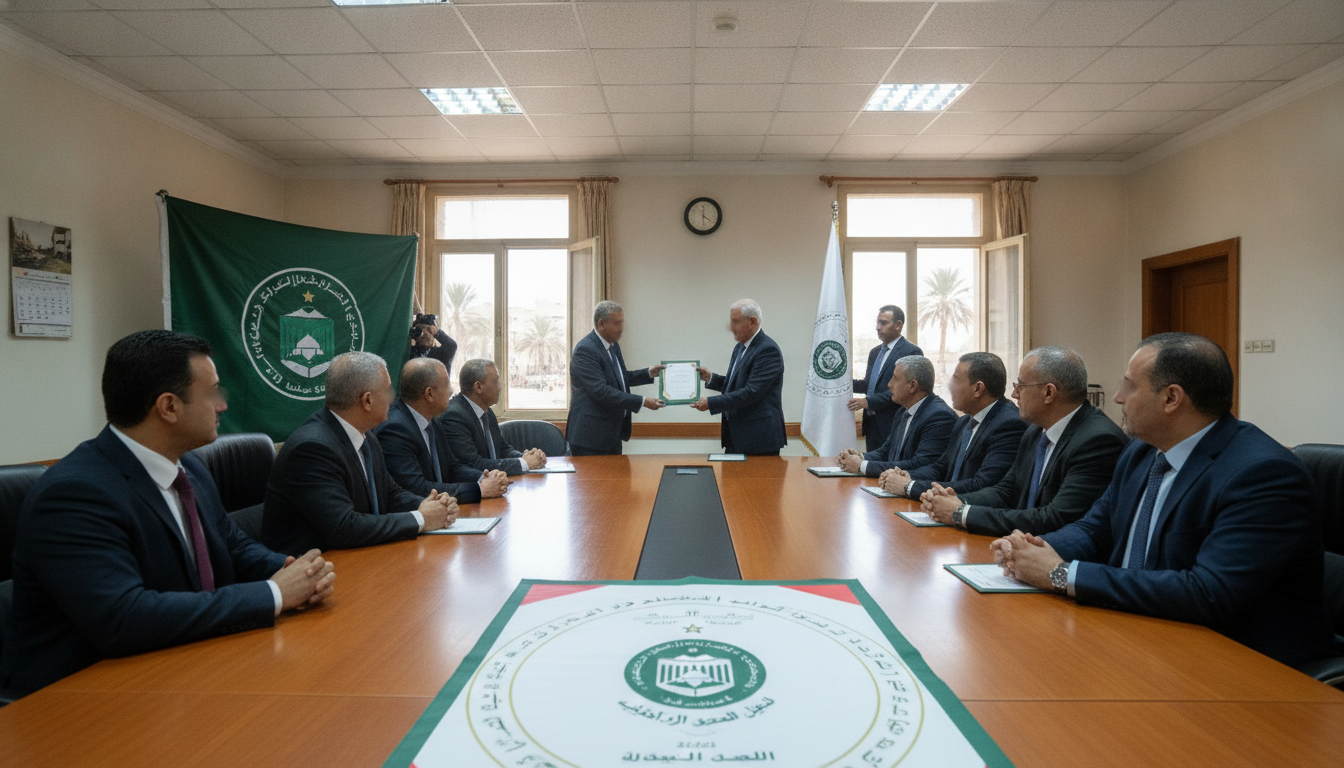
Hamas dissolves Gaza administration as technocratic handover under U.S. plan is announced
Hamas dissolves Gaza administration to clear the way for a U.S.-backed technocratic committee expected to assume civilian governance amid unresolved security and entry obstacles. (elpais.com)
Hamas announcement and immediate measures
Hamas announced on July 6 that it had formally dissolved the Gaza Strip’s emergency administrative committee, saying the move would facilitate a transfer of powers to a Palestinian technocratic body. (amp.dw.com)
Ismail al‑Thawabta, head of Hamas’s government media office, said the acting chairman of the emergency committee, Mohammed Abdul Khaleq al‑Farra, submitted his resignation and the committee had been disbanded. (amp.dw.com)
The group framed the step as support for the civilian transition laid out under the ceasefire framework negotiated last year, but presented it as a strategic rather than final settlement of authority. (elpais.com)
Composition and mandate of the National Committee for the Administration of Gaza
The National Committee for the Administration of Gaza (NCAG) is a technocratic body created under the U.S.‑brokered peace architecture known as the Board of Peace. (cfr.org)
International and Palestinian officials say the NCAG is intended to be composed of independent experts tasked with restoring basic services, overseeing reconstruction and running civilian affairs while security arrangements are negotiated. (cfr.org)
Ali Shaath has been identified in reporting as a leading figure associated with the committee, which backers portray as a transitional authority rather than a political government. (albawaba.com)
Disarmament and legal obligations left unaddressed
Despite the administrative handover, Hamas’s statement did not include any commitment to disarmament, a central element of the U.S. plan’s Phase Two. (elpais.com)
The Trump‑led Board of Peace and U.S. envoys have publicly tied reconstruction and meaningful international support to steps that include demilitarization, but Hamas has repeatedly signalled resistance to full weapons surrender absent a complete Israeli withdrawal. (cfr.org)
That lack of a disarmament timeline leaves the broader security package — including any international stabilization force and guarantees for civilians — in limbo. (cfr.org)
Practical obstacles to the NCAG taking control
Reports indicate that the NCAG has not yet taken up residence or operational control inside Gaza, with movement into the territory blocked or delayed by security and logistical constraints. (politiverse.com)
Israeli authorities have at times resisted aspects of the transition and authorities cited challenges over vetting, entry permits and the security environment that must be addressed before external personnel can assume civilian duties. (politiverse.com)
Aid and reconstruction pledges conditioned on the NCAG’s effective entry will depend on rapid diplomatic and operational coordination among Egypt, Israel, the United States and international donors. (cfr.org)
Regional and international responses
Reactions in the region and beyond were cautious, with some international backers embracing the prospect of technocratic governance while others warned that political and security preconditions remain unmet. (es.euronews.com)
The U.S. administration that helped design the Board of Peace has signalled support for the committee, describing it as integral to moving from ceasefire to reconstruction, but officials in Jerusalem and elsewhere have stressed that full implementation hinges on Hamas’s cooperation on security issues. (cfr.org)
Diplomatic channels in Cairo and Washington are expected to intensify efforts to broker the committee’s safe entry, reassure donors and set benchmarks for the phased transfer of responsibilities. (aa.com.tr)
Humanitarian context and potential impact for Gaza residents
Gaza’s civilian infrastructure remains severely damaged after years of conflict, and humanitarian needs are acute across health, water, electricity and shelter sectors. (elpais.com)
Proponents of the NCAG argue that technocratic management could speed restoration of essential services and unlock reconstruction funds, but sceptics note that services alone will not solve political grievances or security vulnerabilities that fuel instability. (cfr.org)
Any immediate changes on the ground are likely to be incremental, with practical improvements contingent on safe corridors for personnel, reliable funding and clear security guarantees. (aa.com.tr)
Hamas has administered Gaza since 2007 after seizing control in internecine fighting with the rival Fatah movement, a historical fact that underlines how significant and sensitive any transfer of civilian authority is for local politics. (en.wikipedia.org)
The coming days will test whether the declared dissolution marks a procedural step toward the NCAG’s entry or a largely symbolic gesture amid an unresolved security bargain and competing regional interests.

