
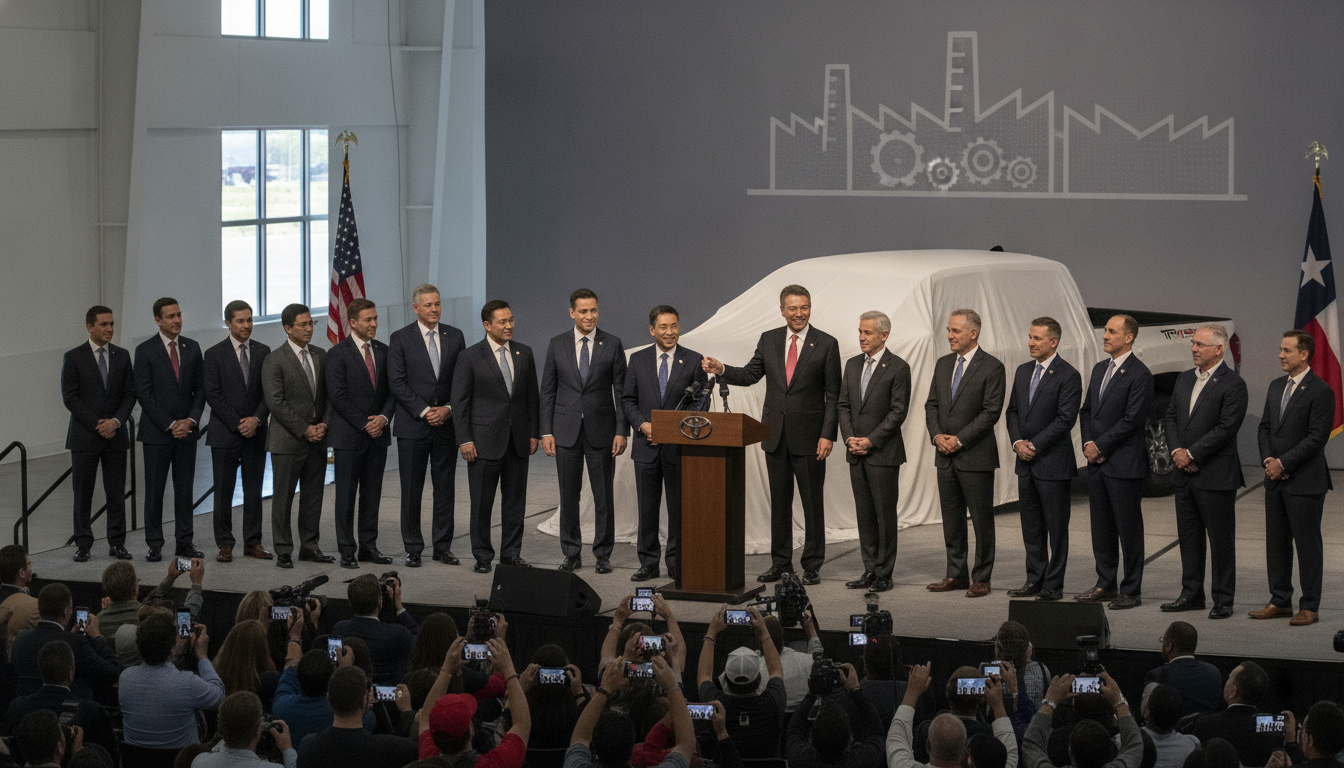
Toyota to shift Toyota Tacoma production back to U.S., invests $3.6 billion in San Antonio plant
Toyota to invest $3.6 billion in its San Antonio plant and move some Toyota Tacoma production back from Mexico, citing U.S. manufacturing pressures and tariffs.
Toyota $3.6 billion San Antonio investment
Toyota Motor announced a $3.6 billion investment in its San Antonio, Texas, manufacturing complex to expand production capacity and upgrade facilities. The company said the funds will be used to retool the plant and support the return of some Toyota Tacoma pickup truck production to the United States. Toyota framed the investment as a strategic response to evolving trade policies and consumer demand in North America.
The decision marks one of the largest single investments in the San Antonio facility since it opened, and it signals a reorientation of Toyota’s North American manufacturing footprint. Company officials emphasized the importance of maintaining flexible production lines that can respond to market shifts and regulatory changes.
Tacoma production moving from Mexico to Texas
The move will see a portion of Toyota Tacoma output, previously shifted to Mexico, return to the San Antonio assembly lines. Toyota originally moved Tacoma production to Mexico several years ago to optimize costs and regional logistics, but the company has now elected to reallocate capacity. The shift does not mean an immediate full relocation of the model; rather, Toyota plans a phased transfer that will integrate with existing vehicle programs at the Texas plant.
Toyota has framed the change as a restoration of domestic capacity to better serve U.S. customers and dealers. The company has not released a precise timeline for the phased transfer, but factory upgrades and supplier coordination will determine the schedule.
Trade policy and pressure from the Trump administration
Analysts say the investment and production shift come amid heightened political pressure from the Trump administration for manufacturers to increase U.S. production. Tariffs, trade negotiations, and public calls for reshoring have created incentives for automakers to reassess supply chains. Toyota’s announcement arrives in that context and has been interpreted by observers as a corporate response to a more protectionist policy environment.
While Toyota has cited business and logistical reasons for the investment, the company also acknowledged that evolving trade measures and market dynamics influenced its decision-making. The San Antonio expansion reduces exposure to cross-border tariff risks and aligns production closer to a major market.
Local and supply-chain implications
The San Antonio investment is expected to reverberate through the regional economy, affecting suppliers, logistics providers, and local labor markets. An expanded production program typically generates demand for stamping, parts assembly, and transportation services, drawing on an established network of Texas and U.S. suppliers. Local leaders in San Antonio have highlighted the potential for increased supplier activity, though Toyota has not confirmed specific hiring figures tied to the investment.
For suppliers, the shift means recalibrating capacity and lead times to support the Texas plant’s schedules. Automotive parts manufacturers that serve pickup truck programs may see new contract opportunities, while logistics firms will face adjustments in cross-border and domestic freight flows.
Industry reactions and competitive context
Industry analysts noted that Toyota’s move mirrors a broader trend of automakers reassessing global production footprints in light of trade volatility and consumer preferences. Rivals have similarly announced capacity changes and investments in North America, aiming to reduce exposure to tariff uncertainty and to shorten supply chains. Observers said Toyota’s San Antonio upgrade could intensify competition among U.S. plants for high-volume pickup production.
Investment decisions of this scale also factor into long-term brand strategy, with automakers weighing the benefits of “built-in-America” marketing against cost pressures. For Toyota, maintaining efficient operations while responding to political and economic signals remains a central challenge.
Regulatory and policy implications for future manufacturing
The announcement is likely to be cited in policy debates about the effectiveness of trade measures and incentives intended to boost domestic manufacturing. Proponents of reshoring point to such corporate investments as evidence that policy can influence where companies place production. Critics argue that investment decisions are complex and driven by multiple factors including labor, logistics, and demand patterns, not solely policy gestures.
Lawmakers and economic development agencies may use the San Antonio example to lobby for continued support for automotive manufacturing, such as workforce training, supplier development, and infrastructure improvements. Toyota’s investment underscores the interplay between corporate strategy and public policy in shaping the auto sector.
Toyota’s move to return some Toyota Tacoma production to the U.S., backed by the $3.6 billion San Antonio investment, reflects a recalibration of manufacturing strategy amid changing trade dynamics and market conditions. The phased shift will affect suppliers and regional economies as Toyota balances global efficiency with closer-to-market production.

