
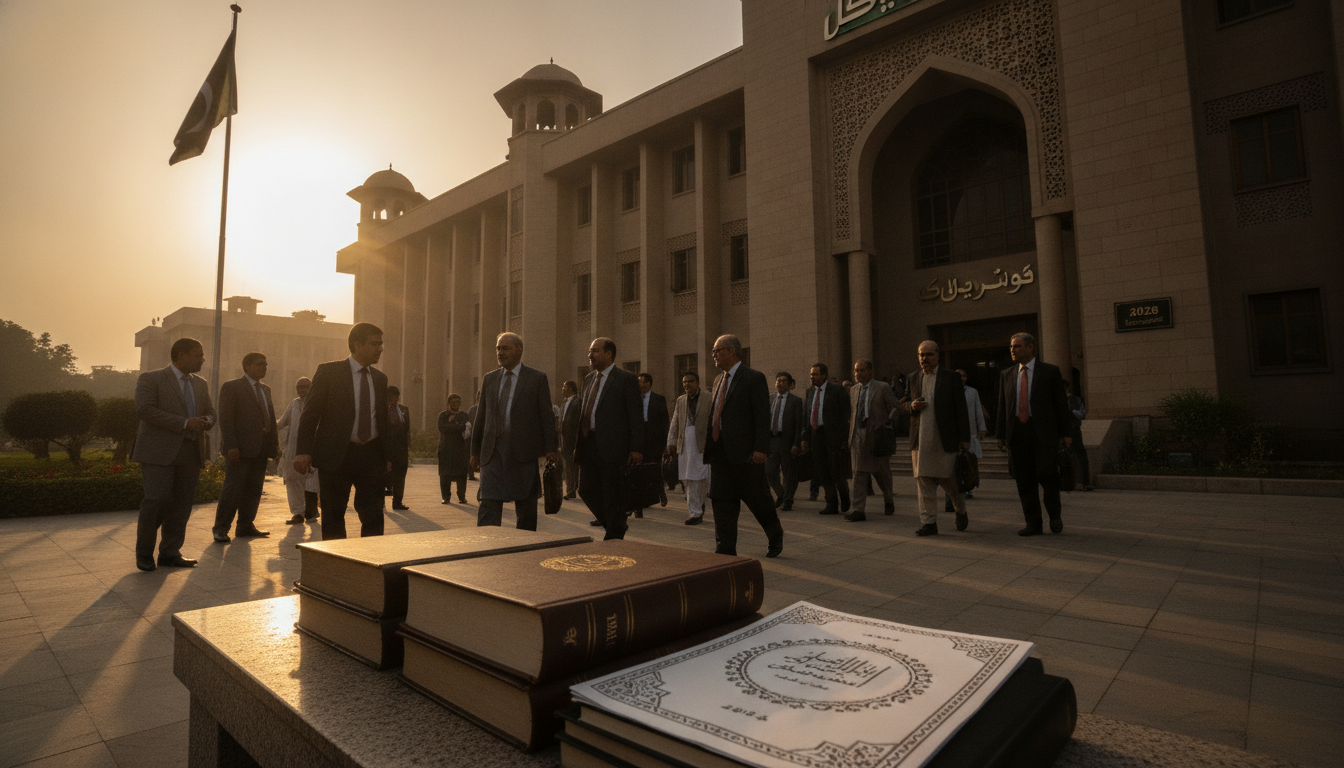
Pakistan orders domestic banks to convert to sharia-compliant model by 2028
Pakistan mandates domestically owned banks to adopt sharia-compliant banking by 2028, while foreign banks may continue offering non-Islamic services alongside.
Islamabad — The Pakistani government has ordered all domestically owned banks to transition to a fully sharia-compliant model by 2028, a major shift toward interest-free finance that will reshape Islamic banking in Pakistan and the broader financial sector. Foreign-owned banks will be permitted to continue offering non-Islamic, interest-based services in parallel, a carve-out that analysts say could give international lenders a competitive edge. The decision aims to eliminate conventional interest-based financing domestically while preserving a dual framework for foreign institutions.
Government Sets 2028 Deadline for Domestic Banks
The government’s directive sets a firm timeline for domestic lenders to convert core operations to sharia-compliant banking by the start of 2028. Officials described the move as part of a broader banking reform intended to align the domestic financial system with Islamic finance principles and remove interest-based products from local banks’ offerings. The policy marks one of the most ambitious nationwide shifts to Islamic banking in recent years.
Foreign Banks Allowed to Offer Dual Services
Under the new rules, foreign banks operating in Pakistan will be allowed to continue providing conventional interest-bearing products alongside Islamic alternatives. Regulators have framed the exemption as a means to maintain international banking relationships and cross-border finance, but critics warn it could create an uneven playing field. Market participants say the dual system could enable foreign banks to attract clients seeking conventional credit terms not available from converted domestic institutions.
Implications for Lending, Credit and Corporates
The mandated conversion is expected to alter the structure and availability of credit, particularly for corporate borrowers accustomed to interest-rate lending. Islamic banking products use profit-and-loss sharing, lease, and trade-based contracts rather than conventional interest, which may require firms and banks to redesign financing arrangements. Some firms could face transitional costs and contractual adjustments, and smaller businesses reliant on short-term interest-bearing loans may encounter gaps in credit availability during the switch.
Market Reaction and Currency Considerations
Financial markets will closely watch how investors and depositors respond to the policy in the coming months. Observers note that shifts in bank funding models can affect liquidity, risk profiles and confidence in the rupee if depositors seek alternatives. The move comes amid ongoing economic pressures; any disruptions to banking intermediation or foreign capital flows could have broader implications for Pakistan’s macroeconomic stability and exchange-rate dynamics.
Operational and Compliance Challenges for Local Lenders
Domestic banks must overhaul product suites, IT systems, legal contracts and risk-management frameworks to meet sharia-compliant standards, a process that industry leaders describe as complex and resource-intensive. Staff retraining and the development of new sharia governance structures will be needed, alongside coordination with religious scholars and regulatory bodies to certify compliant products. Smaller regional banks may face particular strain in meeting compliance costs and operational demands within the timeline.
Regulatory Oversight and International Standards
Regulators will be tasked with defining compliance benchmarks, supervision protocols and dispute-resolution mechanisms for the new system. Aligning domestic sharia requirements with international banking standards and correspondent banking practices will be critical to sustaining cross-border trade and remittances. The carve-out for foreign banks raises questions about regulatory parity that policymakers and international partners are likely to address during implementation.
The conversion to sharia-compliant banking by 2028 represents a decisive policy choice with economic, legal and social dimensions that will unfold over the next two years. Domestic banks, corporate borrowers and international lenders now face a compressed window to adapt systems and contracts, while regulators must balance religious objectives with financial stability and market access. Observers say clear regulatory guidance, phased implementation and engagement with both domestic and foreign stakeholders will be essential to minimize disruption and preserve confidence in Pakistan’s banking sector.

