
Prime Minister Takaichi Meets Yoshimura Over House of Representatives Seat Reduction and Vice-Capital Bills
Japan’s ruling coalition faced a high-stakes meeting on July 7, 2026, as Prime Minister Sanae Takaichi and Japan Innovation Party leader Yoshimura Hirofumi discussed the contentious House of Representatives seat reduction and two linked bills. The House of Representatives seat reduction proposal, demanded by the Innovation Party, is central to whether opposition parties will end their boycott and allow debate on the government’s top-priority Imperial Household Law revision. The outcome of the meeting could determine whether crucial legislation advances or the Diet remains stalled.
Meeting Focused on Seat Reduction and Vice-Capital Legislation
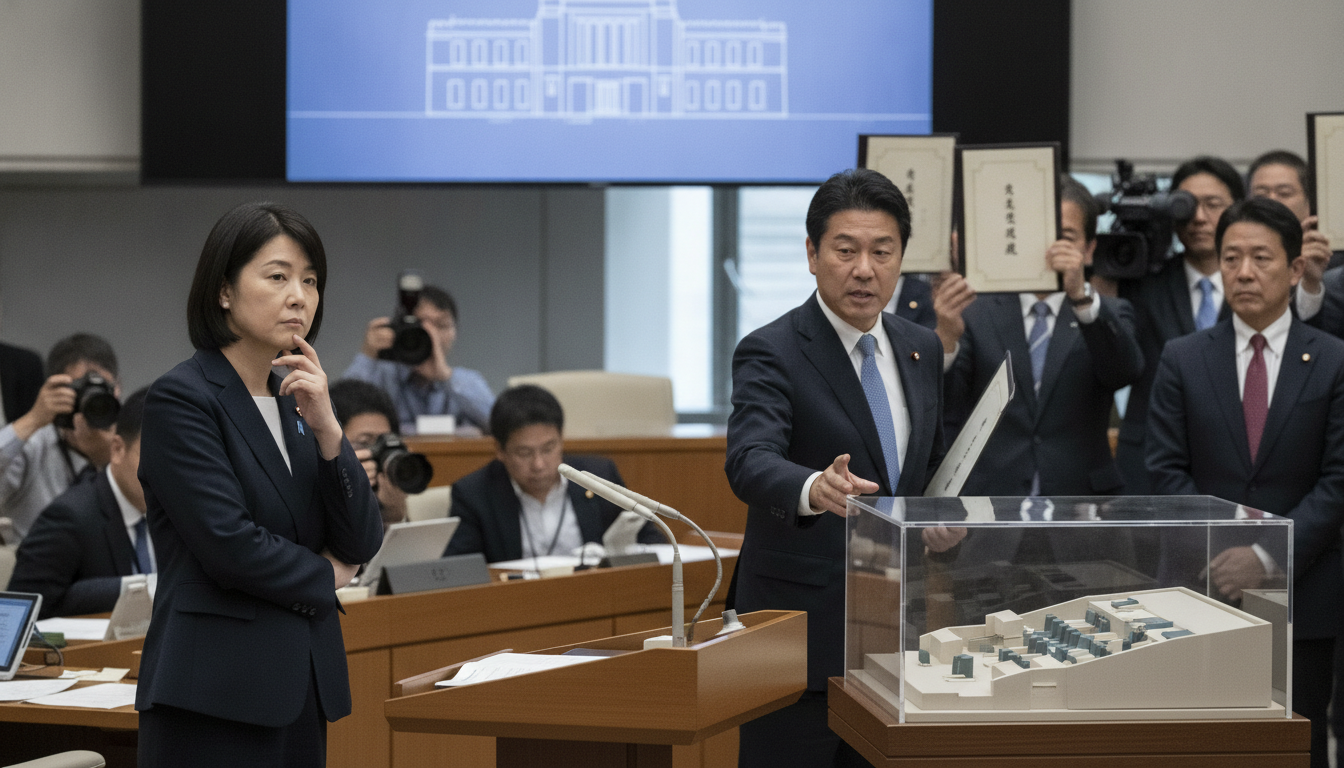
Prime Minister Takaichi and Yoshimura met in the Diet chamber on July 7, 2026, to try to resolve a standoff that has frozen parliamentary proceedings. The Japan Innovation Party has made the House of Representatives seat reduction and a separate vice-capital law pillar demands for its continued cooperation. For the government, the inability to secure opposition attendance means debate on the Imperial Household Law revision — labeled “top priority” by officials — cannot begin.
The Innovation Party insists the seat reduction bill remain on the agenda this session, tying its support to its passage. Opposition parties have maintained a unified refusal to participate in deliberations while the bill is active, effectively blocking movement on a range of government initiatives. The meeting was framed as a last-minute bid to choose between compromise and continued gridlock.
Scenario One: Abandoning the Two Bills to Break the Deadlock
One possible outcome discussed by ruling-party members is abandoning the two Innovation Party bills to restore parliamentary functioning. If the seat reduction and vice-capital measures are withdrawn, opposition parties could end their boycott and allow hearings on the Imperial Household Law revision to proceed. Many within the Liberal Democratic Party have expressed reservations about reducing lower-house seats, making this option politically palatable inside the governing party.
Abandoning the bills, however, would come at the cost of angering the Innovation Party and its supporters. Senior figures in that party have warned of drastic steps, including withdrawal from any coalition arrangement, should their core demand be ignored. The prime minister must weigh the immediate benefit of resuming Diet business against the potential fracturing of her governing coalition.
Scenario Two: Pressing Forward with Innovation Party Demands
A second scenario is that the government accedes to the Innovation Party’s demands and presses the seat reduction bill through this session. Doing so would aim to preserve the coalition’s unity and deliver a key campaign pledge for the Innovation Party. It could also cement a legislative win that the party regards as structural reform to the lower house.
But moving forward while opposition members refuse to sit could perpetuate a stalemate and undercut the government’s claim to lead an orderly legislative agenda. The tactic risks deepening partisan antagonism and could complicate passage of other priority measures, including the Imperial Household Law revision that the government wants to prioritize. Practical difficulties remain if key votes and committee work cannot be conducted with cross-party participation.
Scenario Three: Seeking a Compromise or Delay
A third possibility discussed by senior aides is a negotiated compromise that defers a final decision or splits the difference on timing and scope. Under this option, lawmakers could agree to delay a final vote on the seat reduction bill until after debate on the Imperial Household Law, or to adopt a scaled-back version of the reform. Such a compromise would aim to peel off opposition cooperation without a full concession.
Political strategists say a compromise could be fragile but would buy time and reduce the risk of a coalition rupture. It would require detailed concessions and enforceable scheduling commitments to reassure all sides. Whether either the Innovation Party or the opposition would accept such a middle path remained unclear heading into the evening talks on July 7.
Internal Party Dynamics and Coalition Risks
Within the Liberal Democratic Party, opinion is divided over the wisdom of pursuing the seat reduction push. Some LDP lawmakers oppose cutting representation from the lower house, citing regional equity and constituency service concerns. That internal resistance complicates the prime minister’s decision, as she must balance party unity, coalition stability, and the government’s legislative priorities.
For the Innovation Party, the seat reduction demand is a test of leverage and credibility. Its leadership faces pressure from rank-and-file members and supporters to secure a tangible policy victory. If the Innovation Party judges that its core demand has been sidelined, it may escalate pressure tactics or signal willingness to abandon cooperation, which would reshape the governing arithmetic in the Diet.
Implications for the Imperial Household Law Revision and Legislative Calendar
The most immediate casualty of the impasse has been the government’s plan to begin deliberations on amendments to the Imperial Household Law, legislation officials have described as the “highest priority.” Without opposition members participating in committees, scheduling hearings and securing votes on that bill will be difficult. Observers say the government risks missing critical windows in the parliamentary calendar if the standoff persists.
How the Takaichi administration resolves the dispute will also shape public perceptions of its effectiveness and the stability of Japan’s governing coalition. A swift resolution could allow lawmakers to proceed with a full slate of issues before the session ends. Conversely, prolonged deadlock could delay a range of policy measures and intensify public scrutiny of party leaders’ bargaining.
The meeting on July 7, 2026, thus set the stage for a pivotal decision on whether to prioritize short-term legislative progress or to defend coalition commitments to structural reform. The choices made in the coming days will determine not only the fate of the House of Representatives seat reduction but also the broader trajectory of the government’s legislative agenda.

