
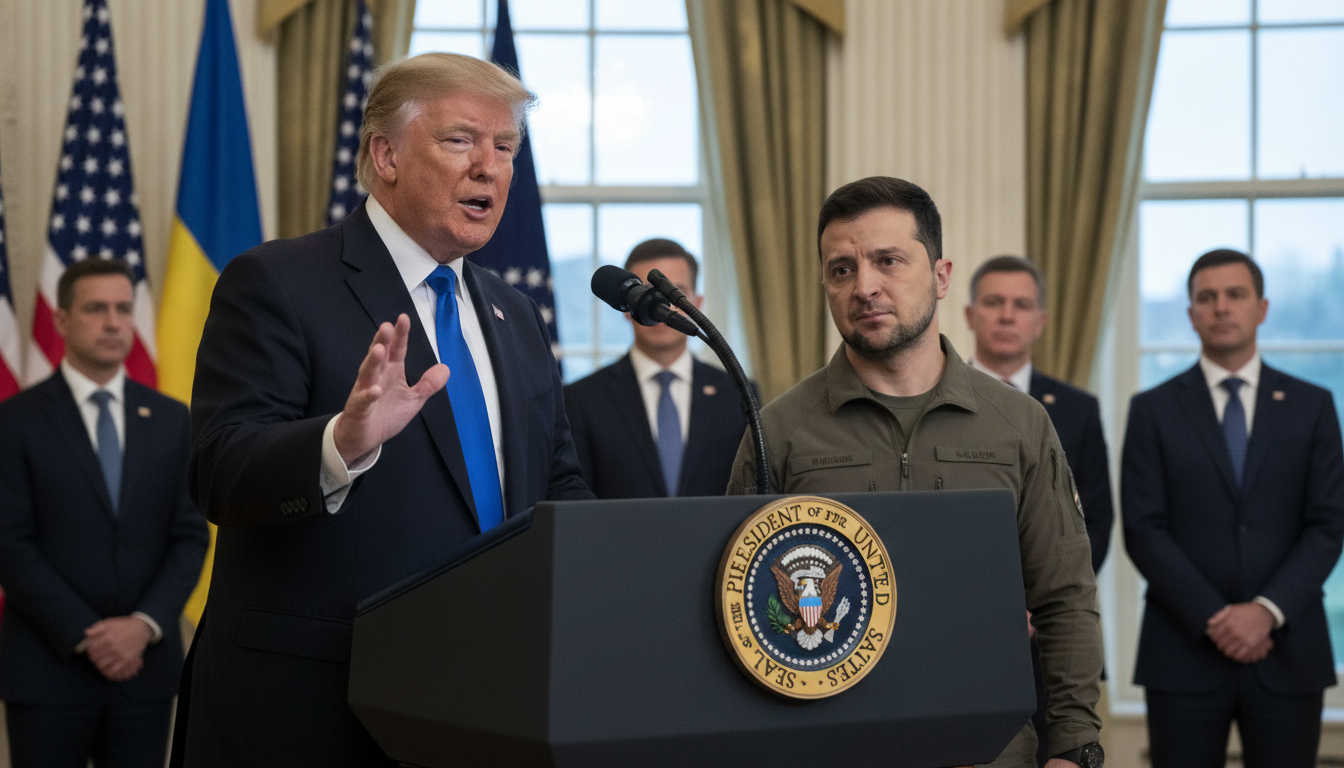
Trump Mistakenly Calls Iran the "Japan Islamic Republic" During Ankara Meeting with Zelensky
President Trump, speaking in Ankara on July 8, 2026, accidentally referred to Iran as the "Japan Islamic Republic" while meeting Ukraine’s President Volodymyr Zelensky.
President Trump made the verbal slip during a meeting in Ankara on July 8, 2026, when he said the "Japan Islamic Republic" had launched missiles at the U.S. aircraft carrier Abraham Lincoln. The error occurred as he spoke with Ukrainian President Volodymyr Zelensky on the sidelines of a NATO summit and was widely noted by reporters at the scene. The remark appeared to be an unintended substitution for "Islamic Republic of Iran" in the president’s remarks.
Remark at NATO summit in Ankara
The exchange took place during a bilateral encounter on the margins of the NATO leaders’ gatherings in Turkey’s capital. Trump was addressing a separate security incident when the misstatement happened, drawing immediate attention because the topic concerned alleged attacks on a U.S. Navy vessel. Journalists at the event recorded and circulated the moment, which prompted rapid commentary online and among diplomatic observers.
Content of the claim and the intended reference
In his remarks, the president said that "Japan Islamic Republic" fired 111 missiles that struck the Abraham Lincoln, a statement that reporters and officials interpreted as a slip for "Islamic Republic of Iran." The Abraham Lincoln is a Nimitz-class aircraft carrier that has been at the center of recent strategic discussions, making the purported attack — and the subsequent naming error — notable. The content of the claim itself, as reported, tied into broader regional tensions involving naval deployments and missile activity.
Immediate reaction and media amplification
The gaffe was quickly picked up by international and domestic media outlets and amplified across social platforms. Reporters covering the summit reacted in real time, noting the incongruity between the reference to Japan and the subject matter of Middle East hostilities. Social media users and commentators treated the slip both as a factual oddity and as fodder for wider discussion about presidential rhetoric.
Potential diplomatic sensitivity and confusion
While the mistake was verbal, such misstatements can produce diplomatic ripples when they touch on sovereign identities and security incidents. Officials and analysts caution that careless language in high-profile settings risks misunderstandings between allied governments and target states. At the same time, observers noted that context and follow-up explanations typically determine whether a gaffe becomes a substantive diplomatic issue.
Historical pattern of public speaking errors
Political figures across administrations have occasionally made verbal errors in public, and these moments often become part of the public record and political discourse. Commentators placed the Ankara slip within a broader pattern of speaking mistakes that attract scrutiny because they occur during sensitive foreign-policy exchanges. Commentators also highlighted how technology and media environments now magnify such moments far faster than in previous decades.
What to watch next
Diplomatic and communications teams frequently move to clarify or correct public remarks that may cause confusion, and Washington and allied capitals are likely to monitor any fallout from the comment. Analysts said attention will focus on whether the White House issues a clarification and on any reactions from the governments of Japan or Iran, though sources cautioned that a direct diplomatic incident would depend on subsequent statements and context.
The incident underlines how offhand language at international gatherings can take on outsized significance, particularly when it involves the names of nation-states and allegations of military action. Observers will be watching official channels for clarifications and for any adjustments in messaging from the administrations involved.

