
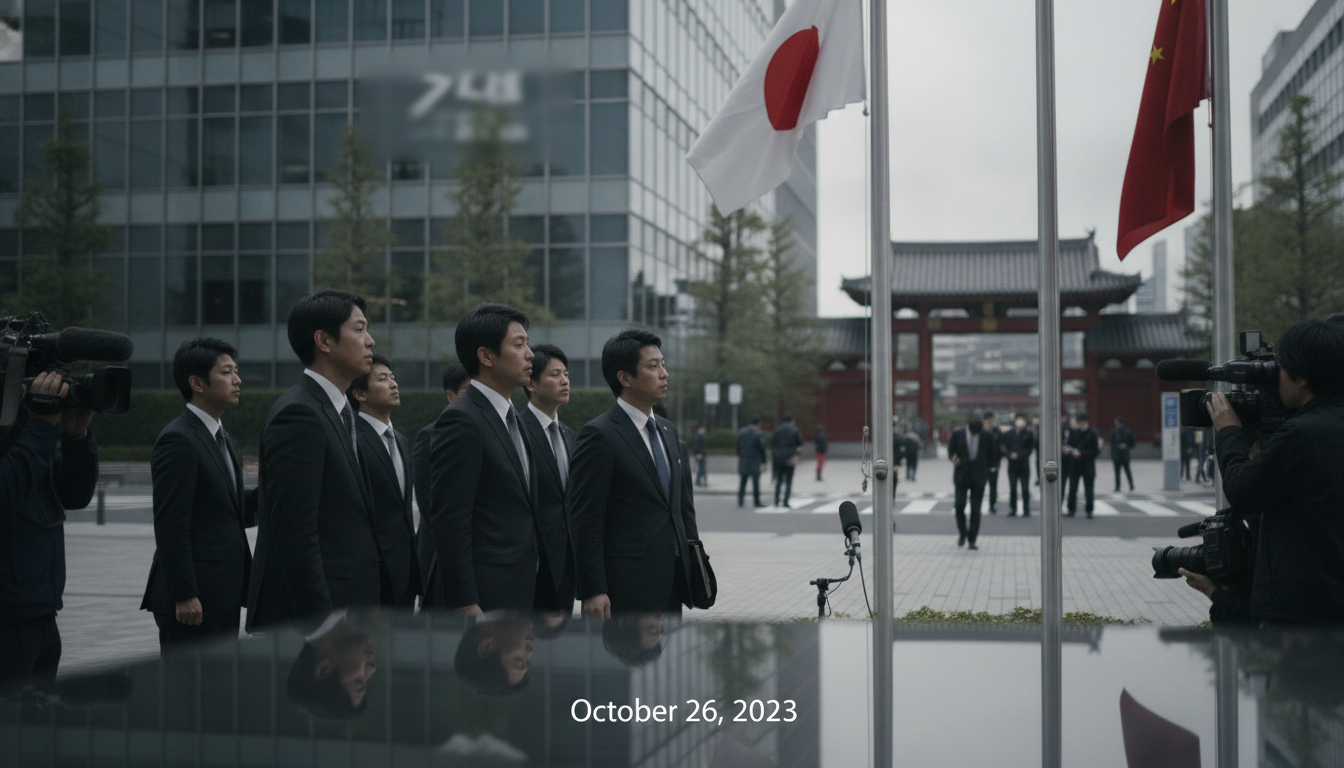
Japan-China tensions escalate as two Fuji Electric employees detained over rare-earth export rules
Two Fuji Electric employees have been detained in China on suspicion of violating rare-earth export controls, and Beijing’s new public reporting rules are heightening Japan-China tensions and corporate compliance concerns. (apnews.com)
Two Fuji Electric employees detained in Dalian
Two Japanese nationals employed by the Fuji Electric group were detained in Dalian in May on suspicion of smuggling or exporting items subject to China’s export controls, according to Japanese and international reports. (japantimes.co.jp)
Chinese authorities later moved to formally arrest the two, who remain in custody as Beijing pursues enforcement under tightened export-control rules covering strategic minerals and dual-use items. (nippon.com)
MOFCOM formalises public reporting on strategic mineral violations
On June 24, 2026, China’s Ministry of Commerce (MOFCOM) issued Announcement No. 26 of 2026 to improve handling of reports about violations of export controls on strategic mineral dual-use items. The measure took effect on July 1 and allows organizations and individuals to report suspected breaches. (mofcom.gov.cn)
The announcement lists a broad scope of reportable conduct, including unauthorised exports, exports that exceed license conditions, disguising controlled items through modification or disassembly, and routing shipments through third countries to evade controls. (flash.jin10.com)
Legal advisers warn firms to reassess compliance in China
Lawyers and compliance experts say the detentions underline a sharply more active enforcement posture in China and that companies operating in the country should reassess export controls, internal reporting and shipment procedures. (morganlewis.com)
Legal advisers note the combination of tougher substantive controls and a public reporting mechanism increases the risk that administrative or commercial practices once seen as borderline could be treated as violations. Companies are being urged to tighten controls on components, documentation and third-party logistics. (morganlewis.com)
Japanese firms put on alert as government issues guidance
Tokyo has warned Japanese firms with operations in China to exercise heightened caution over exports of dual‑use goods and items that could contain strategic minerals after the detentions were disclosed. Authorities in Tokyo say they are monitoring developments and assisting affected nationals and companies. (nippon.com)
Several business groups and compliance teams are reportedly reviewing supply chains and asking affiliates in China to pause or re-document shipments that could fall within newly clarified export-control categories. Companies face reputational and legal risks if shipments are deemed to contravene Chinese rules. (marketscreener.com)
Broader supply-chain and geopolitical implications
The detentions come amid a wider pattern of trade and regulatory measures between Beijing and Tokyo, including earlier Chinese restrictions on exports to certain Japanese entities and heightened scrutiny of dual‑use technology flows. Analysts say such measures can accelerate efforts by Japanese firms to diversify sourcing of critical minerals. (apnews.com)
For industries reliant on rare-earths and related components — including automotive, electronics and defence supply chains — the episode may prompt faster procurement shifts, increased stockpiling, and new due‑diligence requirements for cross‑border shipments. (japantimes.co.jp)
Japan and Chinese authorities have so far offered limited public detail about the evidence or charges against the detained workers, leaving companies to navigate uncertainty and immediate compliance challenges. Officials on both sides face pressure to manage the diplomatic and commercial fallout. (japantimes.co.jp)
The emergence of MOFCOM’s formal reporting mechanism marks a notable change in enforcement strategy by Beijing, making it imperative that Japanese companies operating in China review internal controls, documentation practices and third‑party relationships to limit legal exposure and reputational damage.

