
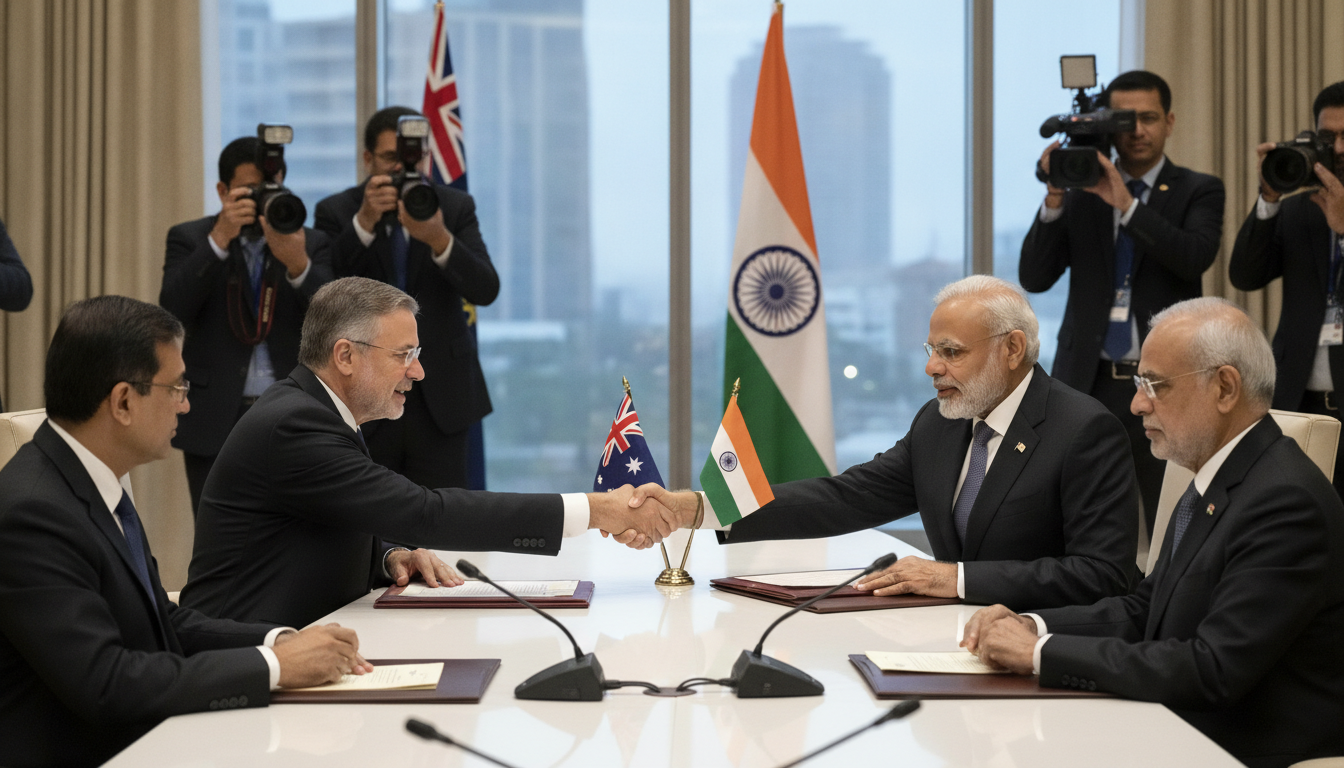
Australia-India uranium agreement finalised to allow Australian shipments of nuclear fuel to India
Australia and India finalise pact permitting uranium exports to India, opening a new supply channel for nuclear fuel while outlining safeguards and end-use controls.
India and Australia announced on July 9, 2026, that they have finalised an Australia-India uranium agreement allowing Australian exporters to ship nuclear fuel to India. The leaders said the deal is aimed at supporting India’s growing electricity needs while establishing controls to ensure the material is used for civilian energy purposes. Officials characterised the move as a significant step in bilateral ties, emphasising both economic opportunity and non-proliferation safeguards.
Details of the agreement announced by leaders
The Australia-India uranium agreement was presented publicly during a ceremonial visit in Melbourne, where officials from both capitals confirmed the signing. Leaders framed the deal as part of a broader partnership to boost energy cooperation and industrial ties between the two countries. The announcement noted that shipments will proceed under strict terms designed to meet international safety and security standards.
The joint statement accompanying the announcement said the arrangement includes legal and technical measures to govern exports, though officials did not provide a detailed timeline for commercial deliveries. Both governments indicated further implementation steps are required, including final regulatory clearances and commercial contracts with mining and fuel supply companies.
Safeguards and end-use guarantees outlined
Canberra and New Delhi stressed that the pact contains safeguards intended to prevent military diversion of nuclear material. The governments said the arrangement will rely on monitoring and verification mechanisms consistent with global practice to track end-use of exported uranium. International oversight and reporting obligations were described as central to the agreement, with both sides pledging transparency.
Technical safeguards and licensing procedures are expected to be finalised by relevant regulators before any physical shipments occur. Sources close to the negotiations said that end-use assurances and enforceable conditions were priorities for Australian negotiators, reflecting Canberra’s longstanding emphasis on non-proliferation controls.
Implications for India’s energy strategy
Analysts said the agreement helps India secure additional low-carbon fuel options as it expands nuclear power capacity to meet rising electricity demand. India has been pursuing a diversified energy mix to reduce reliance on coal and to advance climate commitments, and access to reliable uranium supplies is an element of that strategy. Officials in New Delhi described the deal as enabling predictable fuel procurement for existing and future civilian reactors.
The pact may also support India’s plans to accelerate nuclear projects, subject to project financing and regulatory approvals. Observers noted that while uranium imports alone do not determine reactor timelines, stable long-term supply agreements can influence investment decisions and project scheduling.
Economic prospects for Australian suppliers
The agreement creates potential new markets for Australian uranium producers, which supply a significant share of global civilian uranium demand. Industry representatives said the arrangement could translate into commercial contracts and long-term purchase commitments once regulatory approvals and safeguards protocols are completed. Canberra’s domestic mining sector could benefit from increased export volumes and diversified customer relationships.
Government officials cautioned that commercial benefits depend on market conditions, pricing, and the outcome of contractual negotiations. They also noted that Australia’s export licensing framework and corporate due diligence will remain central to any shipments, ensuring compliance with domestic law and international obligations.
Reactions from non-proliferation and environmental groups
The announcement drew responses from civil society and non-governmental organisations that called for close scrutiny of safeguards and environmental impacts. Some NGOs urged both governments to publish the full legal text and to guarantee robust, independently verifiable monitoring of material flows. Environmental advocates also reiterated concerns about uranium mining’s local ecological effects and the need for strong regulatory oversight.
Government spokespeople said they would engage with stakeholders and that the agreement includes provisions intended to address safety, security, and sustainable resource management. They further emphasised commitments to international norms governing nuclear materials.
The Australia-India uranium agreement marks a diplomatic and commercial milestone while raising questions about implementation details, regulatory processes, and timelines. Both capitals say further steps are needed before exports begin, including final approvals, technical arrangements for safeguards, and the negotiation of commercial contracts. The deal is likely to reshape a portion of the civilian nuclear fuel market and will be watched closely by governments, industry, and civil society as the parties move from announcement to execution.

