
Sumida River Fireworks Festival 2026: Complete guide to watching Tokyo’s July 25 spectacular
Sumida River Fireworks Festival 2026 draws one million spectators to Tokyo’s riverside; plan for July 25, 2026 showtimes, viewing spots, transport and safety tips.
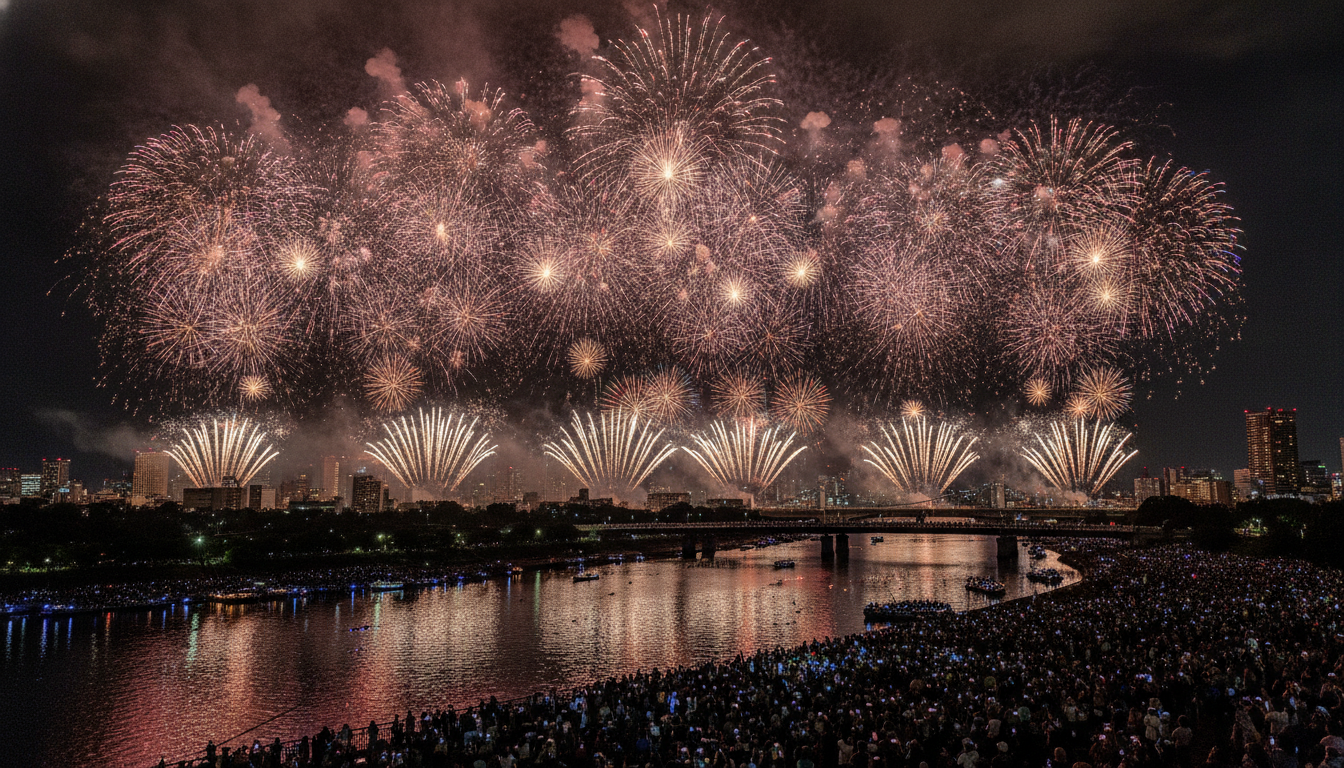
The Sumida River Fireworks Festival, known locally as the Sumidagawa Fireworks, returns on Saturday, July 25, 2026, with a tightly scheduled display that will light the Tokyo night from 7:00 p.m. to 8:30 p.m. The event, which typically attracts around one million people, will launch approximately 20,000 shells from two river locations. Local authorities and organizers advise readers to plan arrival, viewing, and departure carefully because crowds, road closures and limited facilities make the evening logistically challenging.
Event schedule and launch sites
The festival follows a strict timetable: the first launch zone, between Sakurabashi Bridge and Kototoi Bridge, begins at 7:00 p.m., while the second site, between Komagata Bridge and Umaya Bridge, starts at 7:30 p.m. Both sites continue concurrently and finish at 8:30 p.m., packing the full program into a 90-minute display window.
Organizers plan to fire roughly 10,000 fireworks from each site, totaling about 20,000 effects across the two banks of the Sumida River. The dual-site format creates layered effects and allows different pyrotechnic teams to present competing sequences that build to a grand finale.
Because the show is concentrated in a short period, viewers should expect intense local crowding and acoustic impact. Those with hearing sensitivities, young children, or mobility constraints should assess whether a closer riverside position or a more distant vantage is the right option.
Crowds, road closures and timing
The road beside the Sumida River in the Asakusa area is typically closed to vehicle traffic from around 6:00 p.m. on the night of the festival, but people begin assembling many hours before that. In practice, spectators start lining barriers and claiming spots in the afternoon; crowds were observed forming from about 3:30 p.m. in previous years.
Because reserving public space ahead of time is prohibited, the practical effect is a first-come, first-served scramble for riverside seats. Expect significant pedestrian controls, temporary fencing, and designated viewing corridors; a detailed road restrictions map is usually published in the week before the event and should be consulted for the most up-to-date routing.
Public safety measures include managed entry points, temporary toilets placed across the viewing zones, and a visible police presence. Spectators should factor extra time to pass through crowd-control checkpoints and to find clearly marked meeting points in case groups are separated.
Best and alternative viewing locations
Prime riverside viewpoints are the roads near Sumida Park and the area by Asakusa Station, but those stretches are the most congested. For a less claustrophobic experience, consider Shiori Park or the northern portion of Oyokogawa Water Park, both of which offer reasonable sightlines with more breathing room.
If you prefer a more distant but quieter panorama, the Arakawa River bank near Horikiri Waterside Park provides a clear northern view and larger open spaces. Observers in that area will see the main bursts but with greater comfort and easier post-show dispersal.
Bridges can offer distinctive perspectives, though they carry restrictions. Many bridges require continuous movement and do not allow stopping; Chuo-Ohashi Bridge is known for photographic views but can be obstructed by railings and other infrastructure. Plan to arrive early and be ready to keep moving if the authorities enforce bridge traffic rules.
Paid seating, boat cruises and elevated viewpoints
Limited paid seating is made available each year for sponsors and general sale, and tickets are generally released in early May. For 2026, those reserved seats were offered from mid-May with starting prices around ¥8,000. These ticketed areas guarantee a marked space and a less chaotic experience but are quickly sold out.
Viewing from a riverboat is one of the most comfortable options: numerous cruises operate on the Sumida River during the festival, some combining dinner service with unobstructed waterside views. Boat tickets must be reserved well in advance and typically include boarding time and designated berths; they also remove the challenge of navigating post-show pedestrian crowds.
For elevated paid views, consider major observation decks such as Tokyo Skytree or local facilities like the Tower Hall Funabori observation area, which occasionally opens for the event with reservations required. Restaurants and hotels with river views also sell vantage access, and reservations for these venues often need to be made months ahead.
Accommodation and transport planning
Staying overnight in the Asakusa area removes the immediate post-show scramble for trains and provides a quieter escape after the display. Hotels that advertise river or Asakusa skyline views fill up exceptionally early for the festival night, so booking well in advance is strongly recommended.
When planning routes home, avoid crowding the nearest stations immediately after the finale. Instead, walk to a less congested station such as Tawaramachi on the Ginza Line, Shin-Okachimachi served by the Oedo and Tsukuba Express Lines, or Okachimachi for JR Yamanote and Keihin–Tōhoku lines. These options typically offer a steadier flow and a shorter waiting time than the stations adjacent to the river.
If you do not plan to travel immediately, consider spending time in nearby eateries or karaoke venues to let the initial tidal wave of commuters subside. Allow extra time for train delays and station crowd control, and check transport operator announcements on the day for last-minute changes.
Food, facilities and what to bring
There are few if any food stalls directly on the roads adjacent to the launch zones, though festival-related vendors tend to appear in surrounding areas such as Sensōji Temple precincts and nearby station approaches. Many spectators opt to bring their own food and beverages; a compact cooler with chilled water, drinks and light snacks is common practice.
Pack a seating mat, wet wipes, sunscreen for daytime waits, a hand fan, and small personal first-aid items. For heat management, carry electrolyte drinks and consider portable shade or a small umbrella while gathering before road closures begin. If rain is likely, bring a waterproof poncho rather than a bulky umbrella to stay within crowd movement rules.
For attire, wearing a yukata is a popular choice and contributes to the seasonal atmosphere, but be mindful that traditional garments can be less practical when navigating dense crowds. Comfortable shoes and lightweight, breathable clothing will make long waits and walking much easier.
Weather policy, accessibility and safety advice
The festival proceeds in light rain, but severe weather—specifically typhoon conditions—will lead to cancellation with no rescheduled date. Spectators should verify weather forecasts and organizer announcements in the days leading up to July 25, 2026, and bring suitable rain protection if showers are predicted.
Crowd density means those with limited mobility should plan for accessible routes in advance and consider paid seating or boat options that provide priority boarding or dedicated spaces. Families with young children should establish meeting points and identify the nearest temporary toilets or medical stations upon arrival.
Safety rules typically prohibit glass containers, personal fireworks, and oversized items that block passageways. Follow instructions from event staff and police, and be prepared to move when corralled by authorities; keeping a charged mobile phone and a portable battery pack is a practical precaution.
Tips for first-time and returning attendees
Arrive early in the afternoon if you want a close riverside position; expect people to claim space hours before the lights go out. For the best balance of view and comfort, aim for Shiori Park or the Arakawa River bank rather than the immediate Asakusa waterfront, which becomes tightly packed.
If you prefer to avoid the crush entirely, book a river cruise or secure one of the limited paid seats. Elevated observation points and restaurant reservations are other reliable alternatives, but they require advance planning and will often cost more than ground-side viewing.
If travelling by public transport, carry small change for vending machines and local vendors, and plan exit routes to secondary stations. Mark a clear rendezvous spot with your group and identify visible landmarks to make reunions easier after the display.
The Sumida River Fireworks Festival is an iconic Tokyo event with deep historical roots, and Friday or Saturday scheduling tends to influence how long crowds linger and how transportation systems respond. Spectators who prepare—by checking the official schedule, securing alternative viewing plans, and packing for heat or rain—will experience the display with greater comfort and safety.
Take into account the compact program timing: the principal displays occur between 7:00 p.m. and 8:30 p.m., and the dual-launch format produces rapid sequences that are most impactful from mid-river vantage points. For photographers, arrive early to stage tripods where permitted and be mindful of local rules around equipment and standing-room restrictions.
Advance planning, patience and respect for crowd management measures will ensure a memorable night for residents and visitors alike.

