
2026 youth trends reshape Tokyo: from “—sugite metsu” to Y3K fashion
A report on 2026 youth trends in Tokyo, highlighting the “—sugite metsu” catchphrase, M!LK’s influence, retro revivals, Y3K fashion, deca drinks, and attention detox.
Strong opening summary of 2026 youth trends
The year’s defining 2026 youth trends are reshaping street culture across Tokyo and other urban centers in Japan, driven by music, nostalgia, and new aesthetic movements. The catchphrase “—sugite metsu” and the five-piece band M!LK have emerged as central forces, influencing language, fashion and social media behavior among teens. Retail patterns, gaming revivals, and a contrasting impulse toward offline privacy round out a landscape that blends Heisei-era nostalgia with futuristic visuals.
Catchphrase of the year —sugite metsu dominates teen vocabulary
Survey results compiled by Mynavi indicate that the phrase “—sugite metsu” (○○すぎて滅), roughly translated as “so [X] I could perish,” topped lists of buzzwords among teenage respondents. More than half of surveyed teen girls cited the phrase, which quickly migrated from song lyrics to everyday speech and social posts. The expression now appears appended to everything from concert reactions to snack reviews, signaling how pop music can accelerate lexical change among young people.
The spread of “—sugite metsu” also shows how catchphrases propagate via visual culture and choreography. A related chant, ba-ku-re-tsu, has become a staple pose in photo booths and short-form video clips, reinforcing the phrase’s visibility. Linguists and cultural commentators note that these micro-trends often begin in youth subcultures and then diffuse outward through influencers, magazine features and high-profile commercial tie-ins.
M!LK’s chart success and cultural impact
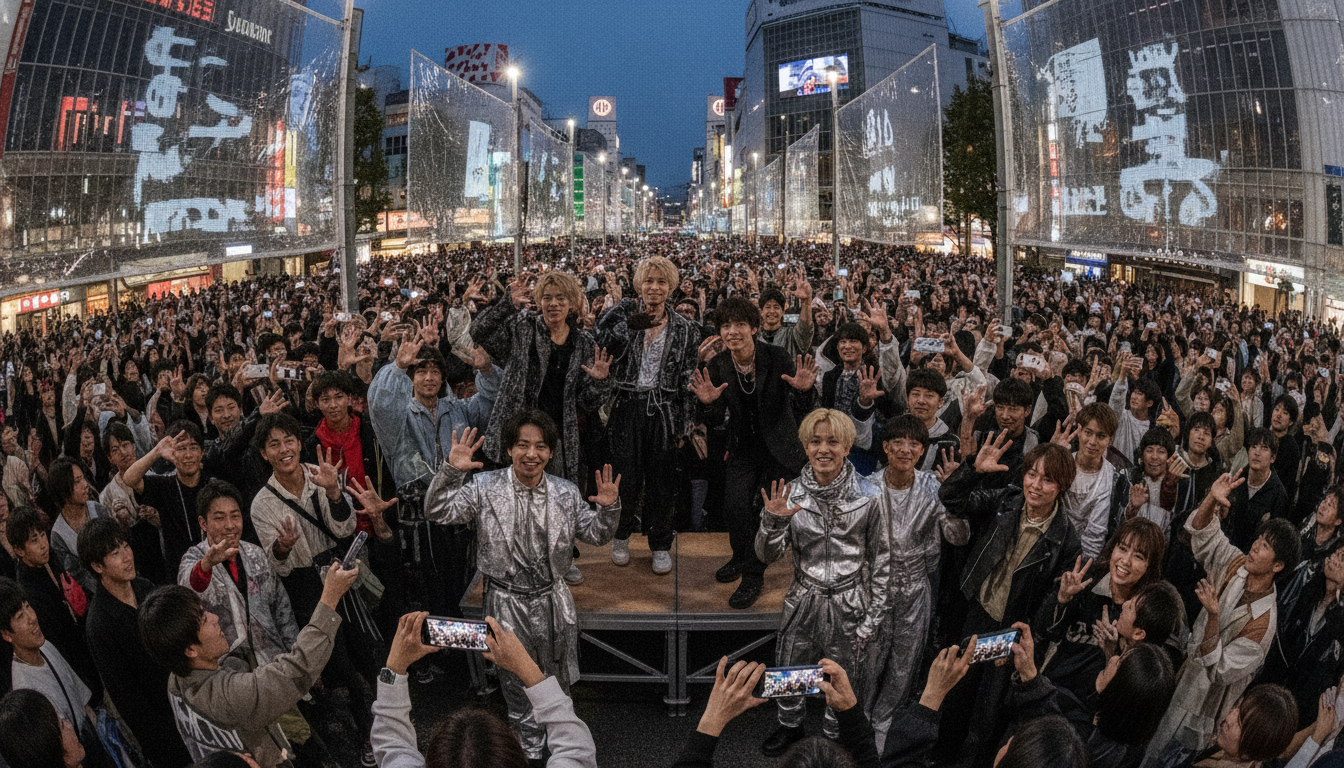
M!LK’s breakout year is both musical and cultural: the group topped multiple categories in youth-focused rankings, including top act and top song, and contributed the year’s leading catchphrase through its double A-side release. Their single “Bakuretsu Aishiteru / Suki Sugite Metsu!” reached number one on the Billboard Japan Hot 100 in late February and recorded strong physical sales on release. That commercial performance translated into broader visibility, from magazine reprints to viral choreography.
The band’s influence extends beyond sales figures; their imagery and signature moves have been adopted in purikura booths, concerts and fan-produced content across social platforms. This level of integration between music and youth behavior exemplifies how pop acts now serve as catalysts for multi-platform trends. Industry observers attribute part of M!LK’s traction to a coordinated release strategy and an audience primed for fast-moving cultural references.
Sticker books and tactile nostalgia return
A surprising revival in 2026 is the sticker book, or shiiru-chō, a Heisei-era pastime that had waned with the rise of smartphones. Young consumers, many of whom were raised on digital media, have embraced the tactile pleasure of collecting and trading puffy stickers and water-filled seals in dedicated albums. These physical artifacts serve as low-stakes, collectible objects that are easy to display on social media while offering real-world exchange opportunities among peers.
Marketers and retailers have responded with limited-edition releases and collaboration sets that quickly sell out, turning formerly humble stickers into sought-after items. The trend is also drawing attention from older generations, whose nostalgia for the genre fuels reprints and collector interest. As a cultural phenomenon, the sticker-book revival highlights a broader appetite for analog experiences in an increasingly digitized youth culture.
Nintendo nostalgia fuels gaming and social buzz
Major franchise moves from Nintendo have amplified retro gaming interest this year, with the return of Tomodachi Collection on Switch and a new Rhythm Heaven title announced for summer. These releases sparked renewed attention to the original Nintendo DS games, which saw a resurgence of viral clips and commentaries on short-form platforms. For many young players, the revived titles serve both as entertainment and as cultural touchstones that bridge generational gaming habits.
The interaction between official releases and user-generated content has been notable; fans repurpose in-game moments into memes and challenges that spread quickly online. Retailers and secondhand markets have likewise seen increased demand for earlier editions and themed merchandise. This wave of gaming nostalgia reinforces how legacy intellectual property can be reintroduced to new audiences through strategic timing and social amplification.
Y3K aesthetic and shōjo-manga-core shape season’s fashion
A new aesthetic dubbed Y3K has started to appear on runways, in boutiques and across social feeds, trading Y2K low-rise nostalgia for a chrome, silver and outer-space palette. Y3K borrows science-fiction motifs—stars, planetary prints and metallic finishes—and interprets them through digitally native sensibilities. The result is a futuristic look that coexists with retro references, creating a layered visual language in streetwear and beauty.
Parallel to Y3K, shōjo-manga-core channels the heroine styles of 1990s–2000s girls’ comics, emphasizing sweet, retro silhouettes and feminine detailing. These two movements are not mutually exclusive; many ensembles combine cosmic accessories with soft, shōjo-inspired garments, reflecting the eclectic tastes of youth. Fashion commentators describe this blending as typical of an era in which past eras are recycled and reimagined to craft new identities.
Deca drinks, food fads and the spectacle economy
The deca drink phenomenon—oversized, highly photogenic beverages offered at low prices—has become a conspicuous part of the year’s food trends, driven in part by chains such as Mixue and by social sharing. These comically large cups, inexpensive yet visually dramatic, encourage group photos and short videos that perform well on social platforms. Other culinary fascinations this season include sago bowls and Dubai-chocolate mochi, each offering a mix of texture and novelty that appeals to younger palates.
Food trends in 2026 demonstrate how low-cost spectacle can generate disproportionate online attention and foot traffic. Cafés and fast-food chains experiment with limited-time items and packaging designed to maximize shareability. Urban planners and small-business owners note the spillover effect: footfall increases for nearby stores when a single café becomes an online hit, illustrating the economic ripple effects of youth-driven food trends.
Attention detox and offline privacy in youth behavior
Amid the visual and viral energy of 2026 youth trends, there is a notable countercurrent: an interest in attention detox and lower-profile socializing. SHIBUYA109 lab. has highlighted this shift toward phone-free gatherings, friends-only closed apps and intentionally small, offline hangouts. Young people report a desire to step away from constant content creation and curated public profiles, favoring quieter interpersonal experiences.
This reaction does not represent a wholesale retreat from social media, but rather a recalibration of its role in daily life. Brands and event organizers are adapting, offering phone-free zones, private pop-up events and invitation-led gatherings that cater to this preference. The coexistence of attention-seeking spectacles and attention-detox practices underscores the complexity of contemporary youth culture.
Decorate-everything impulse and DIY personalization
The decorate-everything impulse has translated into ubiquitous bedazzling, DIY patchwork and 3D-printed accessories across daily life. From rhinestoned card holders to magical-girl–inspired transformation accessories worn in public, personalizing everyday items has become a visible marker of identity. Craft kits, small-scale manufacturing and social tutorials have lowered the barrier to entry, allowing broad participation in decoration trends.
This impulse toward personalization dovetails with both nostalgia and futurism: fans adorn vintage garments while applying metallic, space-age trims in line with Y3K tastes. Retailers have taken note, offering customizable goods and in-store decoration services that turn shopping into an experiential activity. The result is a consumer environment where individual expression is sold as both product and service.
2026 youth trends are multifaceted and fast-moving, reflecting a cohort that blends nostalgia, spectacle and occasional withdrawal from public visibility. The interplay between music, fashion, gaming and food is producing cultural moments that travel rapidly from concerts and boutiques to purikura booths and global social platforms. Observers should expect continued fluidity as new phrases, releases and aesthetics emerge and compete for attention.
The trends outlined here provide a snapshot of how young people in Tokyo and beyond are negotiating identity, community and consumption in 2026. They reveal a generation that consumes culture eclectically, values both tactile and digital experiences, and negotiates publicness in novel ways. As brands and institutions respond, these youth-driven currents will likely shape urban life, retail strategies, and cultural production for the near term.

