
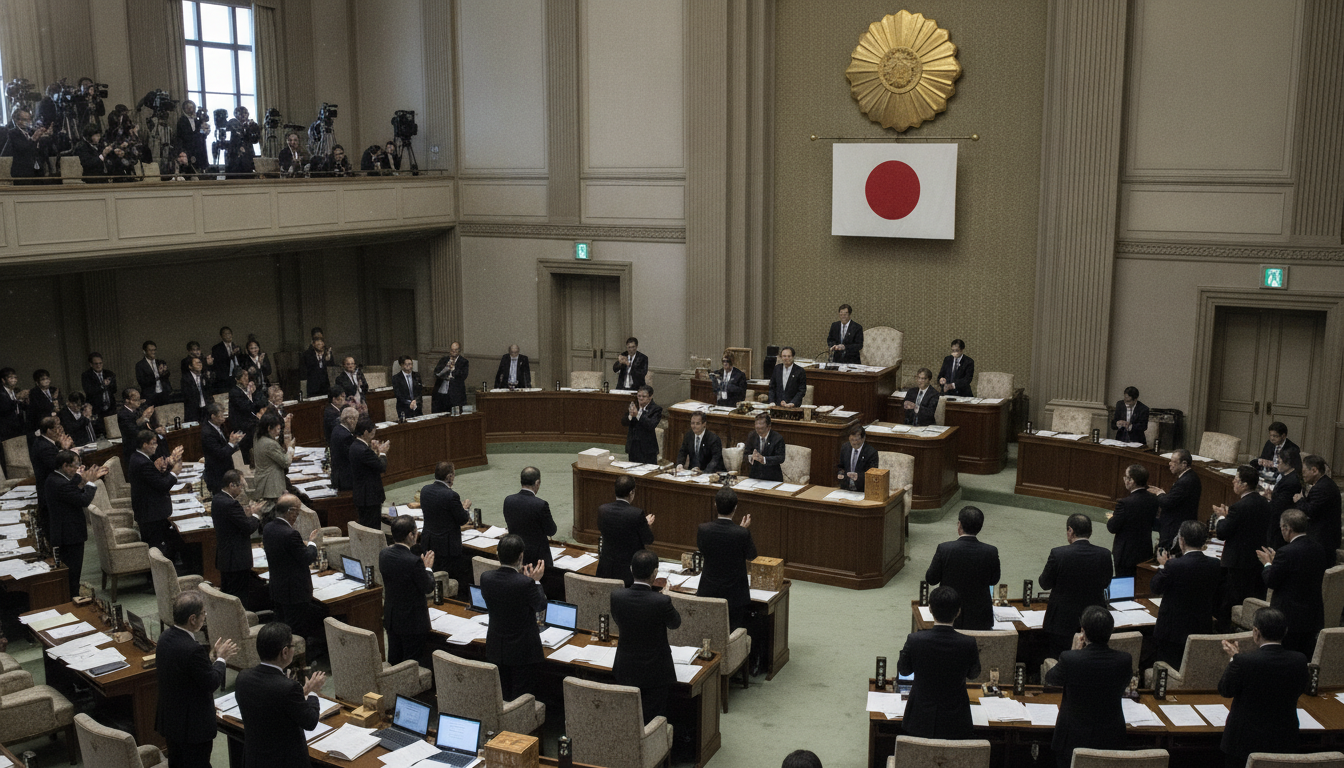
Imperial House Law amendment passes Lower House, headed for enactment after centrist backing
Imperial House Law amendment passed the Lower House on July 10, 2026, after centrist lawmakers shifted to support the government; the measure would allow adoption of male-line descendants from imperial families.
The Lower House of the Diet on July 10, 2026 approved the Imperial House Law amendment in a vote that clears the path for final enactment this session. The bill, designed to secure the number of imperial family members, would permit the adoption of male-line descendants from former imperial households into the imperial family. With a centrist grouping switching to back the proposal and the main opposition party opposing the plan, the legislation now moves to the Upper House for consideration before the current Diet session ends on July 17, 2026.
Lower House Vote and Legislative Outlook
The amendment was adopted in the Lower House by a majority of votes after deliberations in committee and plenary sessions. Lawmakers who had been undecided shifted position in the hours leading up to the vote, enabling the government to secure the necessary support.
Government officials said they expect the House of Councillors to complete its deliberations in time for the bill to be enacted during the Diet session that concludes on July 17, 2026. If the Upper House approves the measure, it will be sent to the imperial household and relevant ministries for implementation steps.
Adoption proposal to bring male-line descendants into the imperial family
The central policy change in the amendment is a mechanism to welcome male-line descendants from former imperial households as adopted members of the imperial family. Proponents say the measure is intended to address a projected decline in the number of working members of the imperial household and to preserve continuity in imperial duties.
Supporters stress that the plan focuses on male-line succession, maintaining what they describe as the historical lineage of the monarchy. Critics, however, have raised legal and institutional questions about whether adoption is the best or only way to address long-term succession concerns.
Prime Minister Takaichi’s push and party dynamics
Prime Minister Sanae Takaichi has been a prominent advocate for measures that reinforce male-line succession and the traditional pillars of the monarchy. In April she framed the debate within a conservative view of preserving tradition and order while pursuing measured reform, saying the emperor is a pillar of Japanese history.
Ms. Takaichi’s long-standing emphasis on restoring ties to former imperial households dates back to earlier party leadership contests, when she publicly argued for reviving the imperial status of branches that left the imperial household after World War II. That stance has shaped the government’s legislative strategy and roused both support and resistance within and beyond the ruling party.
Opposition stances and the decisive role of centrist lawmakers
The main opposition party declared a policy of opposing the amendment, citing concerns about gender equality, constitutional interpretation, and the speed of change. Lawmakers from opposition ranks warned that amendments touching the imperial household should emerge from a broader national consensus rather than expedited parliamentary maneuvering.
A centrist reform coalition that had initially withheld judgment announced its support before the Lower House vote, a move described by some members as reluctant but necessary to avoid an institutional crisis. That switch proved decisive in delivering the parliamentary majority the government required.
Public opinion, constitutional questions and expert commentary
Public sentiment on the Imperial House Law amendment remains divided, with polls showing a mix of support for preserving traditional male-line succession and concern over gender equality and democratic legitimacy. Legal scholars and constitutional experts have pointed to complex questions about how adoption would interact with the postwar constitutional framework and existing statutes governing the imperial household.
Civil society groups and gender-rights advocates argue that alternatives — including recognizing female succession or other reforms — were not given adequate parliamentary consideration. Meanwhile, proponents counter that practical, short-term measures are necessary to ensure the imperial family can continue public duties without overburdening a shrinking number of working royals.
The government has indicated it will prepare implementing regulations and administrative steps should the amendment be approved by the Upper House. Officials also said they will seek to clarify procedural details around adoption, titles, and official status to minimize legal ambiguity.
If the House of Councillors approves the bill before the Diet session ends on July 17, 2026, the amendment will be enacted within this parliamentary term and trigger preparatory work across ministries for the potential reclassification of selected male-line descendants.

