
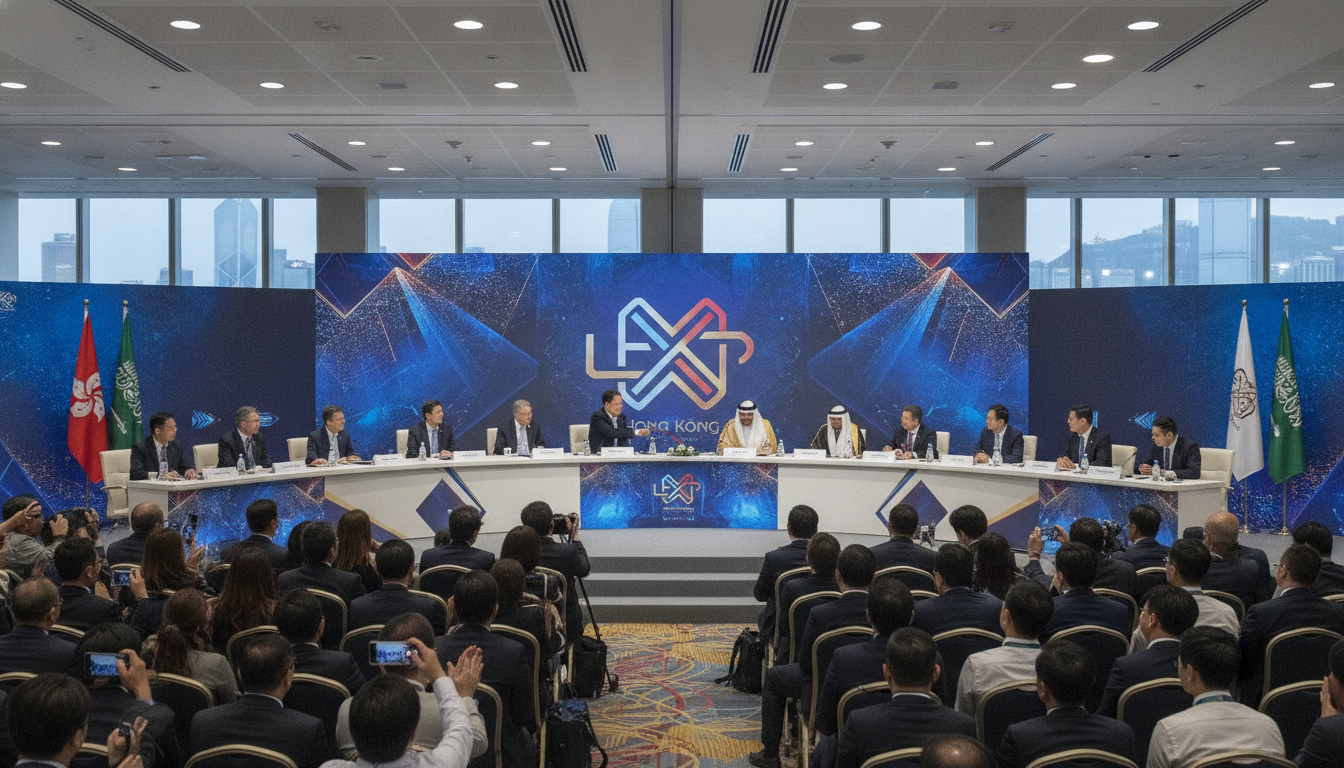
LEAP Conference in Hong Kong Rekindles China–Middle East Tech Links
LEAP conference in Hong Kong draws Chinese tech firms seeking Middle East expansion, spotlighting AI, robotics and healthcare partnerships amid regional tensions
Hong Kong has reopened a business channel with the Middle East as the Saudi-founded LEAP conference staged events in the city, bringing Chinese technology companies keen to expand into Gulf markets. The LEAP conference served as a focal point for firms showcasing artificial intelligence, robotics and medical devices, underlining renewed commercial engagement after disruptions tied to the Iran war. Company representatives and industry organizers described the gatherings as a practical step toward rebuilding trade and technology connections across regions.
Hong Kong reopens Middle East business corridor
Leaders in trade and technology view Hong Kong as a convenient gateway for Chinese companies seeking access to investors and buyers in the Gulf. The LEAP conference created a concentrated opportunity for meetings, product demonstrations and preliminary negotiations with partners from Saudi Arabia and other Middle Eastern markets. Organizers said the event aimed to reestablish relationships that were hindered in recent years by security concerns and geopolitical instability.
Saudi-backed LEAP draws AI and robotics firms
The Saudi-founded LEAP conference emphasized AI and robotics as priority sectors for cross-border collaboration, attracting startups and established firms from mainland China and Hong Kong. Panels and exhibitor halls showcased use cases ranging from data-driven services to automated industrial and clinical systems. Participants described heightened interest on both sides in applying AI to healthcare workflows, logistics and urban technology projects.
Cornerstone Robotics showcases surgical system for Gulf, Southeast Asia and Europe
Cornerstone Robotics, one of the exhibiting companies at the conference, presented a surgical system it hopes to sell in the Middle East as well as in Southeast Asia and Europe. Company staff described the Gulf as a strategic market because of rising healthcare investment and government-led modernization programs. Demonstrations at the LEAP conference were positioned to open distributor conversations and pilot opportunities with regional hospitals and medical groups.
Chinese tech companies seek market entry and strategic partners
Several Chinese technology firms attending LEAP framed the conference as an exploratory stop on broader international expansion plans rather than a final sales push. Executives said they were scouting distribution networks, local partners and potential investors to help navigate regulatory and commercial environments in the Gulf. The emphasis was on forging practical ties—contracts, pilot projects and joint ventures—that can be scaled if early cooperation proves successful.
Investors and trade delegations increase engagement
Beyond product displays, the event drew trade delegations and investor groups looking for technology deals and project financing opportunities. Financial representatives and private equity sources at the conference signaled appetite for targeted investments in AI platforms, healthtech and automation. Industry observers noted that capital flows and public procurement in Gulf countries are key levers that could accelerate Chinese vendor entry if procurement standards and certification pathways are clarified.
Security backdrop and geopolitical risks from Iran war
Delegates acknowledged that recent disruptions tied to the Iran war remain a complicating factor for long-term planning and logistics. Companies and trade bodies said they were factoring security, insurance and supply-chain resilience into expansion strategies, while seeking assurances from local partners and authorities. The need to balance commercial opportunity with risk mitigation shaped many conversations at the conference, particularly for firms dealing with critical infrastructure and medical equipment.
Analysts and participants described the LEAP conference in Hong Kong as an early sign of pragmatic reconnection between Chinese tech suppliers and Gulf buyers, even as political and security uncertainties persist. For many exhibitors, the immediate goal was to secure pilot projects and local endorsements that can translate into formal contracts. If those initial steps proceed smoothly, organizers and businesses expect deeper trade and technology links to follow in the coming months.

