
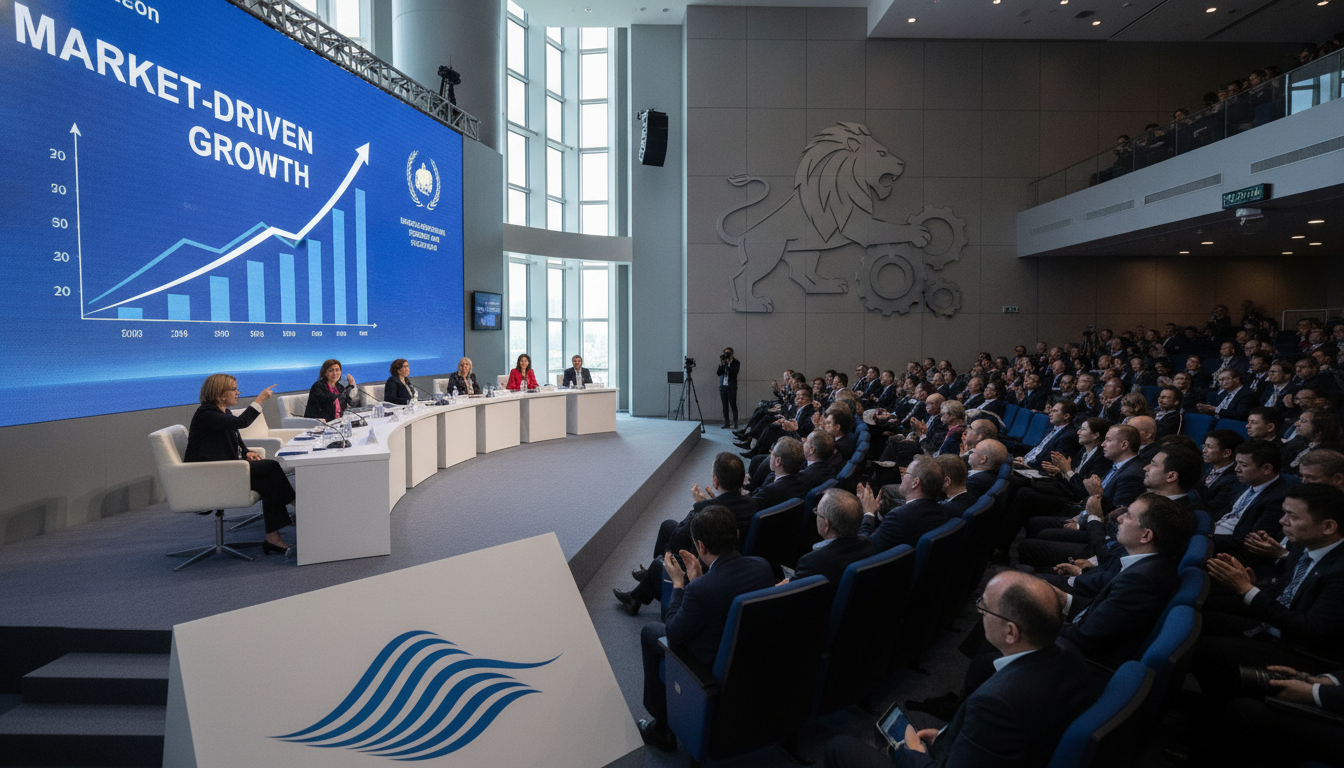
Summer Davos in Dalian Signals Shift Toward Market-Led Growth
Summer Davos in Dalian highlighted market-led reform as the forum’s central theme, bringing global executives and Chinese officials together to debate growth strategies. The World Economic Forum and Chinese authorities co-hosted the event in late June in Dalian, Liaoning province, underscoring Beijing’s interest in courting foreign capital while emphasizing private-sector dynamism. Discussions at the Summer Davos framed markets—not centralized direction—as the most viable route to sustained economic expansion.
Dalian Hosts High-Profile Economic Forum
The coastal city of Dalian served as the venue for this year’s Summer Davos, drawing business leaders, policymakers and investors from across the region. Organizers positioned the event as a platform to rebuild trust between China and international markets amid lingering concerns over regulatory unpredictability. The choice of Dalian—once promoted as the “Hong Kong of the north”—also carried symbolic weight as China seeks to revive growth in its northeastern industrial belt.
Market-Led Growth Dominates Agendas
A recurring message across panels was that market mechanisms, pricing signals and private investment will play an outsized role in restoring momentum to the global and Chinese economies. Speakers argued that while targeted policy support remains necessary, long-term productivity gains hinge on clearer rules for competition, stronger property rights and deeper capital markets. Delegates contrasted market-driven reforms with previous cycles of heavy state intervention, suggesting a pragmatic recalibration rather than an abrupt policy departure.
Corporate Attendance and Investor Sentiment
Major multinational executives used the forum to gauge China’s appetite for foreign capital and to signal commitment where policy clarity exists. Several firms announced renewed engagement plans in sectors ranging from green energy to advanced manufacturing, citing improved access in pilot zones and clearer regulatory roadmaps. Investor panels reflected cautious optimism: participants welcomed outreach but emphasized the need for sustained, verifiable changes to legal and commercial frameworks.
Chinese Policy Signals and Official Participation
Chinese officials participating in the conference sought to reassure foreign audiences that Beijing supports a constructive role for markets within its broader economic strategy. Statements delivered at sessions emphasized targeted support for innovation, the expansion of private enterprise protections and measures to attract high-quality foreign investment. Observers noted, however, that officials also maintained a pragmatic defense of state involvement in strategic areas, framing a mixed approach rather than full market liberalization.
Implications for Japan and Regional Trade
For Japan, the forum offered both an opportunity and a cautionary note: increased Sino-global engagement could deepen trade linkages and investment flows, but persistent policy uncertainty in China could complicate corporate planning. Japanese firms with supply-chain exposure in northeast China are watching for concrete reforms that would stabilize operating conditions and incentivize capital reallocation. Regional coordination on standards, green-transition investments and supply resilience were recurrent themes that could shape Japan’s commercial and diplomatic responses.
Challenges Remaining for Market Reforms
Despite the forward-leaning rhetoric, participants identified several obstacles to translating discussion into durable change, including uneven enforcement, local protectionism and financial sector fragilities. Experts at the forum stressed that piecemeal measures risk producing short-term signals without structural reform to support fair competition. Long-term progress will require consistent implementation across provinces, clearer dispute-resolution mechanisms and enhanced transparency for both domestic and foreign stakeholders.
The Summer Davos in Dalian thus operated as both a confidence-building exercise and a diagnostic forum—showcasing appetite for market-led solutions while exposing gaps between rhetoric and enforceable policy. Business leaders and officials left with a shared recognition that markets must be empowered through legal and institutional reforms if growth is to be sustained.
Ultimately, the outcomes from Dalian will be judged not by speeches but by follow-through: concrete regulatory changes, measurable improvements in investment protections, and visible shifts in provincial practices. For Japan and other regional economies, the near-term priority will be to monitor those developments closely and to align commercial strategies with clear signals from Beijing. The Summer Davos provided a moment of engagement; the hard work of converting dialogue into durable policy now begins.

