
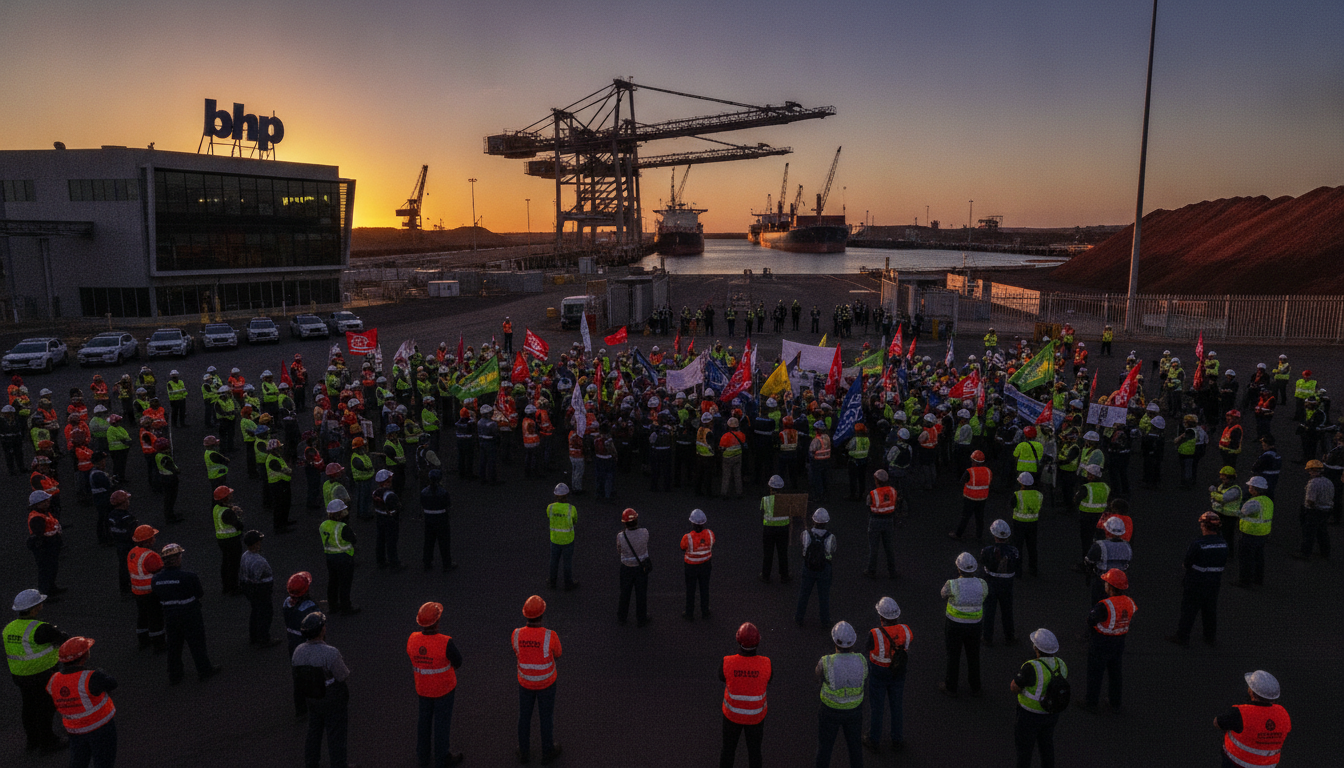
BHP faces Port Hedland walkout as unions notify company of planned eight‑hour strike
Unions at Port Hedland have informed BHP of an eight‑hour walkout that could cost the miner tens of millions and delay iron ore shipments bound for steel mills in China, Japan and South Korea.
The unions representing workers at Port Hedland, the world’s largest iron ore bulk export port, have notified BHP of plans for an eight‑hour walkout, raising the prospect of short but disruptive stoppages to loading operations. The Port Hedland walkout is expected to affect vessel loading schedules and road‑and‑rail logistics that feed the terminals, according to union statements and industry sources. BHP and local union officials have been engaged in talks, but the notification signals an imminent escalation unless an agreement is reached.
Unions Notify BHP of Eight‑Hour Walkout
Unions delivered formal notice to BHP of the proposed eight‑hour action as part of an ongoing industrial dispute over working conditions and rostering arrangements. The notification is a legal step that preserves the right to strike while allowing a short window for further negotiation. Union leaders said the targeted duration is intended to maximize operational impact while limiting worker exposure to prolonged industrial action.
Potential Financial Impact on BHP
Company and market observers estimate the brief stoppage could cost BHP tens of millions of dollars through lost shipments, demurrage and redeployment of assets. Even a single eight‑hour disruption at Port Hedland can cascade through a tightly scheduled export chain, forcing vessel delays and additional berthing costs. For a major producer like BHP, repeated or concurrent stoppages at Pilbara ports would compound losses and weigh on quarterly export volumes.
Export Delays for China, Japan and South Korea
Shipments bound for steelmakers in China, Japan and South Korea face the most immediate risk of delay, as vessels normally arrive on narrow windows tied to global contracts and just‑in‑time supply chains. Customers that rely on timely deliveries may need to reshuffle inventories or source material from alternative suppliers, potentially incurring higher costs. The short duration of the planned walkout suggests delays may be measured in hours and days rather than weeks, but even small timing shifts can strain downstream manufacturing schedules.
BHP Seeks Further Talks with Union Representatives
BHP confirmed it had received notice and said it was seeking further talks with union representatives to avert industrial action and limit disruption to exports. Company executives and site managers have emphasized the importance of maintaining continuity of operations while engaging on workforce concerns. In public comments, BHP framed discussions as aimed at reaching an operationally sustainable outcome that addresses worker demands without endangering supply commitments.
Operations at Port Hedland and Pilbara Infrastructure
Port Hedland sits at the center of Australia’s Pilbara iron ore network, linking mine sites to port terminals via extensive rail and road systems and high‑capacity loading facilities. The port’s scale makes even short interruptions significant because stockpile management, train timetables and vessel rotations are tightly integrated. Seasonal factors such as maintenance windows and weather can narrow flexibility, meaning operators often have limited room to absorb unexpected stoppages.
Industry and Market Reactions
Traders, customers and shipping firms are monitoring the situation closely, and short‑term market responses can include tightening of freight capacity and marginal pricing shifts for spot cargoes. Some buyers maintain contingency arrangements to cover short disruptions, while others have less flexibility and may feel the effects sooner. Industry bodies and other miners in the region are likely to assess the dispute for wider implications and to consider whether to invoke contractual clauses or alter scheduling to protect supply chains.
The notification of a Port Hedland walkout underscores the strategic vulnerability of concentrated export hubs and the leverage that targeted industrial action can yield in bargaining. Companies, unions and customers now face a narrow window to resolve outstanding issues before the planned action, with both sides signaling a willingness to continue talks while preparing operational contingencies.

