
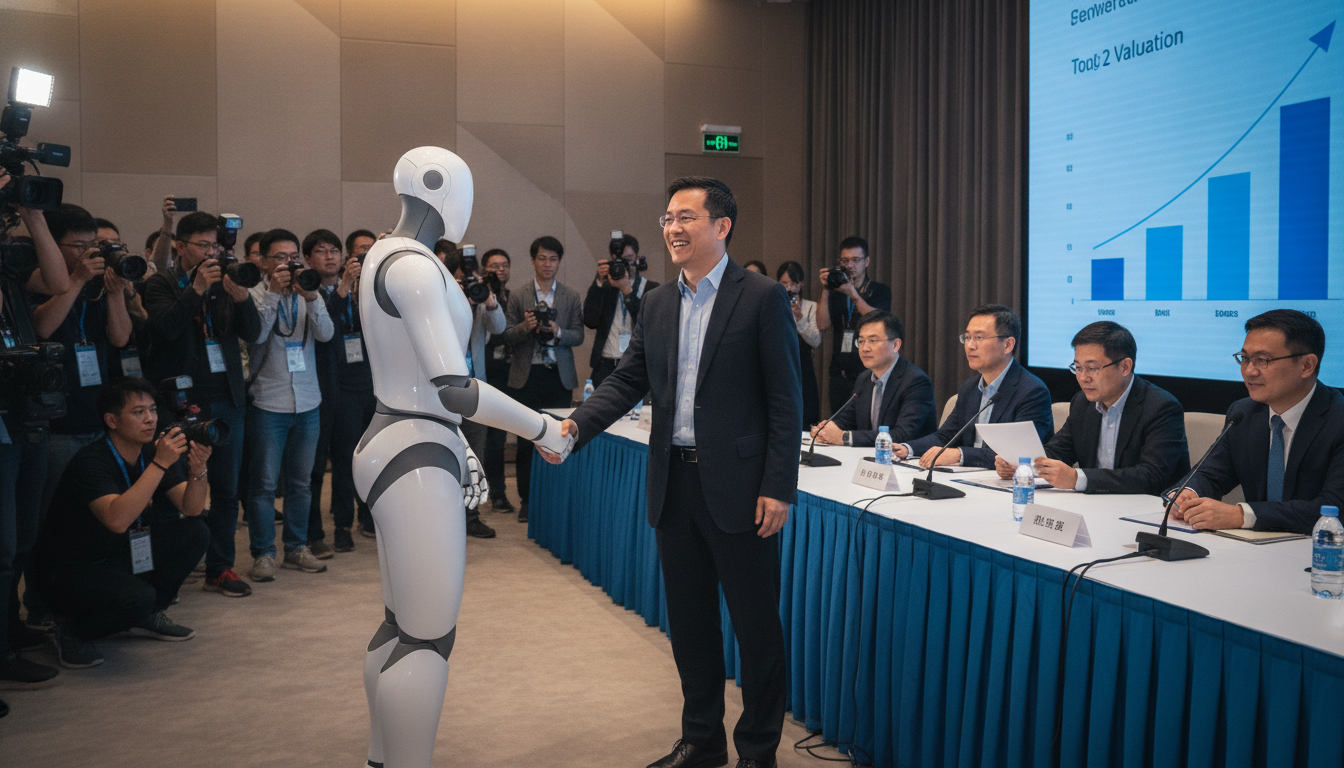
LimX Dynamics Raises Nearly $200 Million at 15 Billion Yuan Valuation to Advance Humanoid Robots
LimX Dynamics raised nearly $200 million in a new funding round, valuing the Shenzhen robotics startup at 15 billion yuan ($2.2 billion) to accelerate development of humanoid robots for autonomous, complex tasks.
SHENZHEN — LimX Dynamics said it secured close to $200 million in fresh capital in a funding round that values the company at 15 billion yuan, or about $2.2 billion. The raise will be directed toward advancing LimX’s humanoid robots and strengthening the data and engineering systems needed to make those machines more autonomous.
The announcement included confirmation that investors from Europe participated in the round, underscoring cross-border interest in robotic platforms. Company executives highlighted the need for expanded real-world data collection to improve autonomy and reliability in complex environments.
Funding size and valuation
LimX’s new financing, described by the company as nearly $200 million, represents a significant endorsement of its roadmap for humanoid robotics. At a stated valuation of 15 billion yuan, the round places LimX among a small group of private robotics firms commanding multi-billion-dollar valuations.
The cash infusion gives LimX greater runway to move from prototype demonstrations toward larger-scale field trials and commercial pilots. The size of the round signals growing investor appetite for companies that aim to pair advanced hardware with large datasets and machine-learning systems.
European investors join the round
The company said investors from Europe joined the financing, marking a notable element of international participation in the deal. That involvement reflects widening global interest in robotics companies that promise to address labor shortages and automation needs across markets.
European capital can also bring strategic value beyond money, including technical partnerships, distribution channels and market access. LimX’s ability to attract overseas backers highlights investor confidence in its technology and commercial prospects.
Oli humanoid revealed at Shenzhen headquarters
LimX showcased its humanoid robot, dubbed Oli, at the company’s Shenzhen headquarters on July 3, where the machine was displayed during demonstrations. The robot is presented as capable of physical tasks that require dexterity and balance, though company statements emphasize ongoing development toward full autonomy.
Visual demonstrations are intended to validate mechanics, sensing and control systems, but LimX has stressed that simulated environments cannot fully substitute for broad exposure to real-world conditions. The company says that deploying robots like Oli in realistic settings is essential to refine perception and decision-making.
Need for real-world data and autonomy challenges
LimX has identified the acquisition of real-world operational data as a priority for improving autonomy and safety. Engineers typically rely on a mix of simulation, controlled lab tests and live operational data to train perception and control models, and LimX officials indicated the new funding will expand those efforts.
Collecting diverse data across varied environments helps reduce failure modes that arise when robots encounter unexpected obstacles or ambiguous sensory inputs. For humanoid robots, in particular, learning to operate reliably in human-centric spaces requires large, annotated datasets paired with iterative testing and sensor fusion improvements.
Market positioning and potential applications
LimX positions its humanoid robots for tasks that are difficult to automate with traditional fixed machinery, pointing to potential applications in logistics, manufacturing support, inspection and service roles. The company and its investors appear to be betting that humanoid platforms can unlock new use cases by navigating spaces built for people and handling a range of manual tasks.
The valuation reflects expectations that early commercial deployments and partnerships could validate demand, although widespread adoption will hinge on cost, reliability and regulatory acceptance. LimX will need to demonstrate operational resilience and scalable economics to convert investor enthusiasm into sustainable revenue.
Planned use of funds and next steps
Company statements indicate the proceeds will be channelled into R&D, data collection initiatives, product refinement and scaling demonstration programs. LimX is likely to expand engineering teams, invest in sensing and AI stacks, and deepen field trials to shorten the path from prototype to deployed systems.
Observers expect the firm to pursue pilot contracts and collaborations that provide structured environments for iterative learning and safety validation. The timetable for broader commercialization remains contingent on technical progress and the ability to secure customers willing to integrate humanoid systems into real operations.
LimX’s latest funding round offers a clear vote of confidence in its ambition to build humanoid robots that can operate autonomously in complex, real-world settings, and the capital will be critical as the company moves from demonstration to demonstration-at-scale. The coming months of testing, data gathering and partnership-building will determine whether LimX can convert this investment into practical, market-ready robotic solutions.

