
Uneven Monsoon Rainfall Cuts Planting by Up to 39%, Raising Food Inflation Fears in India
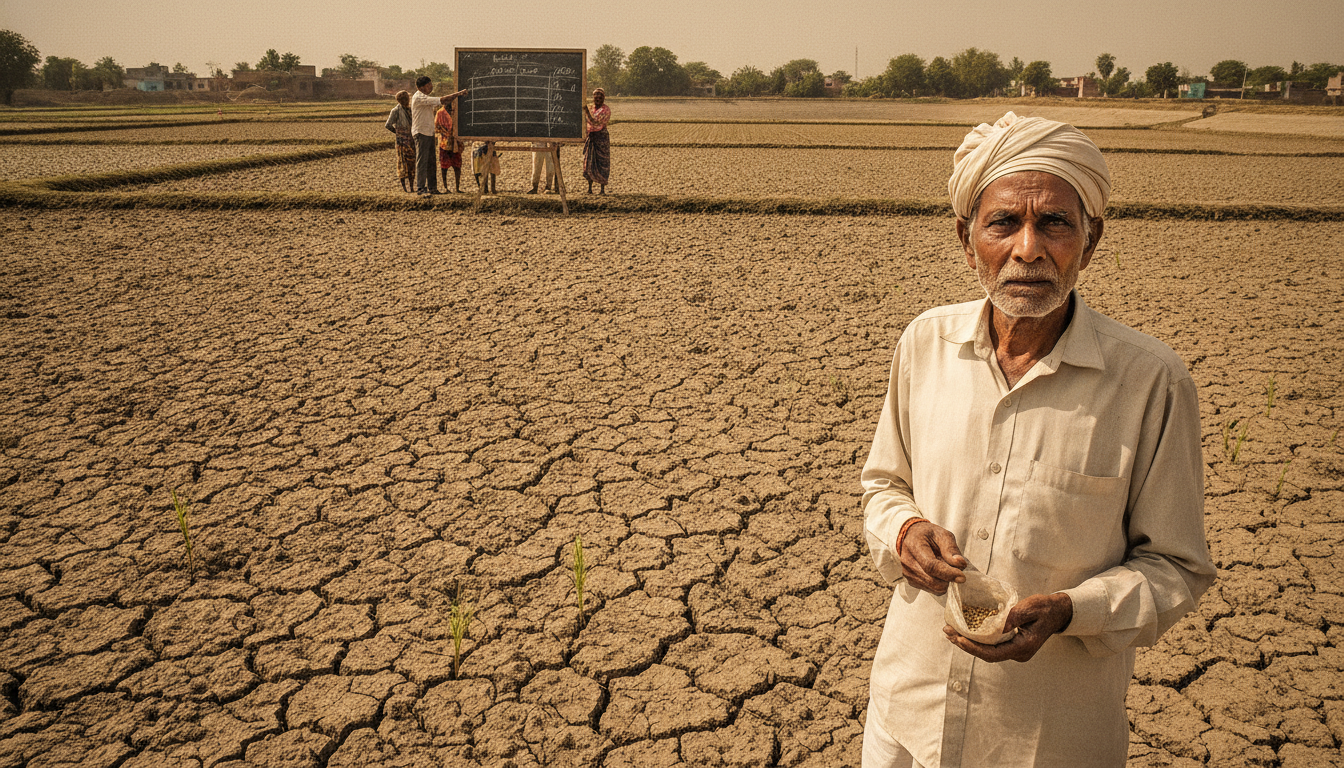
Uneven monsoon rainfall during the sowing season has sharply curtailed planting in parts of India, with key crop sowing down by as much as 39% and prompting renewed concerns about rising food inflation.
India’s monsoon rainfall has been markedly uneven this season, leaving planting for major Kharif crops well below last year’s levels and stoking worries over future food supply and prices. Official and market observers say planting of several staple crops has fallen sharply, with dry states such as Karnataka particularly affected. At the same time, localized heavy rains have forced farmers in parts of Gujarat to replant paddy saplings, underscoring the erratic nature of the season.
Monsoon Shortfall Reduces Planting by Up to 39%
Below-average and uneven rains over the core sowing period have cut the area sown for several crops compared with last year. Preliminary counts indicate that planting of some key crops is down by as much as 39% year-on-year, a decline that will reduce expected acreage and could translate into lower production if rains do not recover quickly.
The shortfall is not uniform across crops, with water-intensive crops particularly vulnerable to delayed or missed sowing windows. Where rains have arrived late or in insufficient quantity, farmers have postponed or reduced sowing, opting either for less water-dependent crops or forgoing cultivation on marginal lands.
Karnataka and Other Dry States Hit Hard
States with historically drier monsoon patterns have borne the brunt of the deficit, with Karnataka cited among those seeing significant declines in planted area. Local officials report that insufficient soil moisture has limited sowing activity, constraining planting of staple cereals and pulses in large parts of the state.
The geographic patchiness of the monsoon means some regions face acute deficits while others received intense downpours that required recovery work. This disparity complicates a uniform policy response and leaves state-level agricultural officials scrambling to assess damage and advise farmers on salvage operations.
Paddy and Kharif Crops Face Planting Delays
Paddy, the principal Kharif cereal, has been especially affected; both delayed onset and erratic distribution of rainfall have pushed back transplanting schedules across several districts. In areas where heavy localized rains arrived after a dry spell, farmers have had to replant damaged seedlings, adding to costs and labour demands.
Other Kharif crops, including pulses and oilseeds, face their own risks from timing disruptions. Shortened growing windows can lower yields even where planting proceeds, and a shift by some growers toward less water-intensive crops could alter the crop mix and market balances for staple commodities this season.
Market Impact and Food Inflation Concerns
Markets have reacted to the planting data with heightened sensitivity, as reduced sowing raises the prospect of tighter supplies and upward pressure on retail food prices. Economists and traders warn that diminished acreage for cereals and pulses could contribute to higher food inflation later in the year if yields do not compensate for the reduced planted area.
Food price inflation is a politically sensitive indicator and has direct implications for monetary and fiscal policy decisions. Retail prices for staples are closely watched by policymakers; significant disruptions to Kharif production would increase the risk of price volatility in wholesale and retail markets through the remainder of the year.
Government and Farmer Responses
State and central authorities typically monitor sowing progress closely and may deploy measures to support vulnerable farmers, including input subsidies, targeted procurement, and advisory services on crop choices and water management. Officials are likely to prioritize areas with acute shortfalls for relief and technical assistance to reduce the risk of crop loss and distress sales.
On the ground, farmers have responded in varied ways: some have replanted paddy saplings where late rains arrived, while others have delayed sowing or switched to crops with lower water requirements. Labour and input costs have risen in some districts as replanting and salvage operations increase demand for seedlings and manual work.
Outlook for the Remainder of the Monsoon Season
The outlook for production will depend crucially on rainfall performance in the coming weeks and the distribution of precipitation across key farming belts. An uptick in consistent, evenly distributed rains could narrow the gap in planted area and support crop recovery, while continued erratic patterns would deepen the risk to yields and supplies.
Agricultural analysts emphasize that the next several weeks are critical for determining final acreage and yield prospects. Monitoring will focus not only on total rainfall but also on soil moisture, reservoir levels and the timing of rains relative to crop growth stages.
The uneven monsoon this sowing season has laid bare the vulnerability of India’s Kharif crop calendar to rainfall variability, raising immediate worries about planting shortfalls and longer-term concerns about food prices and rural incomes. Continued monitoring, prompt policy responses and local adaptation by farmers will be central to limiting the economic fallout as the season progresses.

