
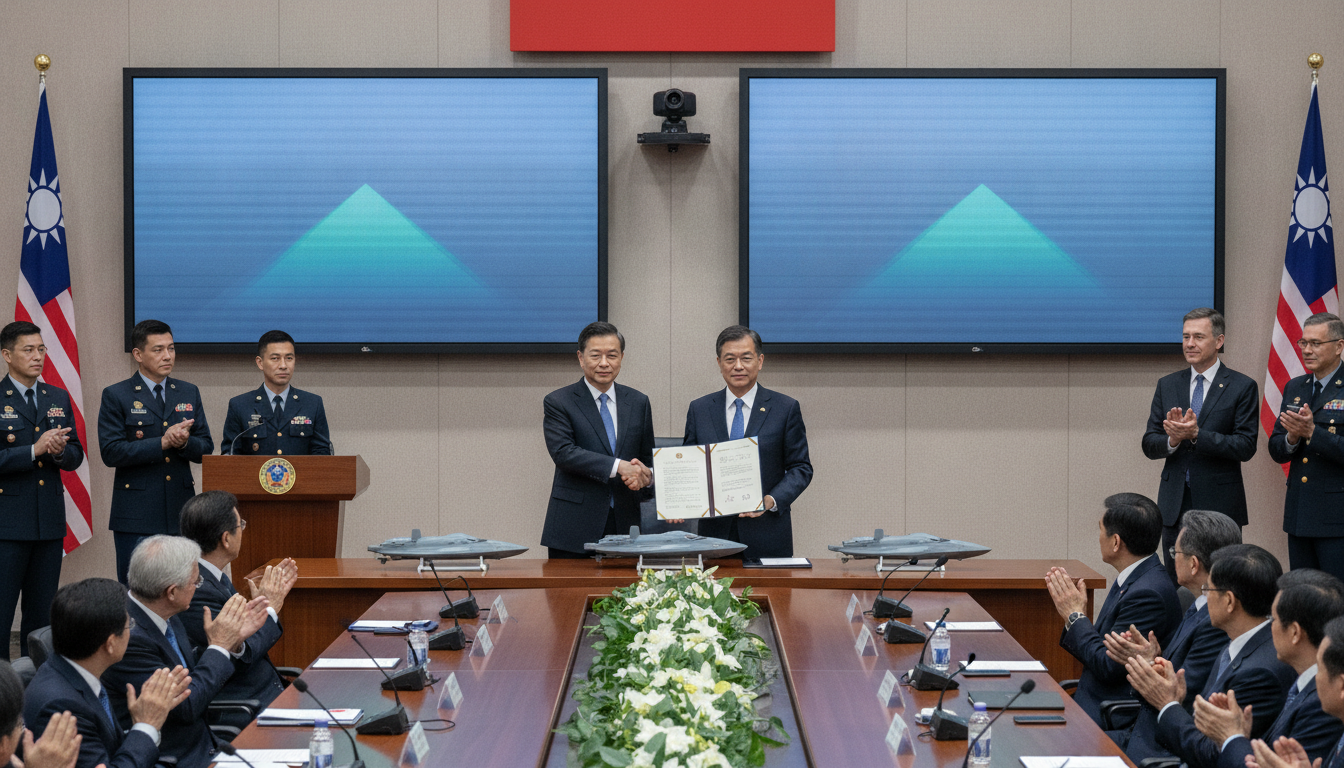
Taiwan Awards Contracts for Dozens of Sea Drones to Strengthen Coast Guard
Taiwan awards contracts for dozens of sea drones to boost Coast Guard capability, using U.S. technology and partners as China expands maritime activity nearby.
Taiwan has decided to award contracts for dozens of sea drones to bolster its Coast Guard, a senior official close to the matter told Nikkei Asia. The move taps U.S. technology and reflects Taipei’s push to upgrade maritime surveillance and response amid intensifying regional pressure. Officials say the procurement is part of a broader effort to close capability gaps against increasingly assertive activity in nearby waters.
Contract Awards and Scale
A high-ranking official speaking to Nikkei Asia confirmed that the contracts will cover dozens of unmanned surface vessels destined for Coast Guard use. The procurement is aimed at improving persistent patrolling, surveillance and data collection in coastal zones where manned operations face limits. Details on specific suppliers and contract values were not disclosed by the official, who spoke on the condition of anonymity.
The government has signalled that additional purchases could follow as operational needs become clearer and testing proceeds. An ex-official familiar with Coast Guard planning told reporters that hundreds of sea drones may ultimately be required to provide comprehensive coverage. That assessment underlines a potential long-term buildup rather than a one-off upgrade.
U.S. Technology and Institutional Partnership
Taipei is also moving to partner a government research institute with a U.S. firm for development and integration work. Officials described the cooperation as a mix of foreign technology transfers and domestic systems integration to ensure the drones meet local maritime enforcement requirements. The collaboration is expected to blend U.S. sensors and autonomy software with Taiwanese command-and-control systems.
Government sources indicated the arrangement is intended to accelerate deployment while establishing local maintenance and production capabilities. By combining external technology with domestic adaptation, Taiwan aims to shorten lead times and reduce dependence on foreign logistics for routine support.
Coast Guard Needs and Expert Warnings
Coast Guard leaders have long argued for improved unmanned capabilities to manage wide maritime zones with limited personnel and assets. The service faces a complex mission set that ranges from search and rescue to law enforcement and deterrence of irregular incursions. An ex-official briefed on internal assessments said the scale of activity in contested waters means the Coast Guard will need a sustained fleet of sea drones to maintain coverage.
Analysts note that sea drones can extend surveillance reach and free manned ships for higher-intensity tasks, but they require robust communications, persistent power solutions and logistical networks. Training for operators and analysts will be necessary to translate raw sensor data into actionable maritime domain awareness.
Regional Context and Maritime Pressure
Taipei’s decision comes as China’s maritime presence in the region has expanded, contributing to a more contested operating environment for civilian maritime agencies. Taiwanese authorities have cited an uptick in interactions at sea that strain existing patrol resources and increase the need for resilient monitoring. Sea drones are seen as a cost-effective way to maintain presence and gather evidence without escalating confrontations.
Regional security analysts say unmanned systems are increasingly central to gray-zone contests, where state and non-state actors test boundaries without open conflict. For Taiwan, balancing enforcement, deterrence and de-escalation while protecting fisheries and maritime rights shapes procurement priorities.
Procurement, Integration and Industry Impact
The planned purchases are likely to involve phased deliveries, sea trials and iterative upgrades as field experience accumulates. Officials expect initial units to be used in layered operations alongside newly commissioned patrol ships and existing Coast Guard assets. Taiwan’s Ocean Affairs Council has already showcased new manned vessels, indicating parallel investments in crewed and uncrewed platforms.
Domestic firms and shipyards may benefit from integration and sustainment work, especially if the government prioritizes local assembly and maintenance to reduce reliance on foreign supply chains. Long-term industrial planning may include developing indigenous autonomy software and sensor packages tailored to Taiwan’s coastal environment.
Taiwan’s move to acquire sea drones signals an operational shift in how the Coast Guard seeks to preserve maritime order with limited conventional forces. The procurement emphasizes technology partnership, scalable capability growth and a pragmatic approach to maintaining presence in increasingly busy waters.

