
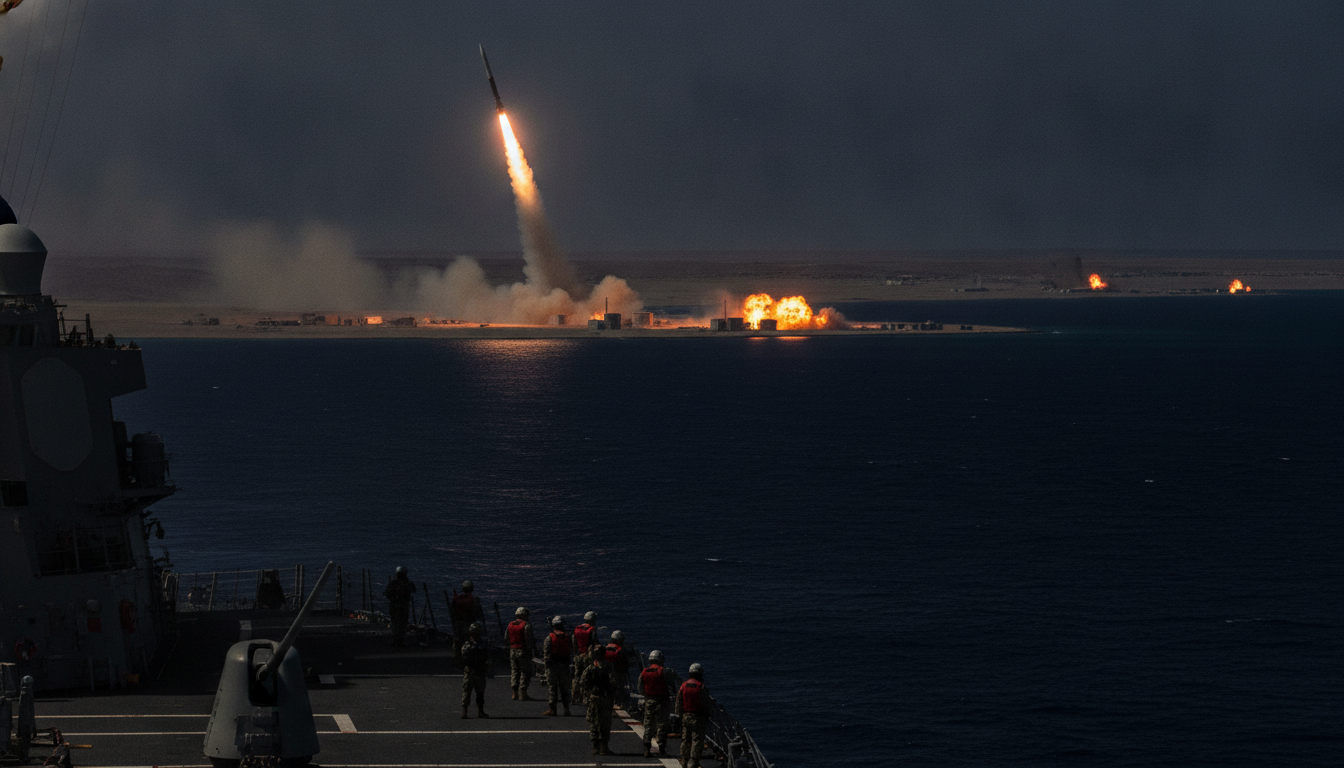
US military attacks Iran twice on July 15, striking facilities near Strait of Hormuz
US military attacks Iran twice on July 15, 2026, targeting missile and defense sites near the Strait of Hormuz; Iran’s parliamentary speaker says no reason to honor U.S. memorandum.
The US military announced on July 15, 2026, that it carried out two separate attacks on Iranian targets, a morning strike followed by a second operation in the afternoon. The actions, described by US Central Command as aimed at facilities threatening freedom of navigation, mark a sharp escalation after a series of recent confrontations. Iran’s parliamentary speaker, Ghalibaf, pushed back against a US-brokered memorandum on ending hostilities, saying there is no reason to adhere to it if Tehran gains no benefit.
U.S. forces launch two strikes targeting Iranian facilities
US Central Command said the first strike on July 15 used precision-guided munitions against defense systems and missile storage and launch sites on an island near the Strait of Hormuz. The command characterized the afternoon action, launched about seven and a half hours later, as targeting Iranian military facilities that threatened free passage through the waterway. Officials framed both operations as defensive measures intended to protect maritime routes and deter further Iranian interference.
Targets near the Strait of Hormuz hit with precision munitions
The morning operation focused on an island close to the strategic Strait of Hormuz, where authorities maintain that some Iranian systems could be used to disrupt shipping. US statements emphasized that munitions were aimed at degrading missile capabilities and related infrastructure, rather than targeting population centers. The timing and choice of targets underscore the Pentagon’s stated priority of safeguarding commercial navigation in a chokepoint that carries a large share of global oil shipments.
Iran resumes maritime blockade and confronts tanker bound for Kharg Island
Iran resumed a maritime blockade on July 14 and, within 24 hours, reported turning back two commercial vessels that attempted to circumvent the restriction. Tehran also posted video on social media showing what it said was an attack on the funnel area of a Curaçao-flagged tanker en route to the oil hub of Kharg Island, alleging the ship ignored multiple warnings. The footage and the naval maneuvers indicate Tehran is using both interdiction and publicity to reinforce its blockade and signal resolve to international and regional audiences.
Ghalibaf rejects memorandum if it brings no benefit to Iran
Leading a delegation in talks with US counterparts, Iranian parliament speaker Ghalibaf stated that Tehran would not feel bound to a memorandum aimed at ending hostilities if it offered no advantages. His remarks came as Washington increased military pressure with a sequence of strikes extending over several days. Ghalibaf’s stance reflects a hardline posture within Iran’s political leadership and signals potential limits to diplomatic avenues unless Tehran secures tangible concessions.
U.S. rationale centers on freedom of navigation and deterrence
US officials publicly justified the strikes by citing threats to the free flow of commerce through the Strait of Hormuz, a vital maritime corridor. Central Command framed the operations as necessary to counter military facilities that could endanger civilian shipping and maritime security. The repeated messaging underlines Washington’s priority of deterring actions it views as coercive or destabilizing in a region already marked by heightened tensions.
Regional implications and diplomatic friction
The two strikes add to a recent pattern of confrontations that risk broader regional escalation, complicating efforts by third parties to mediate de-escalation. Commercial shipping companies may reassess routes and insurance costs if attacks and blockades persist, with economic reverberations for energy markets and trade flows. Diplomatically, the standoff places pressure on partners and international organizations to clarify positions while seeking mechanisms to prevent miscalculation between Tehran and Washington.
The immediate outlook remains uncertain: Tehran’s refusal to commit to the memorandum unless benefits are evident, coupled with Washington’s continued emphasis on maritime security, suggests a continuing cycle of action and response. International actors will be watching for whether diplomacy can regain traction or if further military moves will deepen the confrontation.

