
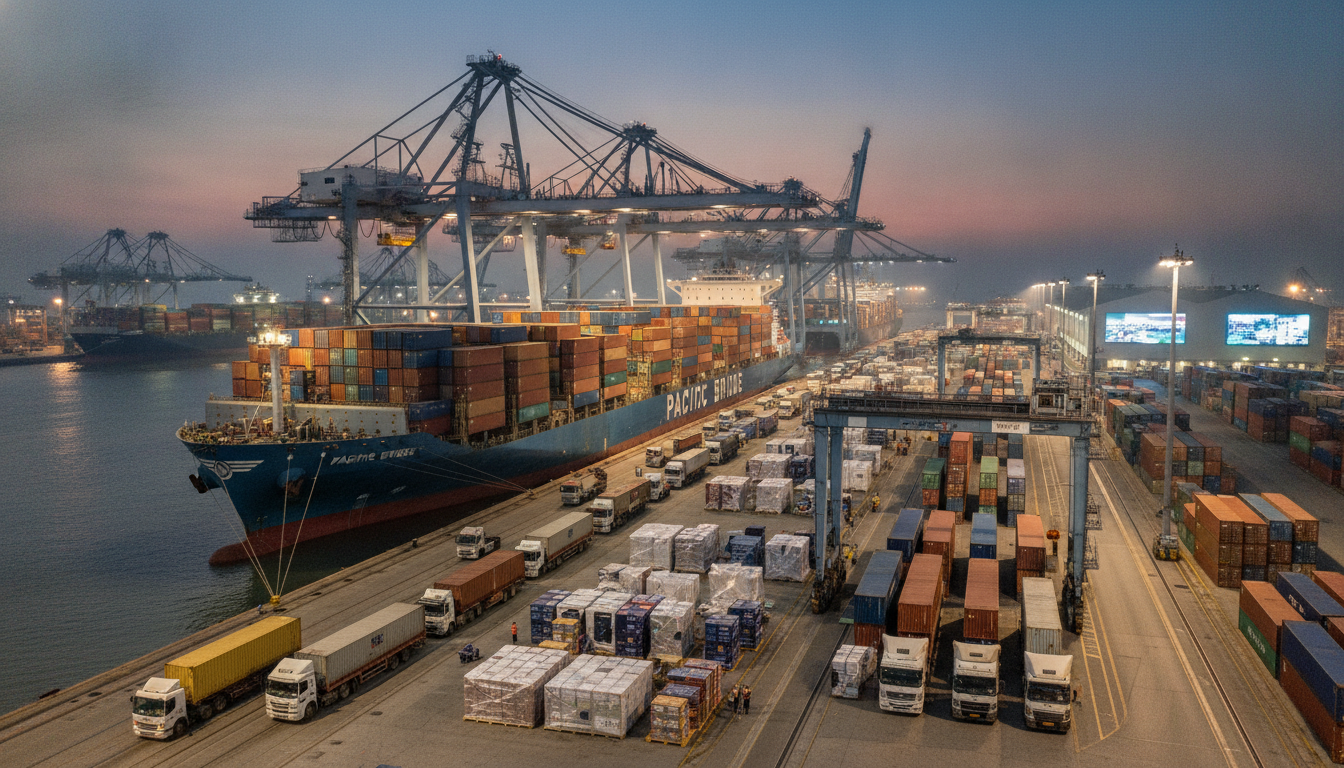
China-U.S. container freight rates surge to near two-year high as retailers rush to beat potential tariff hike
China-U.S. container freight rates hit a near two-year high as retailers rush holiday shipments ahead of possible tariff hikes, straining carriers and ports.
The spike in China-U.S. container freight rates reflects an accelerated push by retailers and importers to move seasonal merchandise before a potential increase in tariff rates. Shippers and logistics firms report heightened booking activity on major east‑west routes, driving up spot prices and shortening lead times. The surge is reshaping shipping schedules and forcing carriers and ports to adjust capacity and operational plans ahead of the peak import season.
Freight spike driven by pre‑holiday bookings
Spot market activity from Chinese export hubs to U.S. ports has intensified as retailers seek to secure inventory for the upcoming holiday season. Increased demand for available vessel space on short notice has pushed spot rates to levels not seen in almost two years, industry participants say.
This rush is being driven by uncertainty over future trade costs and the desire to avoid potential tariff increases that could raise landed costs later in the year. Importers are prioritizing earlier sailings, even at a premium, to ensure shelves and warehouses are stocked for peak demand.
Retailers accelerate shipment plans
Major retail chains and smaller merchants alike are advancing orders and expediting shipments to beat the tariff deadline many expect to come into effect. Buyers report longer booking queues and limited choice on preferred sailing windows, prompting some to consolidate orders and accept longer inland transit if it secures vessel space.
Sourcing managers say the strategy is intended to freeze current cost structures and protect margins, but it also compresses the usual seasonal flow. That compression increases the risk of bottlenecks at receiving ports and inland logistics hubs if volumes spike in a short timeframe.
Carriers and ports contend with concentrated demand
Container carriers have responded to the surge by reallocating capacity and managing blank sailings with an eye toward maximum utilization and yield management. Some carriers are reportedly prioritizing high‑yield westbound cargoes and adjusting schedules to capture premium short‑term business.
Ports on the U.S. east and west coasts are preparing for heavier inbound peaks, with terminal operators and trucking firms on alert for fluctuating arrival patterns. While infrastructure and labor remain stretched in many places, operators say earlier notifications and staggered arrivals can mitigate the most acute congestion risks, if coordinated effectively.
Impact on shipping costs and supply‑chain timing
Shippers facing higher spot freight rates may pass costs along the supply chain or absorb them temporarily depending on contract terms and inventory needs. For retailers that cannot delay product launches, elevated transport costs are becoming part of the margin calculus for the season.
Time‑sensitive goods are most affected, as expedited routing and premium space reservations increase per‑unit logistics expenses. For slower‑moving or higher‑margin categories, some companies are opting to accept higher freight costs to secure on‑time availability.
Risks for consumers and inventory management
A concentrated arrival of holiday goods ahead of a tariff change could create uneven product availability and short‑term price pressure in select categories. Analysts warn that if retailers massively front‑load shipments, downstream distribution centers and stores could face transient capacity shortages or increased handling times.
Conversely, frontloading may also create a subsequent lull in imports if inventories are built early, which could relieve pressure later in the season. Retailers and logistics planners must balance the cost benefit of early shipments against warehouse space constraints and demand forecasting accuracy.
Watchlist: tariff decisions and carrier capacity
The immediate outlook hinges on official tariff decisions and how quickly carriers adjust schedules and capacity to match the surge. Any formal announcement of higher duties would likely reinforce current booking patterns and could extend the period of elevated spot rates.
Monitoring port throughput, blank‑sailing announcements and carrier space availability will be critical for importers deciding between paying premiums now or risking higher costs and delays later. Coordination across the logistics chain remains the most practical lever to manage the coming weeks of intensified activity.
Retailers, carriers and ports are all recalibrating as they try to balance inventory needs, cost pressures and operational constraints. The current spike in China‑U.S. container freight rates is a clear signal that market participants are preparing for changes in trade policy and are willing to pay to secure supply ahead of potential disruptions.

