
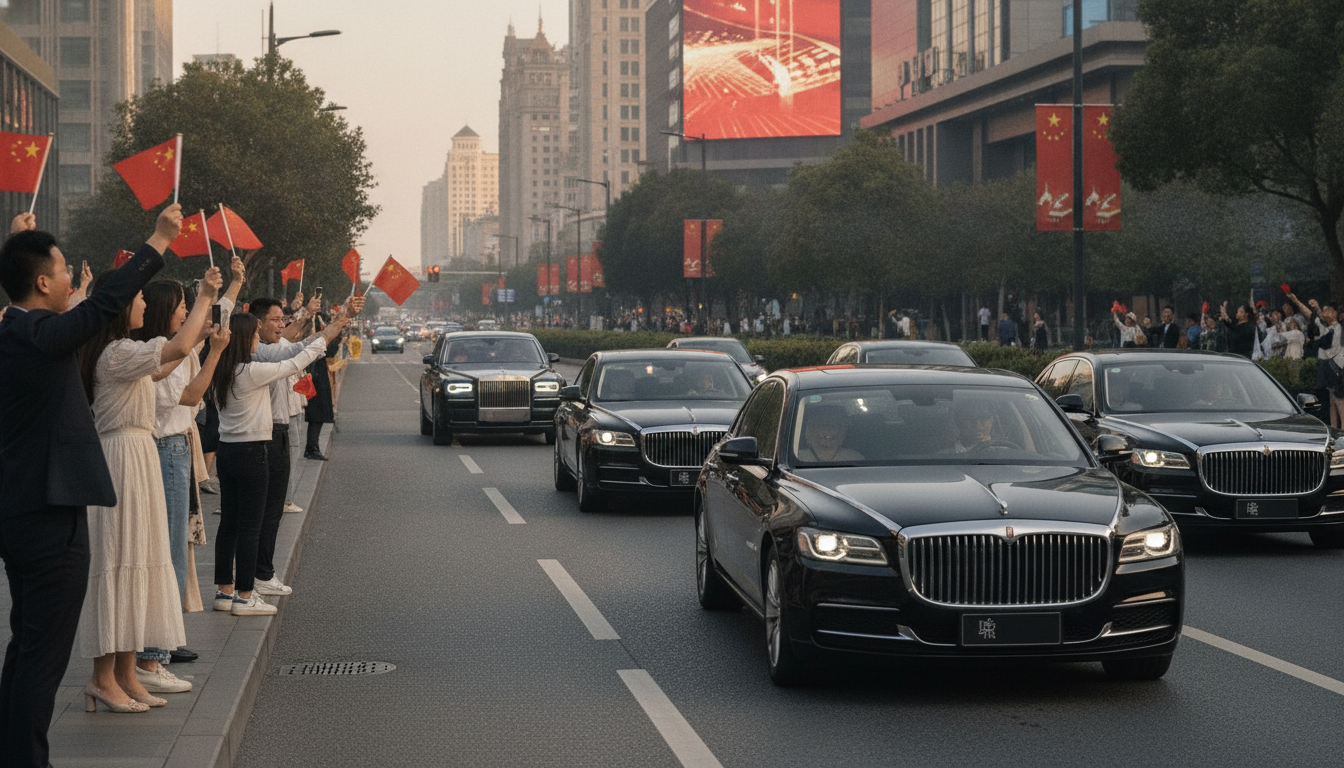
Hongqi’s limousines surge as sales eclipse Rolls‑Royce in China’s ultra‑luxury market
Hongqi’s state‑backed limousines are rising in China’s ultra‑luxury market, with the Guoli special edition unveiled in Beijing and sales now outpacing Rolls‑Royce.
Hongqi, the state‑owned Chinese marque known for ceremonial limousines, has moved to the centre of the country’s ultra‑luxury car market as demand from affluent, patriotically minded buyers strengthens. The brand’s top‑tier models, including the special Guoli edition revealed at the Beijing Motor Show, have drawn attention for high prices and bespoke features that appeal to wealthy domestic customers. Industry observers say Hongqi’s momentum reflects a broader shift toward domestic luxury consumption and strategic brand positioning by state‑linked firms.
Hongqi sales outpace Rolls‑Royce in China
Hongqi has reported a surge in demand for its flagship models that industry analysts say now places its sales above those of Britain’s Rolls‑Royce within the Chinese market. Dealers report brisk orders for unique, ultra‑premium variants that command prices well into the seven‑figure range, attracting buyers who prioritize status and national identity.
The change marks a notable realignment in the ultra‑luxury segment, long dominated by established European marques. Market commentators view Hongqi’s performance as a combination of competitive product offerings and the appeal of a domestic emblem of prestige.
Guoli special edition unveiled at Beijing Motor Show
The Guoli special edition, presented at the Beijing Motor Show in April, epitomizes Hongqi’s move upmarket with lavish materials, advanced technology and extensive customization options. The model has been showcased as a halo product, signaling the company’s ability to produce limousines that blend traditional ceremonial cues with contemporary luxury features.
Priced at roughly $1.6 million for certain configurations, the Guoli edition is positioned not merely as a transport solution but as a statement vehicle for collectors and corporate clients. Its public debut helped sharpen Hongqi’s profile among collectors and the ultra‑wealthy who seek limited‑run automobiles.
Patriotic consumption fuels demand among the super‑rich
A rising trend of patriotic consumption has become a powerful driver for luxury purchases in China, with some high‑net‑worth individuals preferring domestic brands as expressions of national pride. This phenomenon has supported Hongqi’s appeal, particularly among buyers who want to signal both wealth and allegiance to a homegrown symbol of status.
Marketing campaigns and carefully staged unveilings have tapped into this sentiment, emphasizing Chinese craftsmanship and historical heritage. As a result, bespoke packages that incorporate national motifs and exclusivity have become a fast‑selling option at Hongqi showrooms.
State ownership and ceremonial prestige bolster brand image
Hongqi’s status as a state‑owned enterprise and its historical role supplying official limousines to senior leaders have reinforced its image as China’s official luxury marque. That association has helped the company cultivate an aura of ceremonial prestige that private competitors find hard to replicate domestically.
Executives have leaned into the brand’s governmental ties while expanding civilian product lines to broaden appeal. The dual strategy—maintaining ceremonial gravitas while offering modern luxury—has enabled Hongqi to attract both institutional buyers and private collectors.
Dealership strategies and bespoke offerings expand reach
Dealerships selling Hongqi models report tailoring their sales approach to discerning clients with bespoke requests, from unique paint finishes to custom interior embroidery and integrated communications suites. These personalized services echo practices at established ultra‑luxury houses and reinforce the perception of Hongqi as an artisanal, high‑end maker.
Regional showrooms are also staging exclusive events and private viewings to cultivate relationships with potential buyers. The focus on one‑to‑one service and limited production runs has helped sustain elevated margins and generate secondary‑market interest.
Implications for global luxury carmakers in China
Hongqi’s ascent raises strategic questions for foreign luxury manufacturers that have long treated China as their most important market. European brands may need to recalibrate product positioning, deepen local partnerships or accelerate bespoke and electrified offerings to maintain relevance among patriotic consumers.
The competition is likely to intensify as domestic marques continue to move upmarket and as Chinese buyers increasingly factor national identity into luxury purchases. How foreign firms respond could shape the next phase of luxury competition in the world’s largest automobile market.
Hongqi’s recent gains reflect a deliberate repositioning that combines state legacy, high craftsmanship and targeted marketing to affluent Chinese buyers. Whether the trend will sustain across economic cycles remains to be seen, but for now Hongqi has staked a renewed claim at the high end of China’s car market.

