
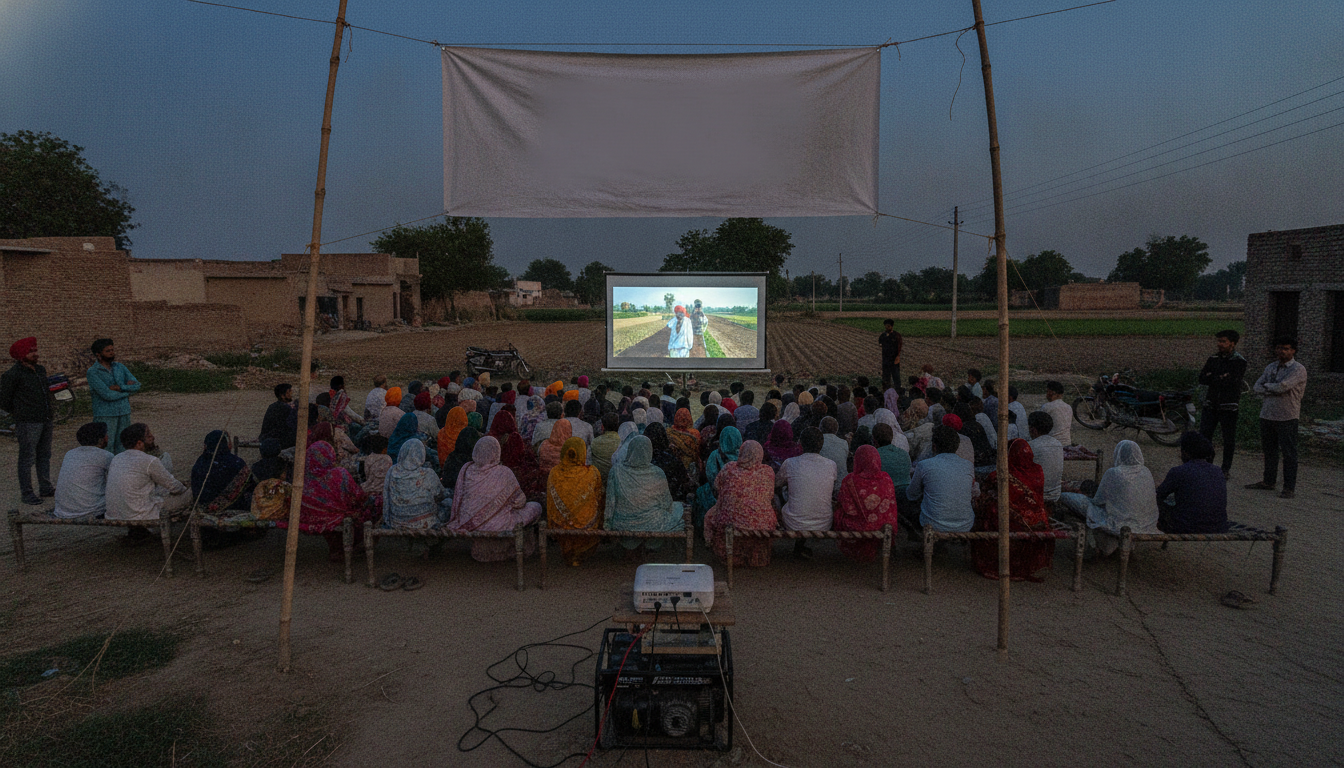
Punjab Villages Hold Public Screenings After Government Bans Satluj Film
Communities across Punjab staged impromptu outdoor viewings of the Satluj film after authorities made the Satluj film unavailable in India, turning gurdwara courtyards and village squares into makeshift cinemas.
Immediate spread of screenings across rural Punjab
Less than 48 hours after the Satluj film became unavailable in India following government intervention, residents in multiple villages began organising public showings. Courtyards of gurdwara Sikh shrines, village squares and open fields were repurposed with speakers and portable screens to accommodate crowds. The rapid mobilisation underscores how quickly the film’s subject and the controversy around its availability have energised local communities.
Subject of the film: Jaswant Singh Khalra and forced disappearances
The Satluj film centres on Jaswant Singh Khalra, a Sikh human rights activist known for documenting alleged forced disappearances in Punjab. Khalra’s work and his subsequent death in the 1990s remain a potent and sensitive chapter in the state’s recent history. The film’s focus on those events has made it particularly resonant for families and communities who continue to seek answers and public recognition.
Government intervention and removal from circulation
Indian authorities intervened in the distribution of the Satluj film, and it promptly became unavailable through formal channels in the country. Details of the specific orders or agencies involved were not disclosed at the time of the initial reports. The removal prompted organisers and supporters to seek alternate ways to show the film to local audiences eager to view it.
Local organisers convert religious and public spaces into cinemas
Organisers coordinated screenings in locations that traditionally host communal gatherings, including gurdwara grounds and village commons. Makeshift setups relied on donated equipment and volunteers to project the film for communities that might otherwise lack access. Audiences gathered in families and small groups, treating the screenings as collective acts of remembrance and civic engagement.
Reactions from residents and civil society in Punjab
Many residents described the screenings as a means to keep discussion alive about the issues the Satluj film raises. Some attendees said they viewed the shows as both memorial and testimony, especially for those directly affected by past abuses. Civil society actors in the region have framed the public viewings as expressions of cultural memory and community-led access to contested narratives.
Uncertainty over enforcement and wider distribution
While the film was reported unavailable in mainstream outlets, its appearance in village screenings highlights the limits of immediate enforcement in rural areas. It was not clear how authorities planned to address the informal gatherings or whether further legal steps would follow. For now, local organisers appear to be prioritising communal viewing over formal distribution channels.
The public screenings of the Satluj film in Punjab have turned a legal restriction into a visible act of communal engagement, signalling persistent local interest in the film’s subject matter and in broader questions about access to contested histories.

